European bee-eaters
Europe’s most colourful birds.
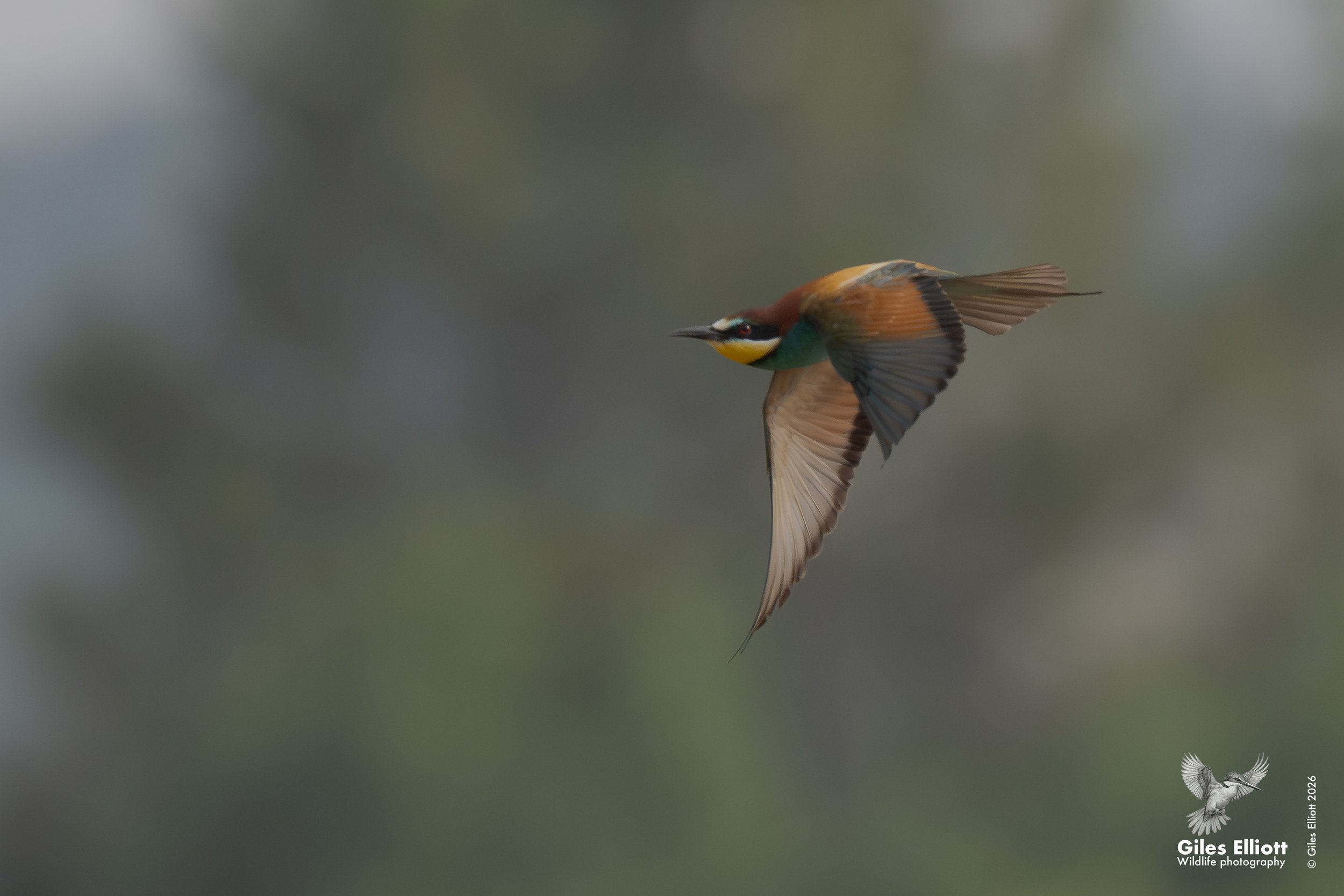
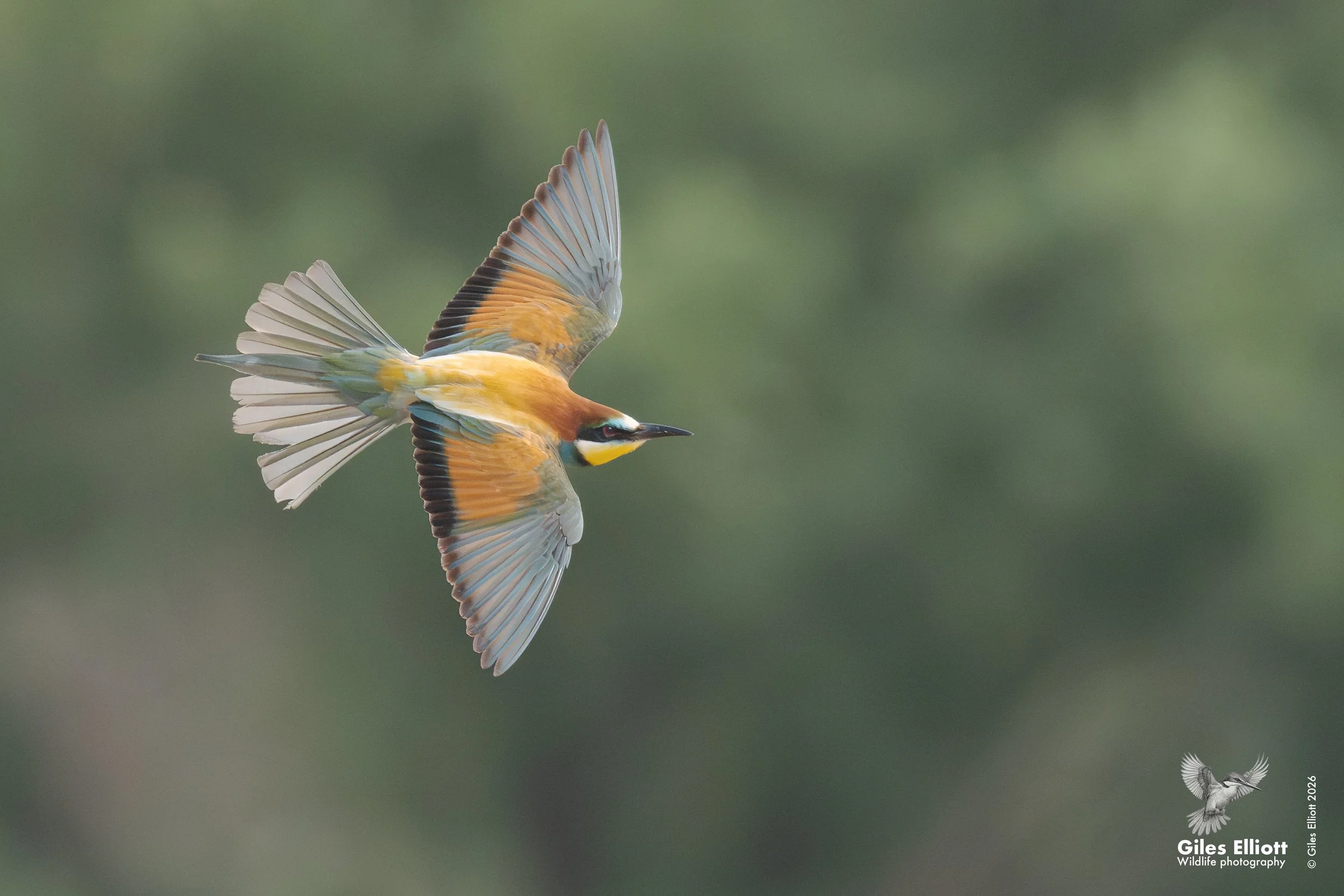
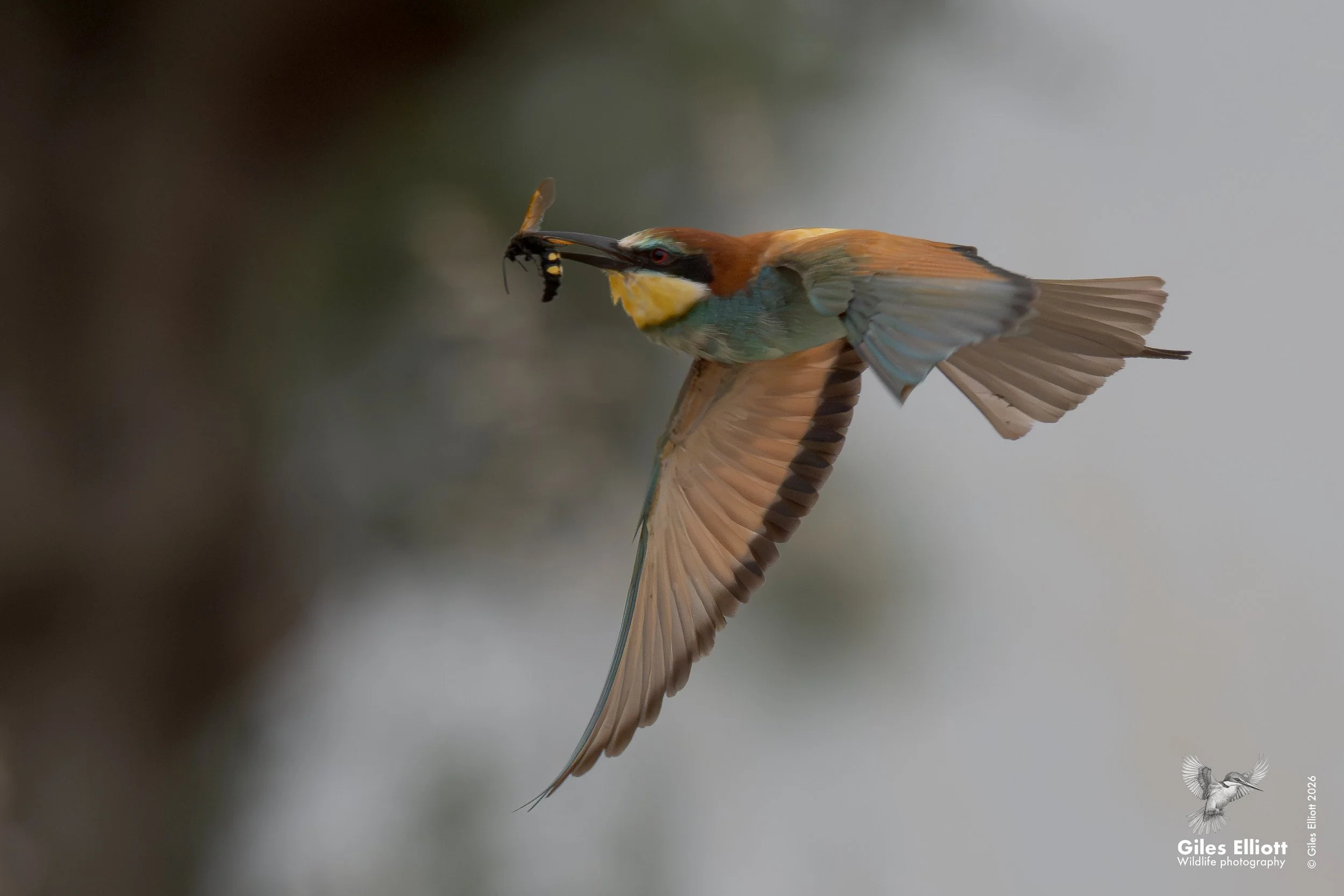
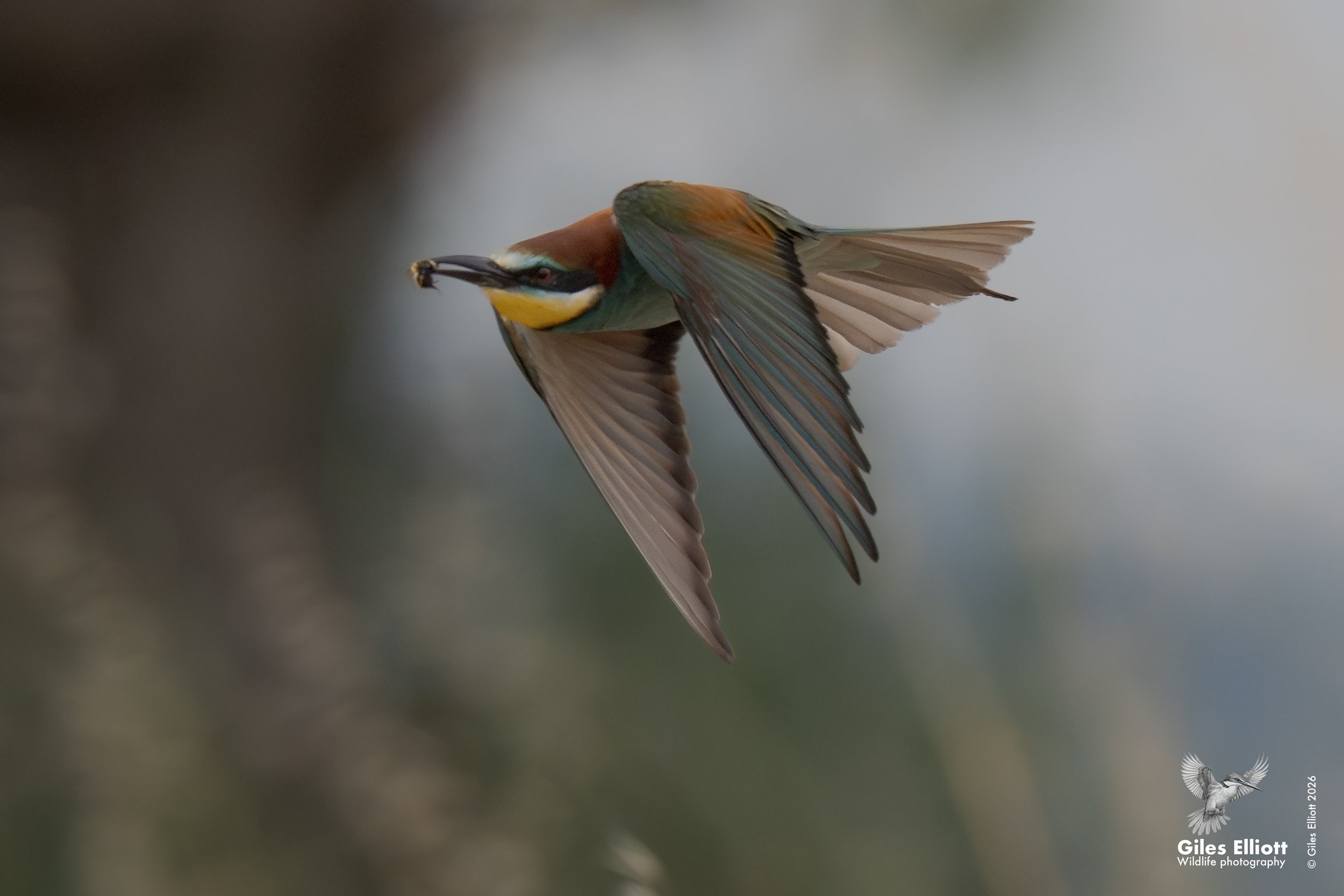
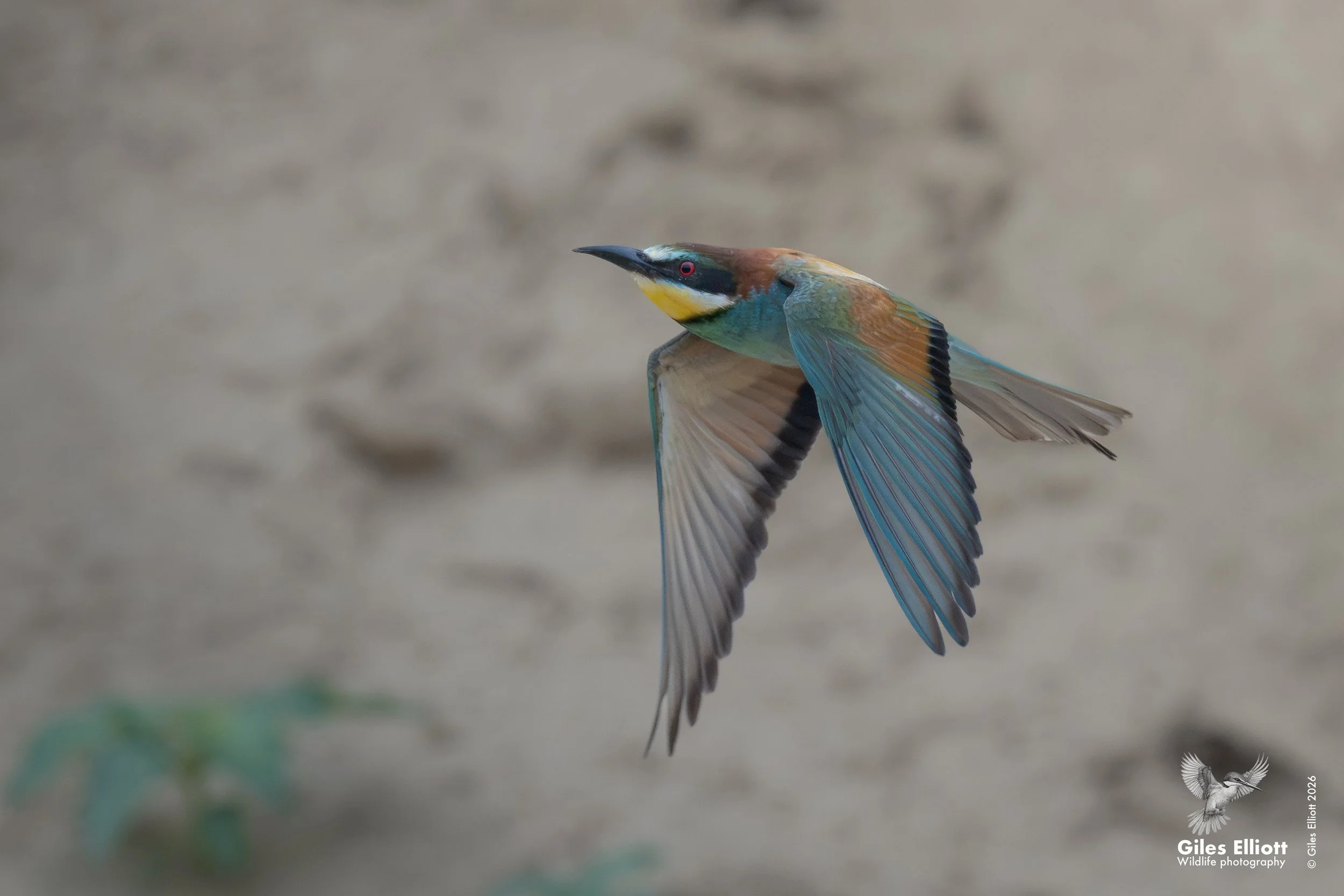
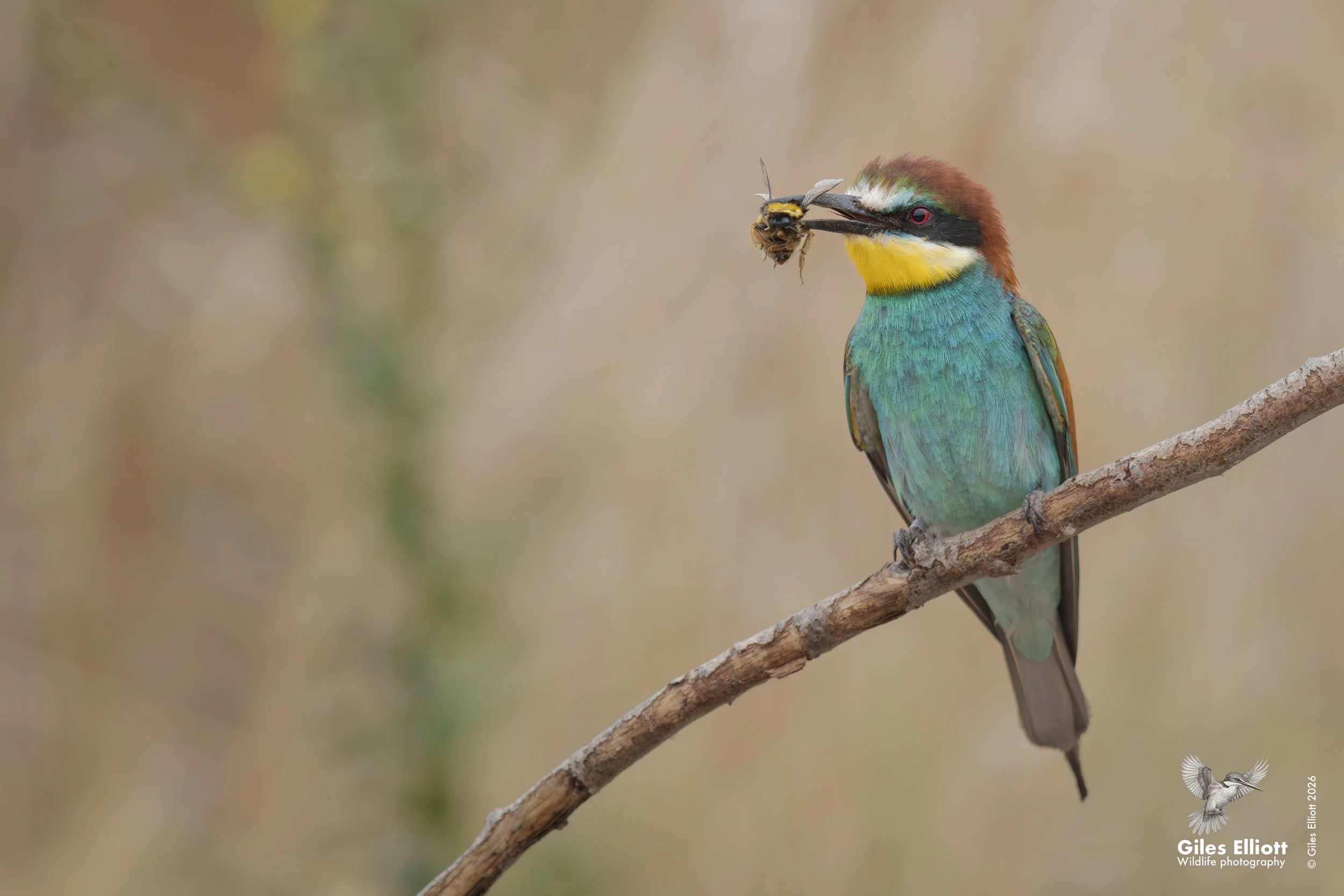
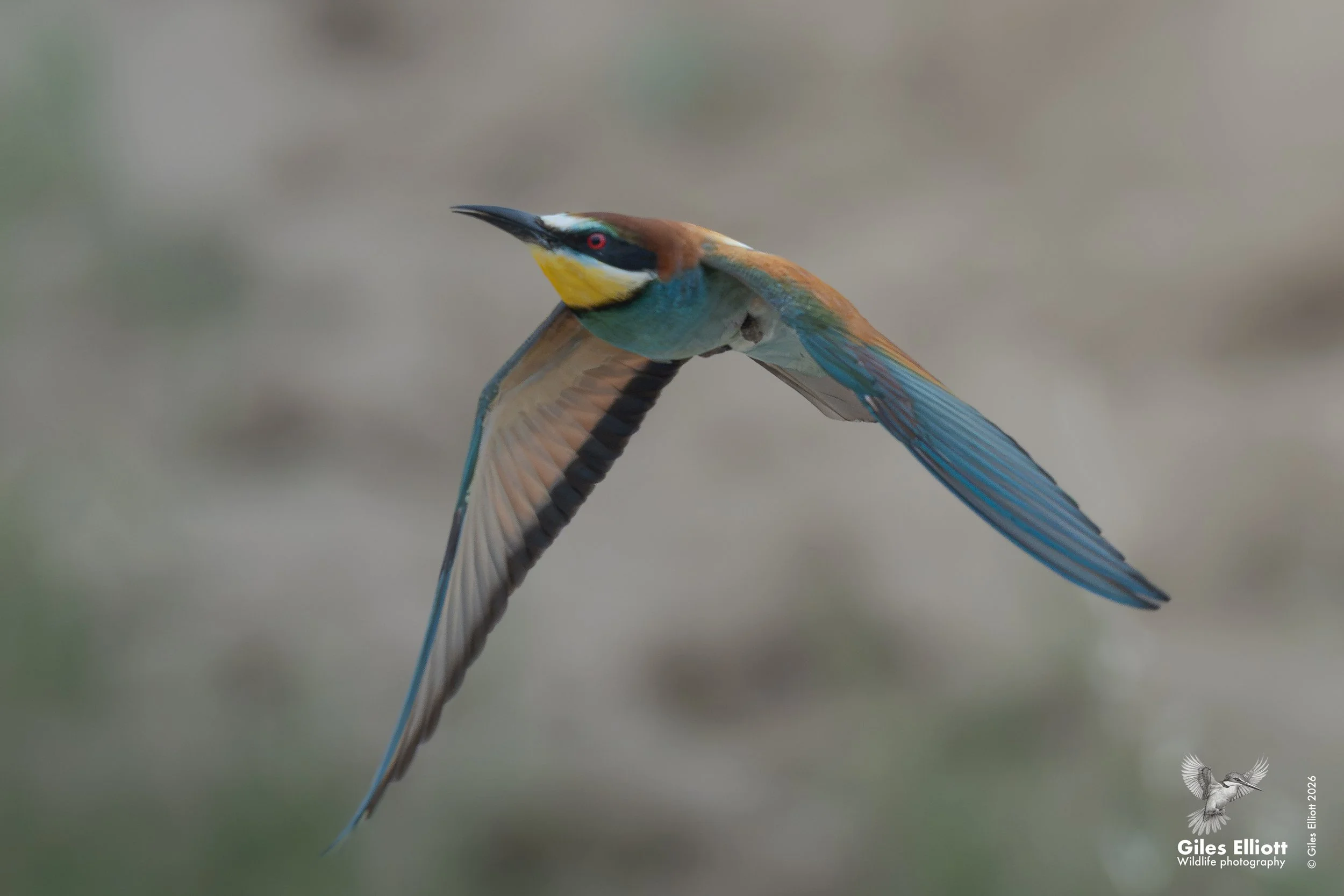
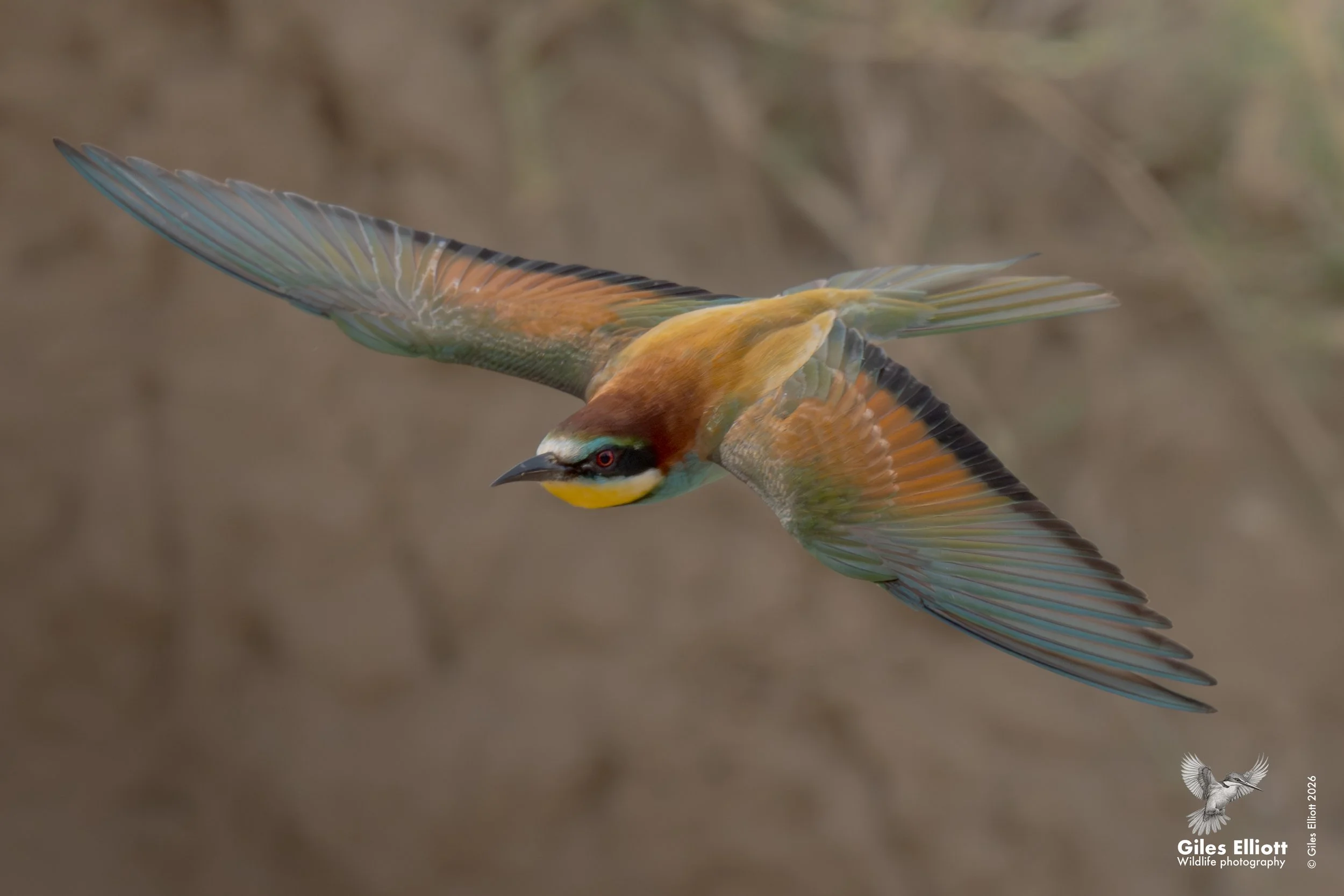
Bee-eaters around the world are some of the most spectacular and colourful birds a photographer can encounter.
In Africa I have been lucky enough to photograph many different species of bee-eater, like the Southern Carmine bee-eaters I travelled to see in Namibia. They are always among my favourite shots of any safari trip.
The European bee-eaters spend the Northern Hemisphere winters in Southern Africa, and their call and flash of colours can be heard and seen alongside their African cousins, but they seem not to settle and are constantly on the wing, making shots tricky.
So, I set out to find a European bee-eater nesting colony in Portugal. For the last few years this has been a focus for my summer trips in Portugal - and I am delighted that in 2026 I have been able to spend considerable time with a colony - from their arrival back from Africa, pairing up, mating and breeding.
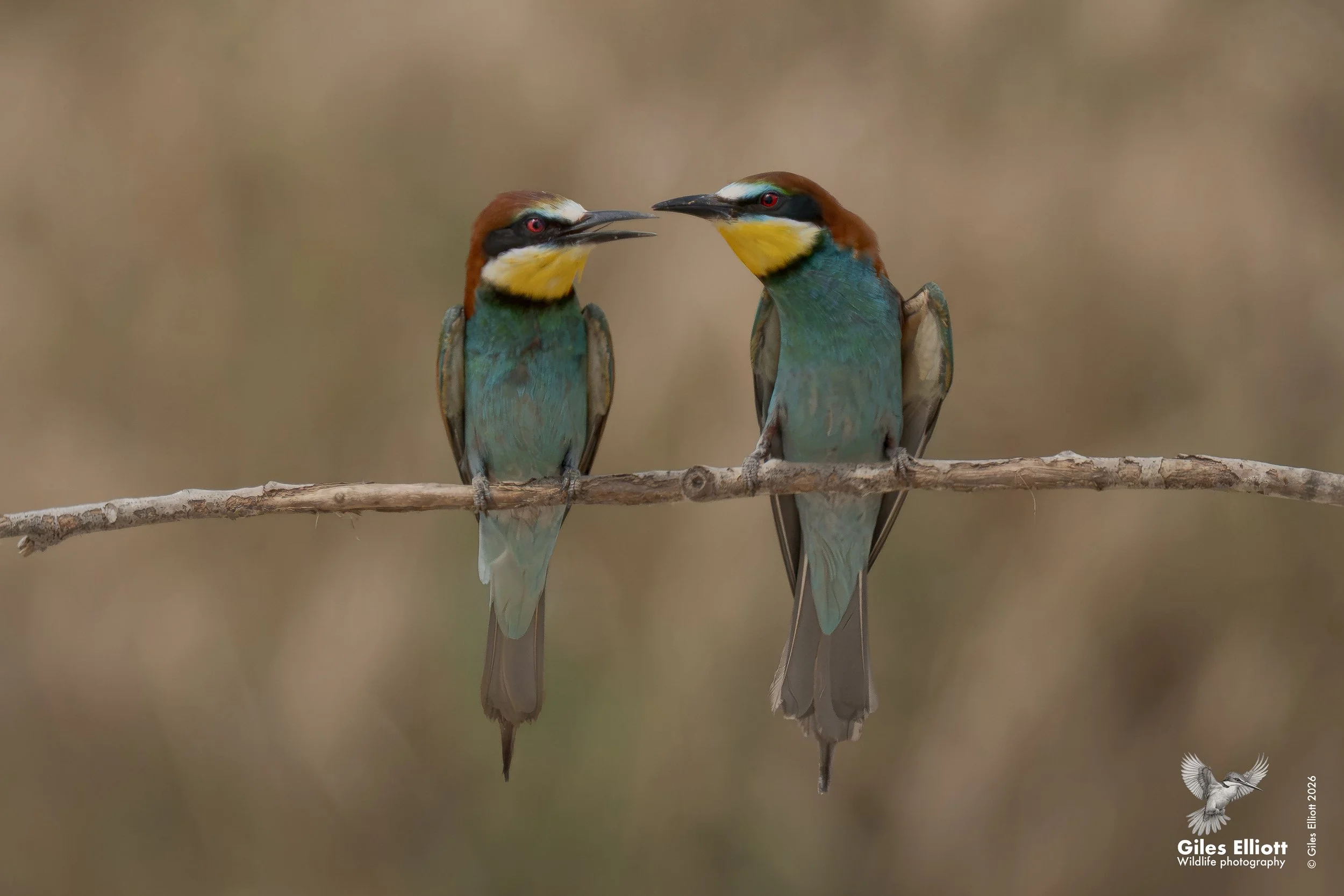
Catching up

Feeding up
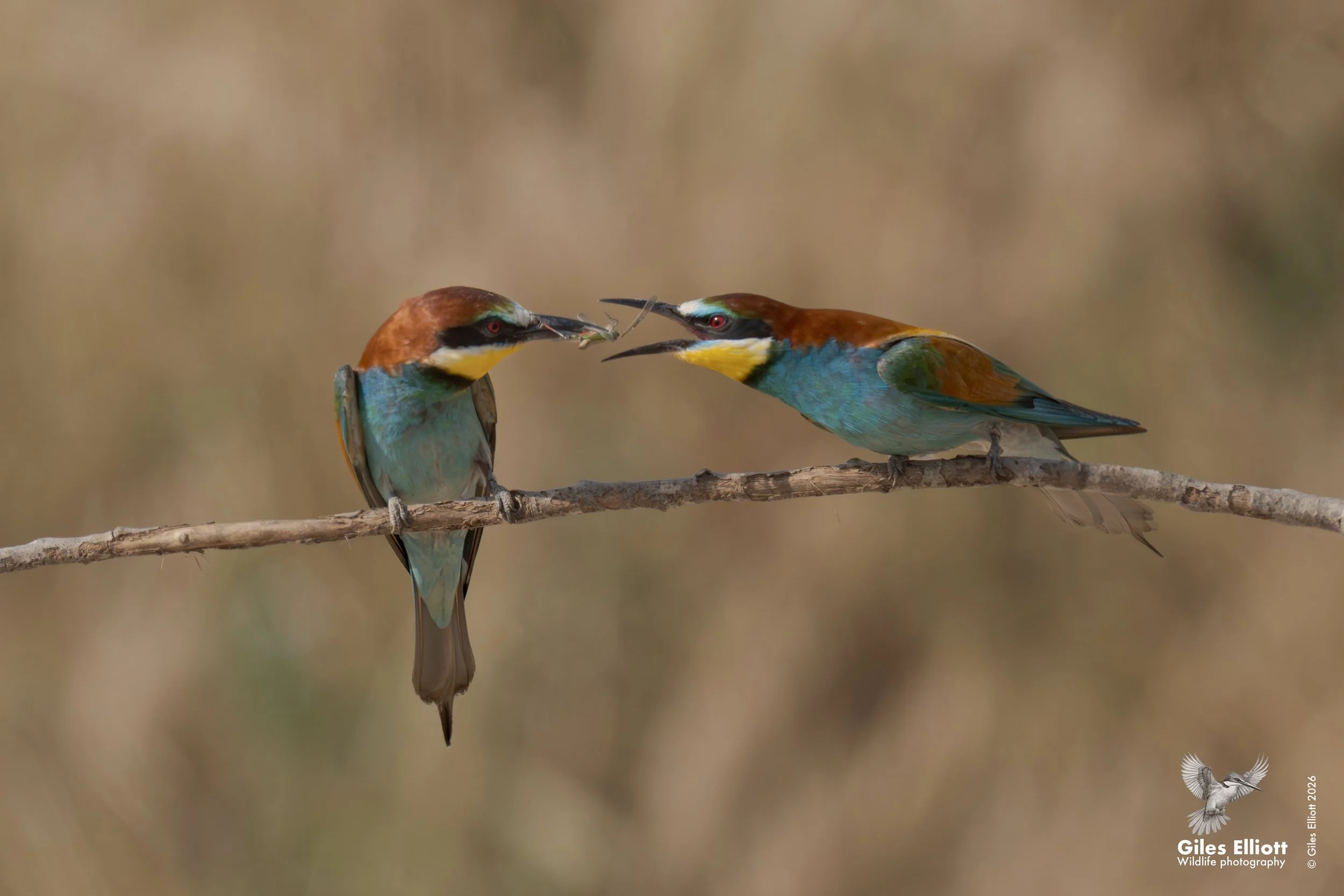
Pairing up

Mounting up
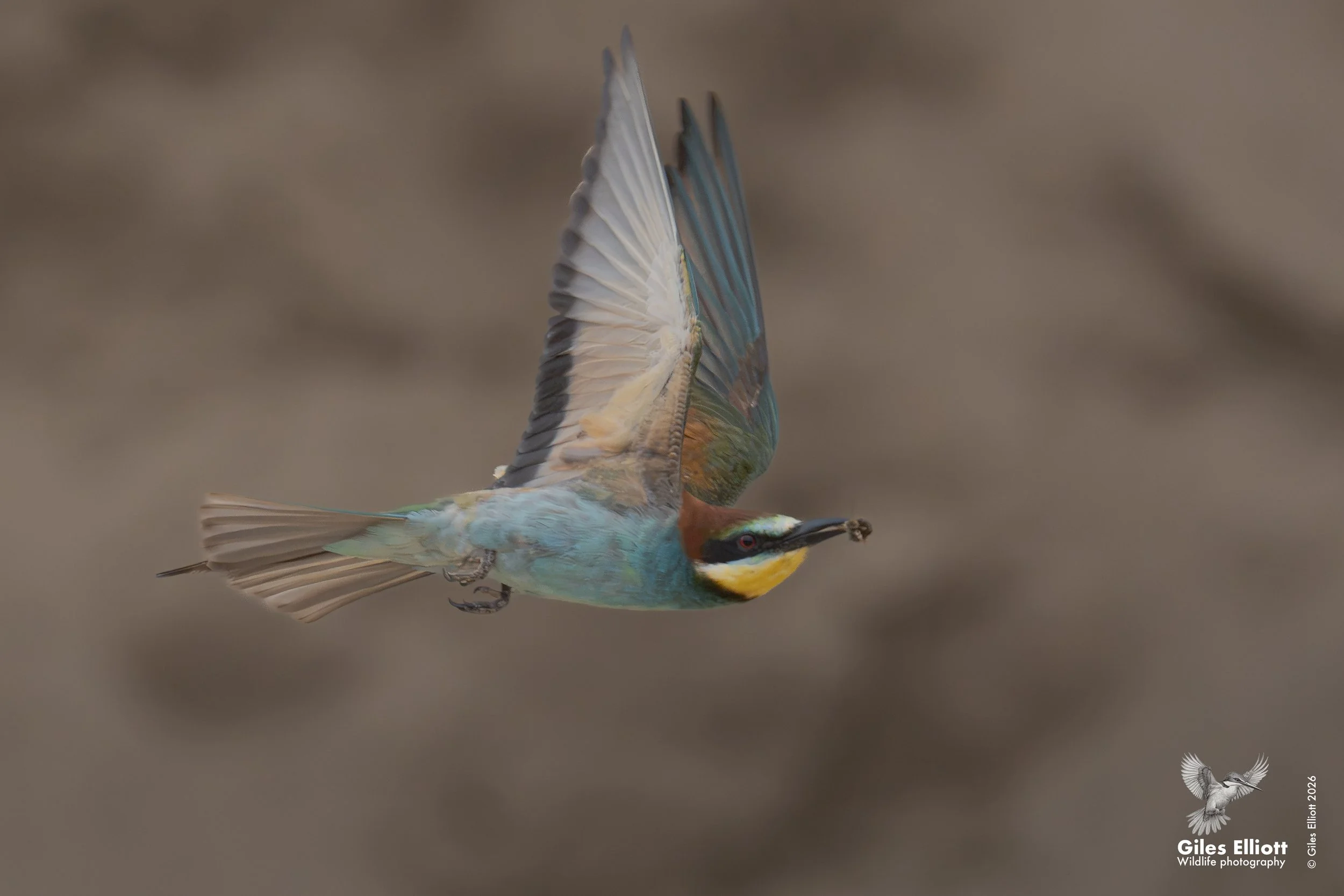
Feeding the family
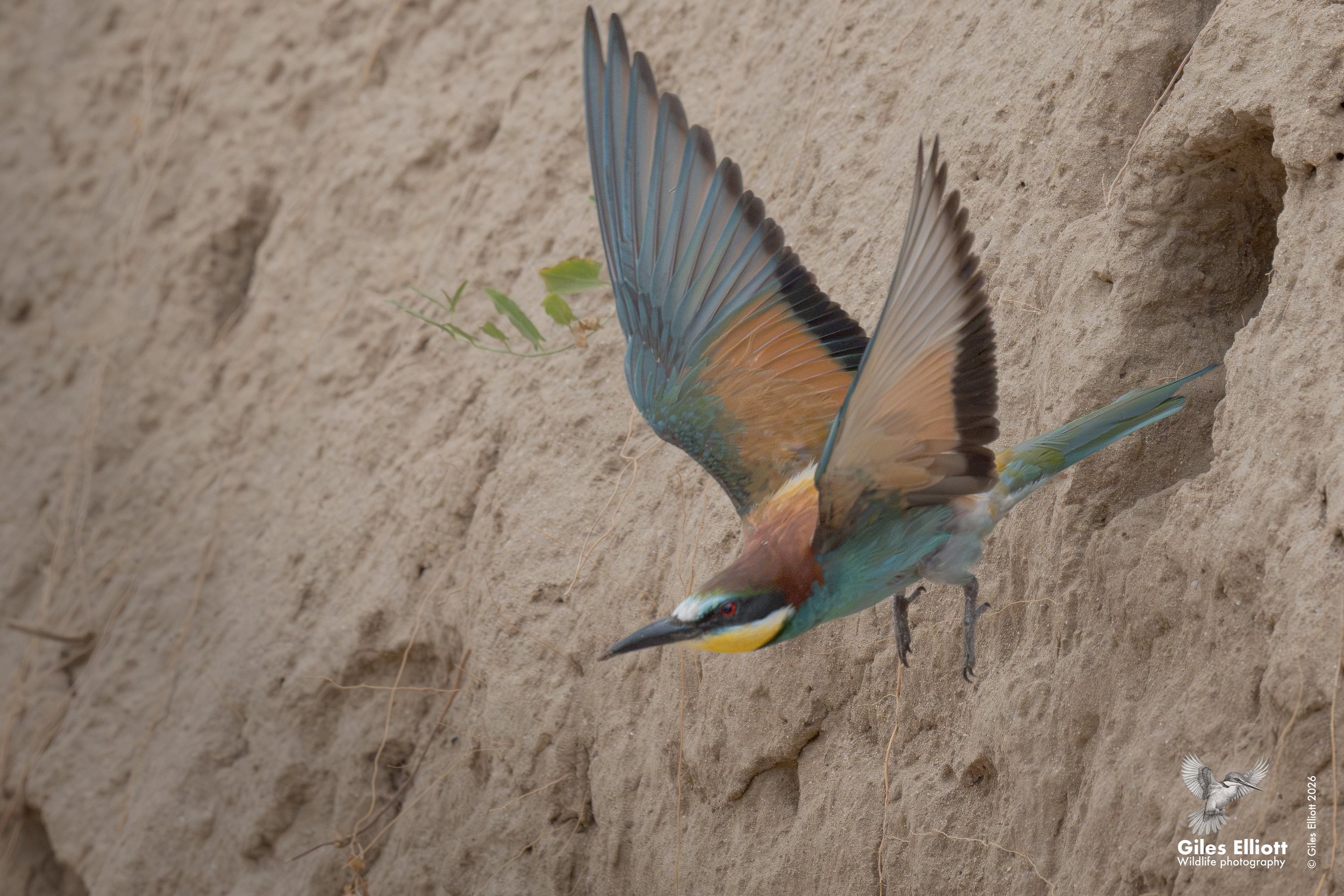
The endless cycle
Use the left and right arrows below to scroll through some shots of the bee-eaters
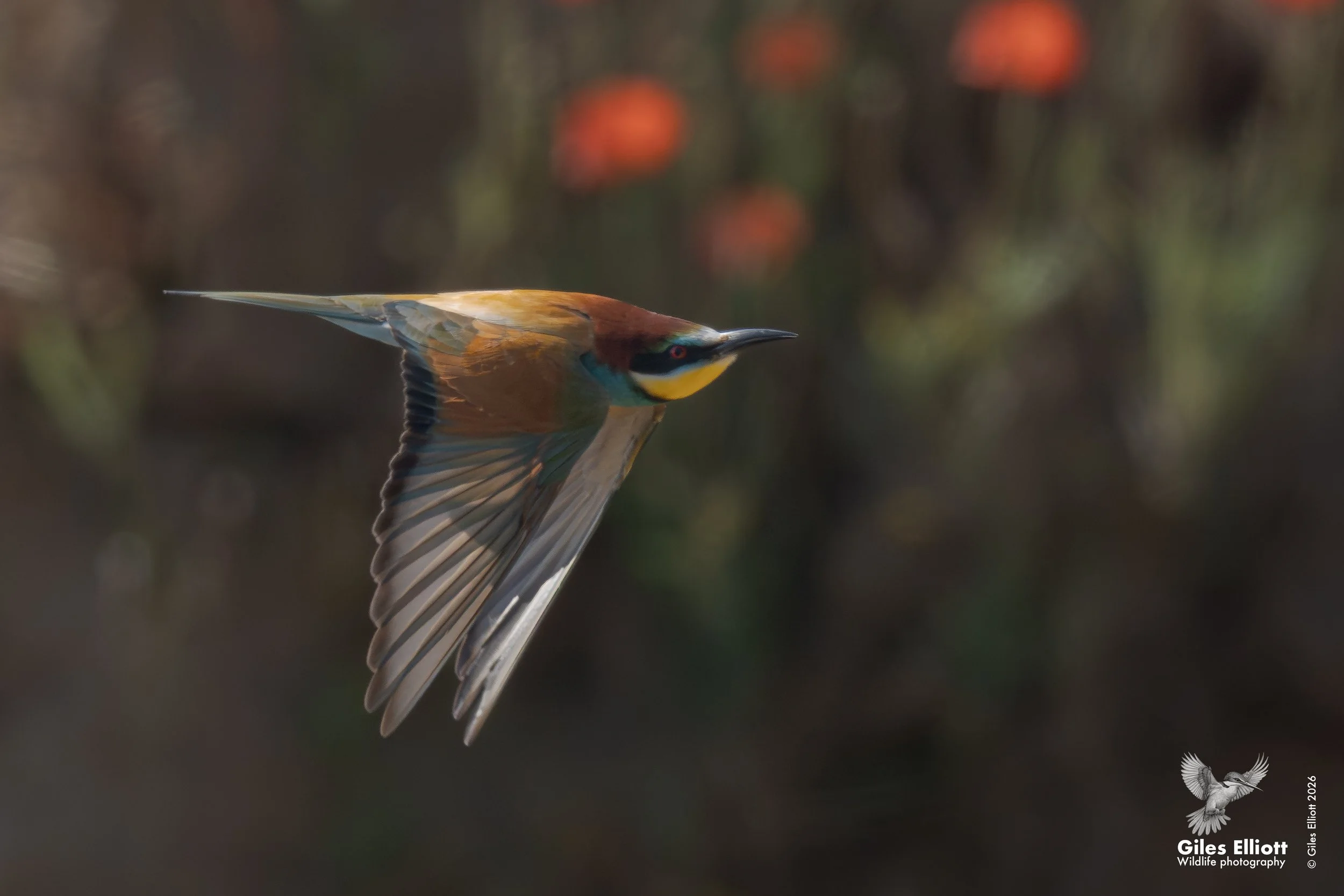
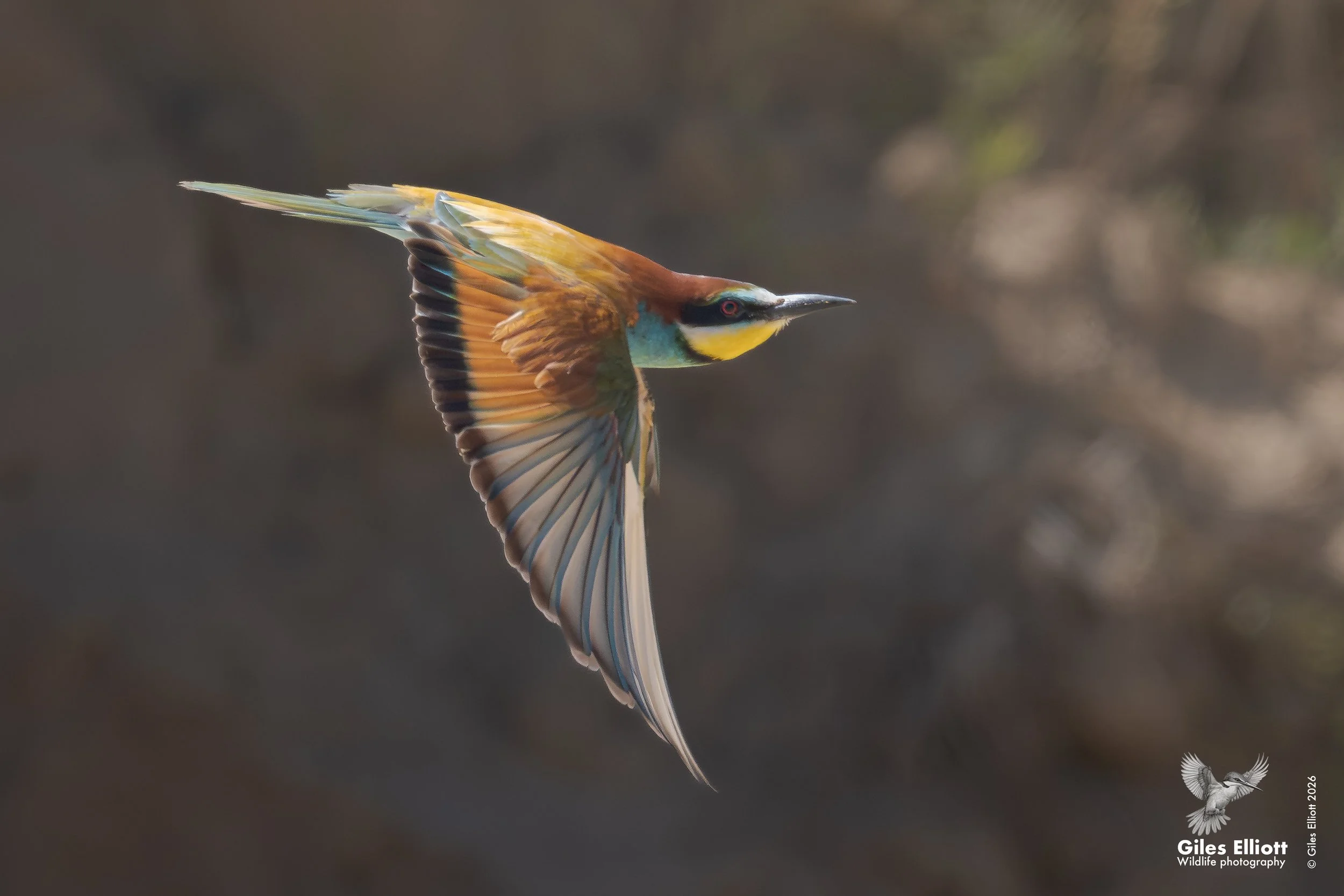
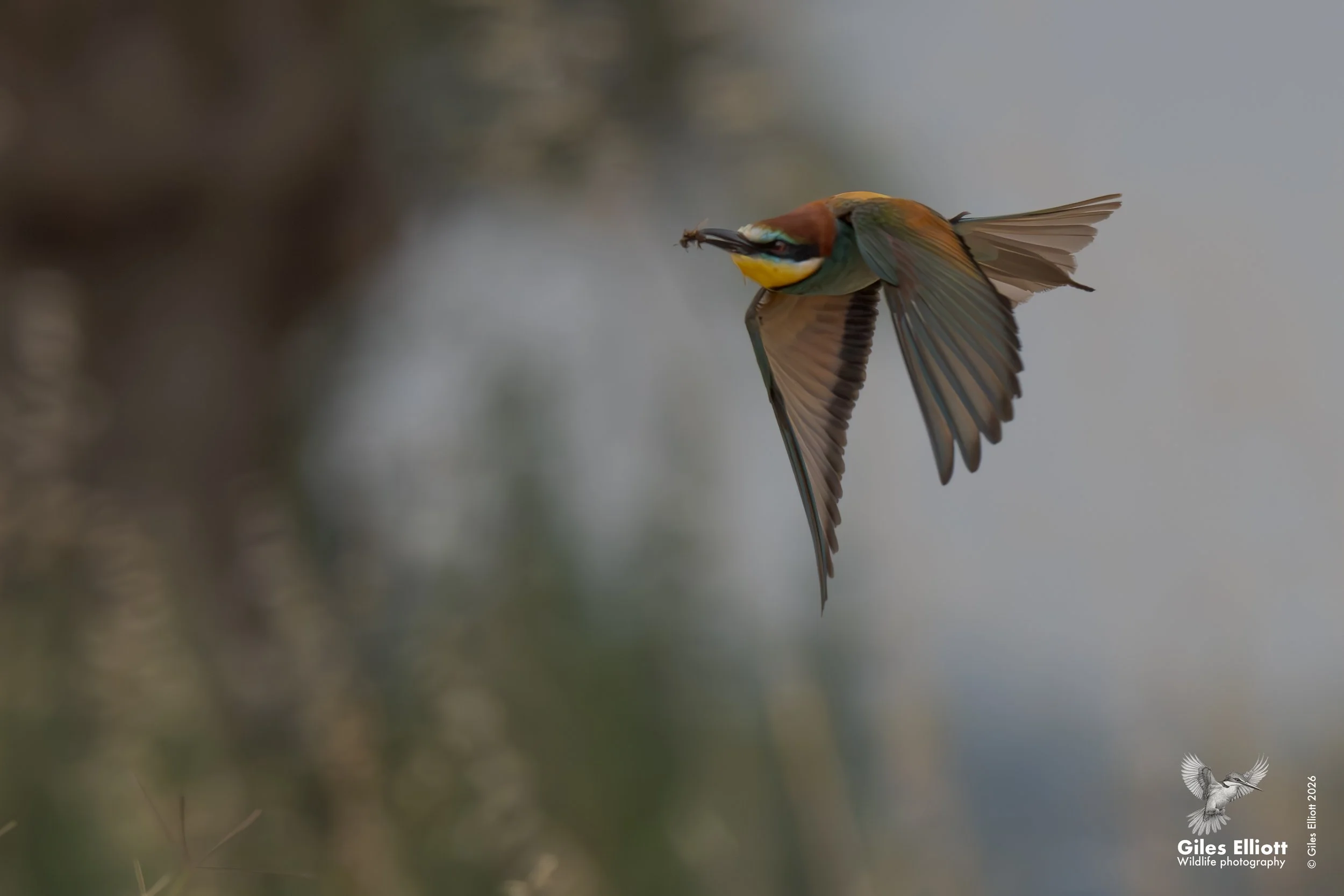
A bit of context..
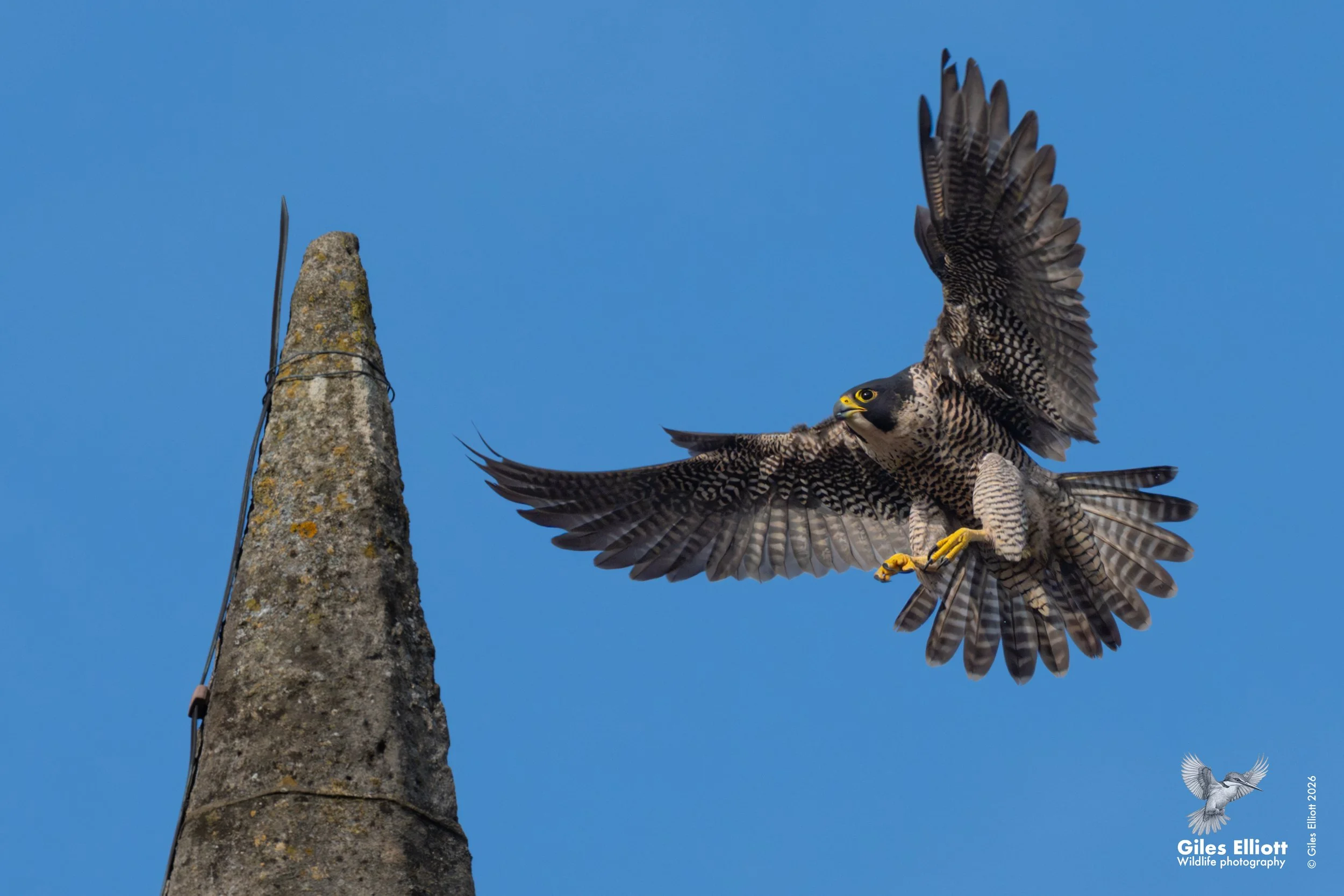
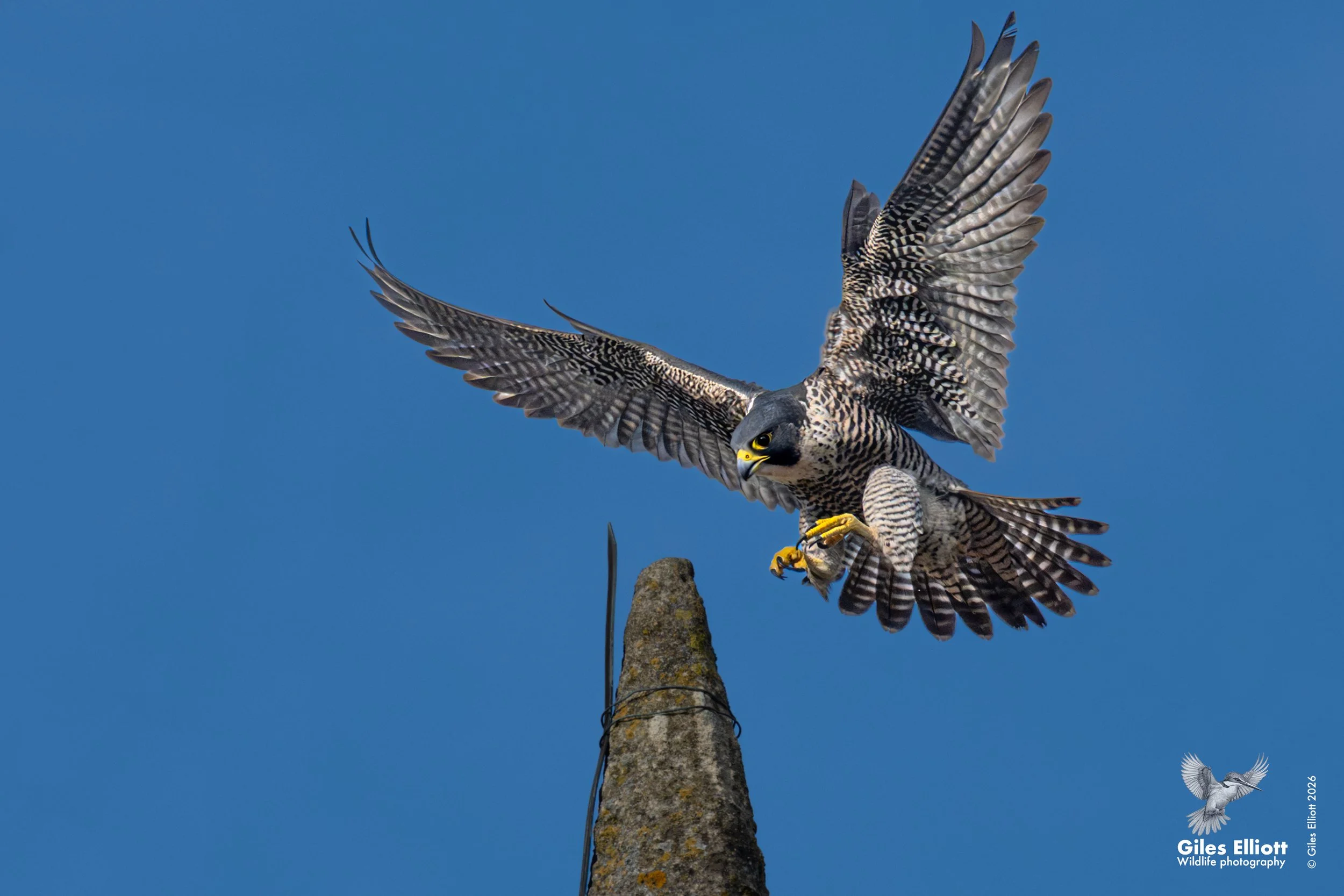
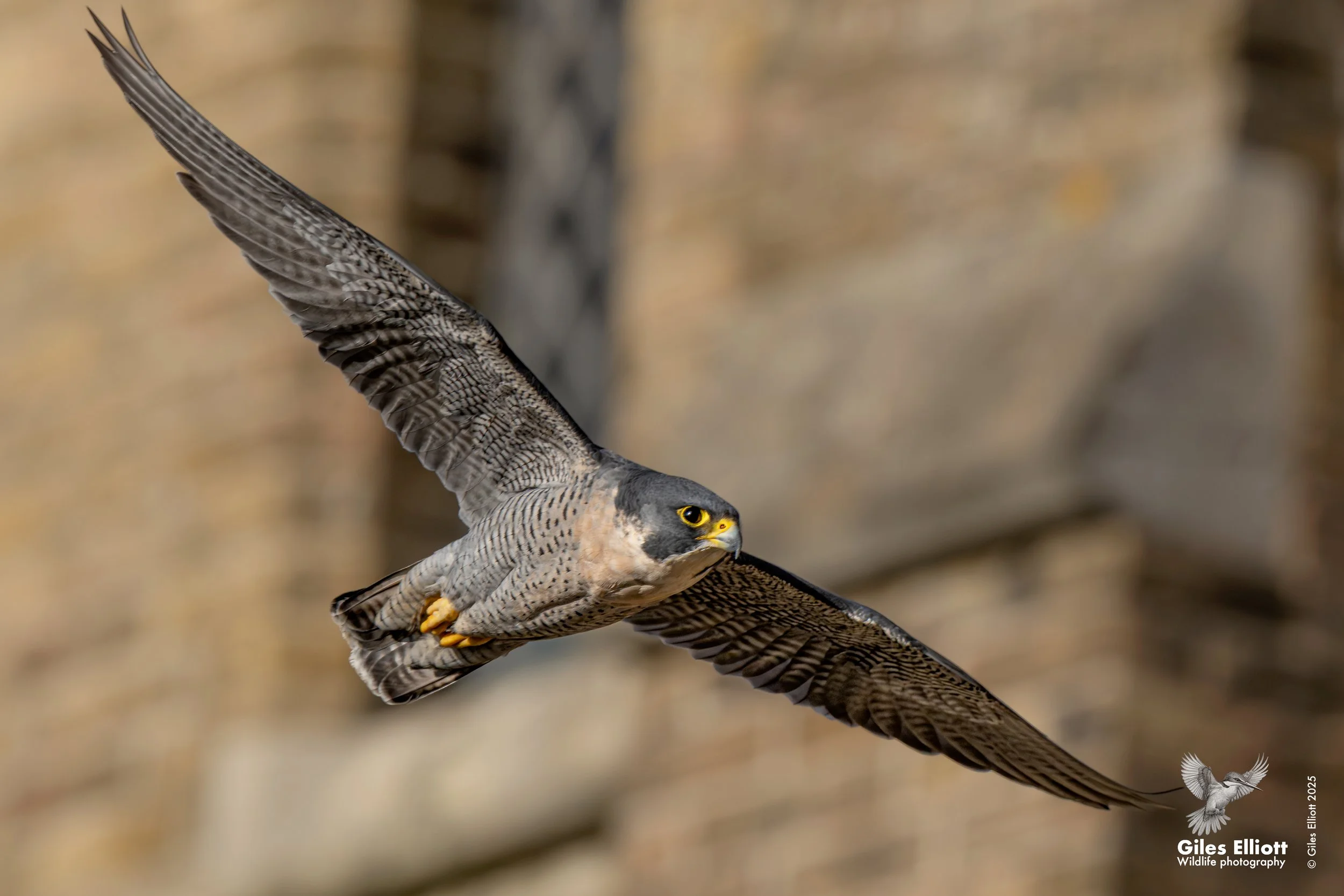
This shot was the one I really wanted - focussing on the peregrine, but showing the context of the church and the urban setting. I needed distance between the peregrine and the church so I could blur the building enough to put the focus on the bird, and I wanted the peregrine to be close to me to get all the detail of the bird. Of course that all needed to be in good light, with that light falling on the bird evenly to not create ugly shadows. I am sure many people who pass day-after-day must wonder if I don’t have enough shots of the birds already, but it is getting the shot I envisage that keeps me going back again and again.
Ruthlessly efficient
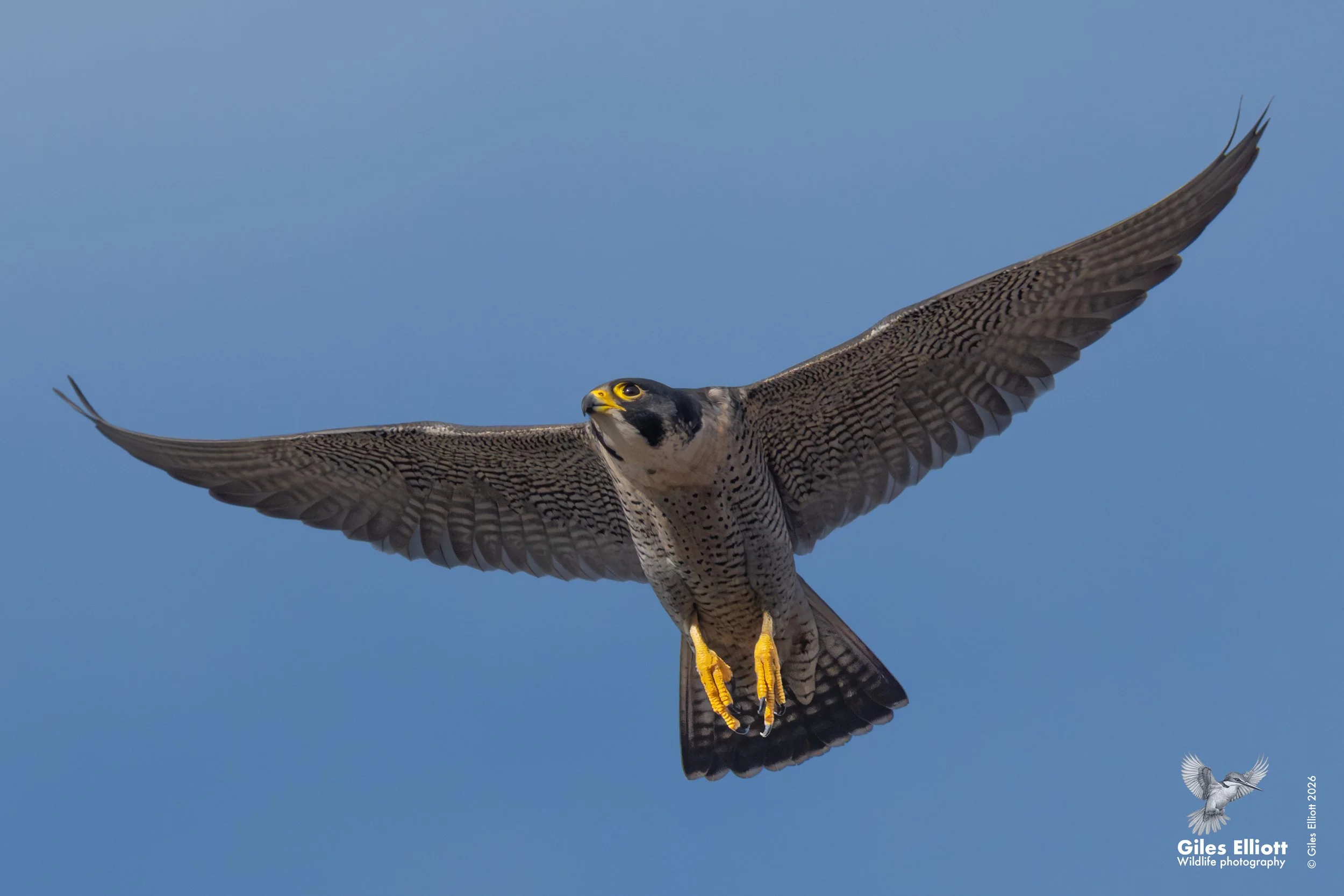
Over the months we have watched them, the peregrines have shown ruthless efficiency in hunting their prey. It amazes us that there are pigeons also roosting on the church and the area around it, but the peregrines seem to hunt a little further afield. While pigeons are the main part of their diet, we have seen them return with parakeets, and even a great spotted woodpecker - it is hard to watch but the key to the peregrines thriving and breeding.
Use the left and right arrows below to scroll through some shots of the peregrines

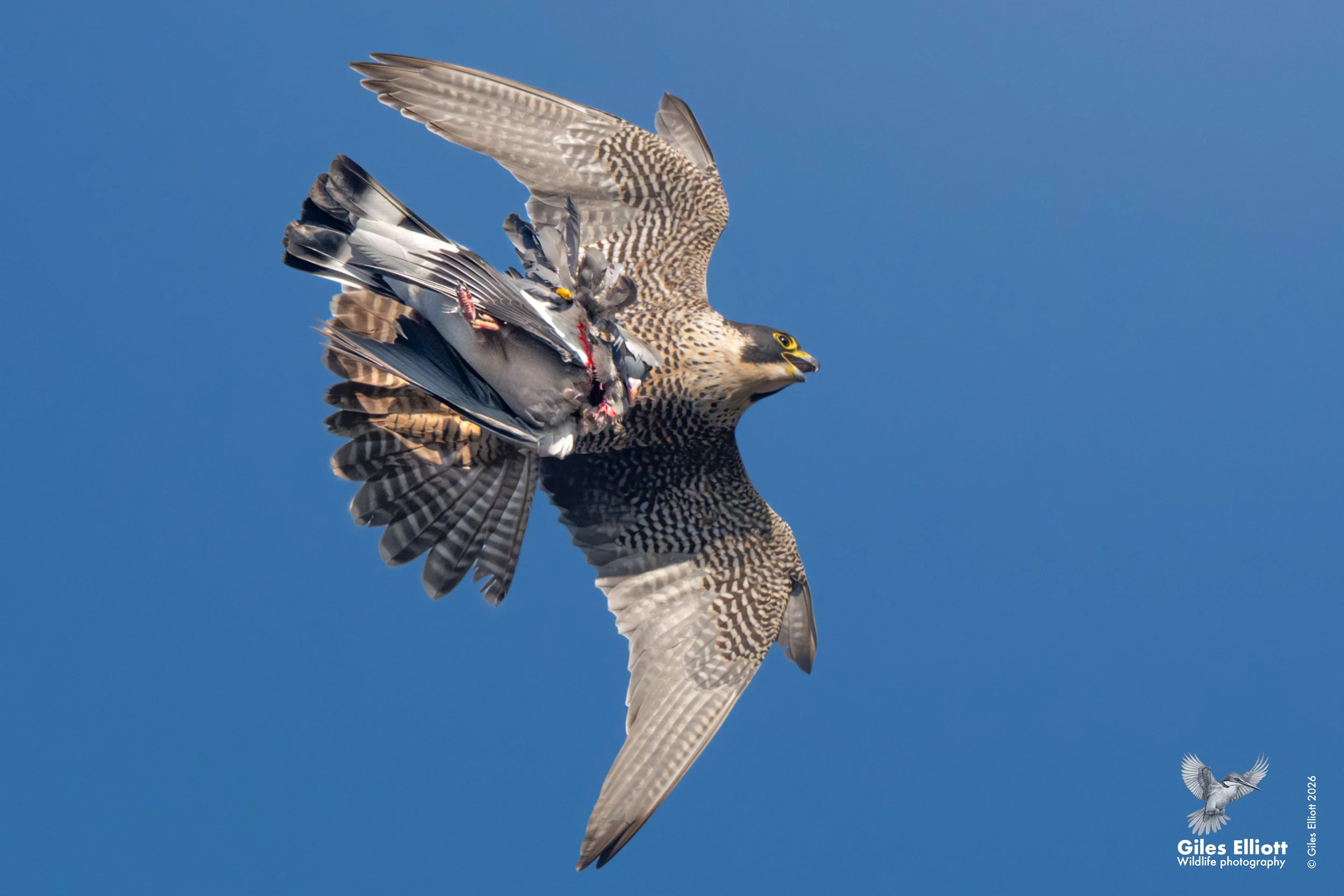

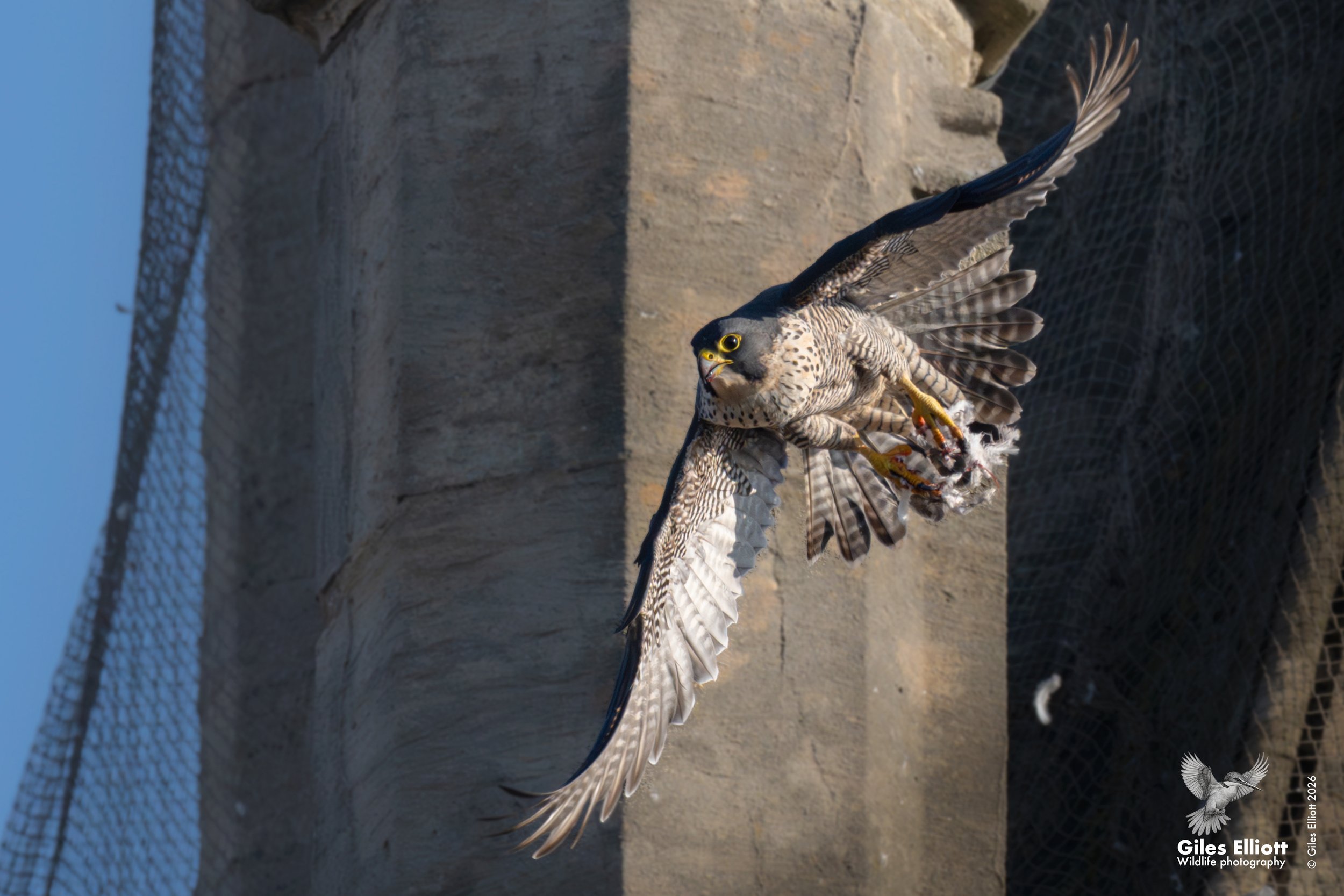
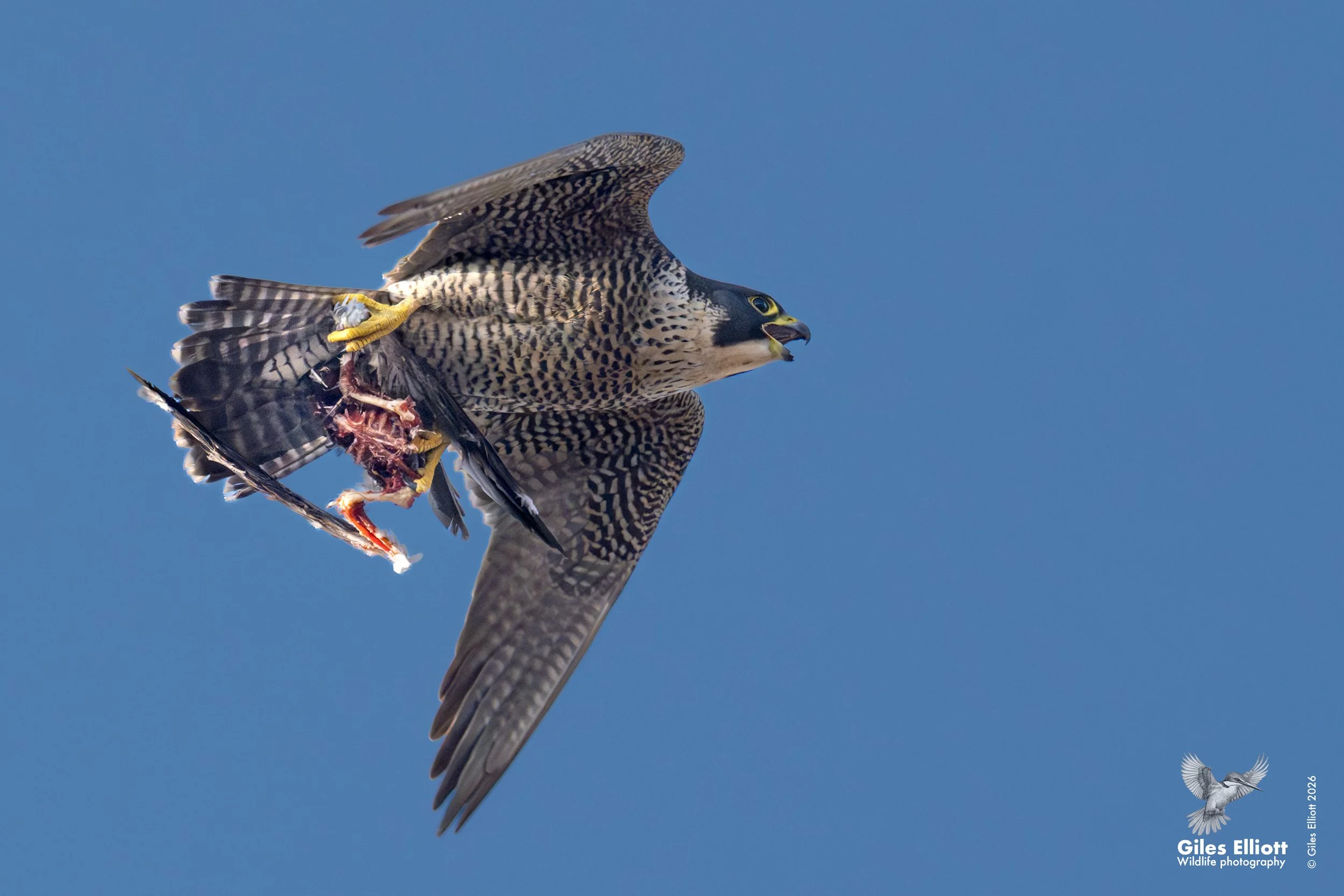

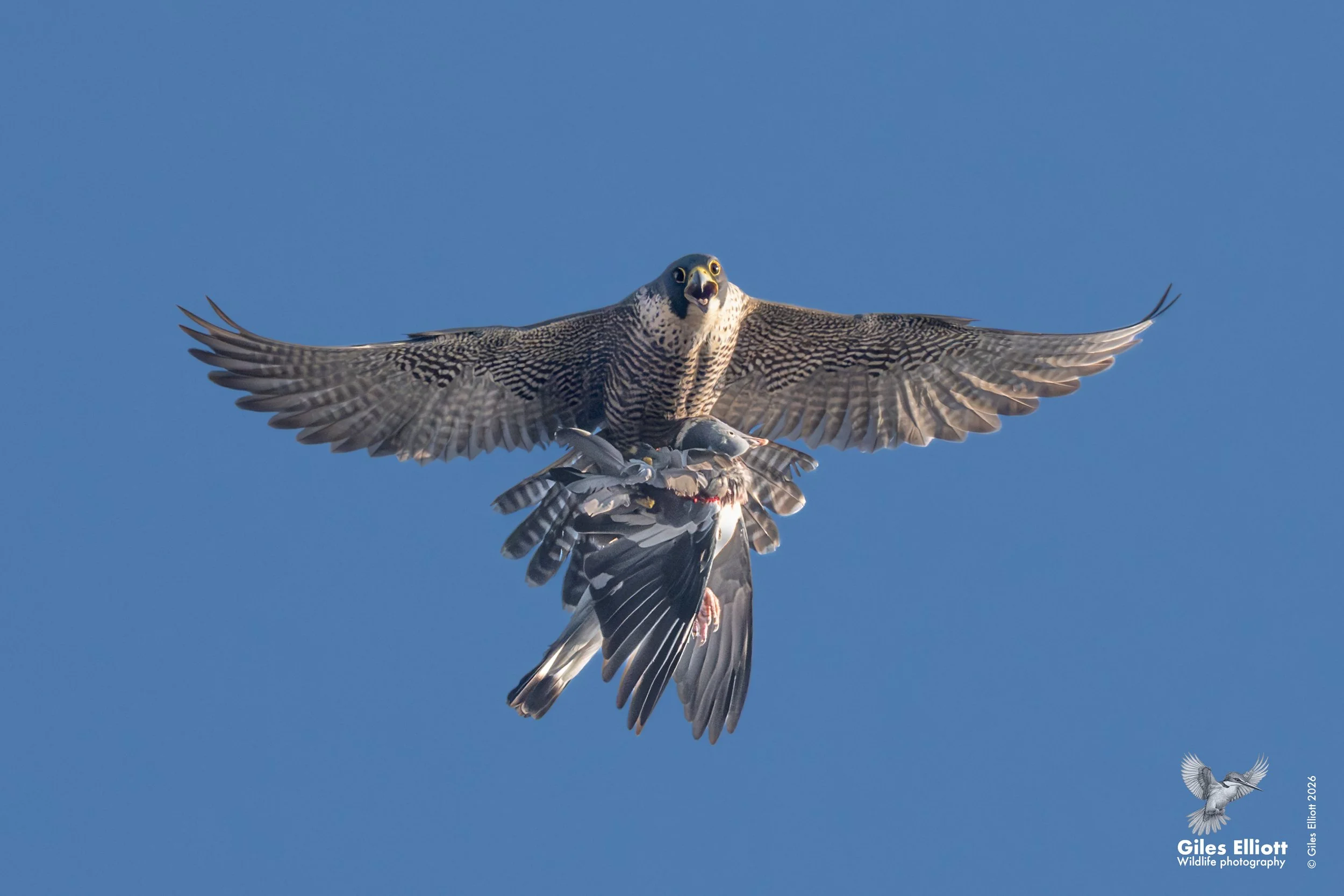


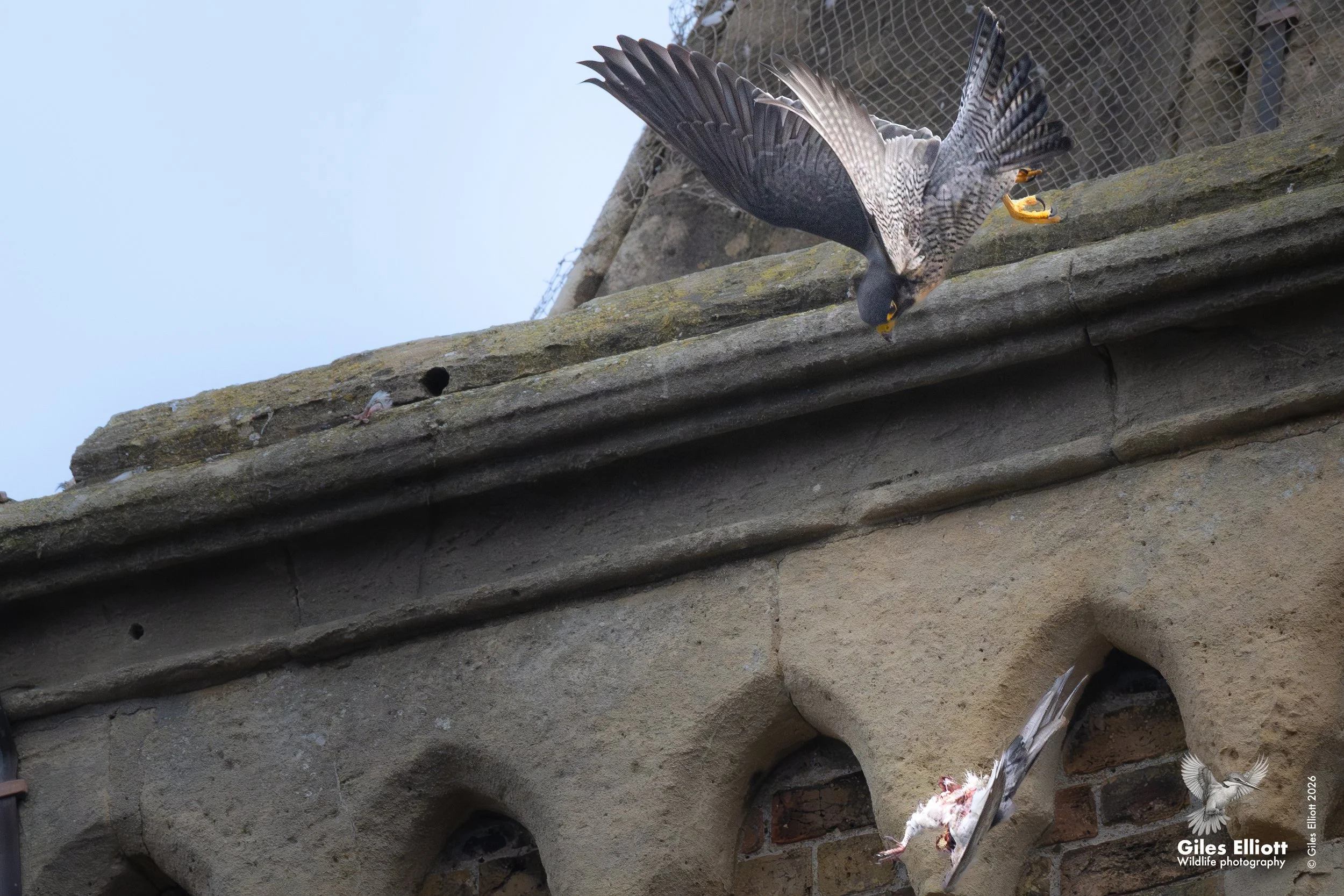
Never play with your food!
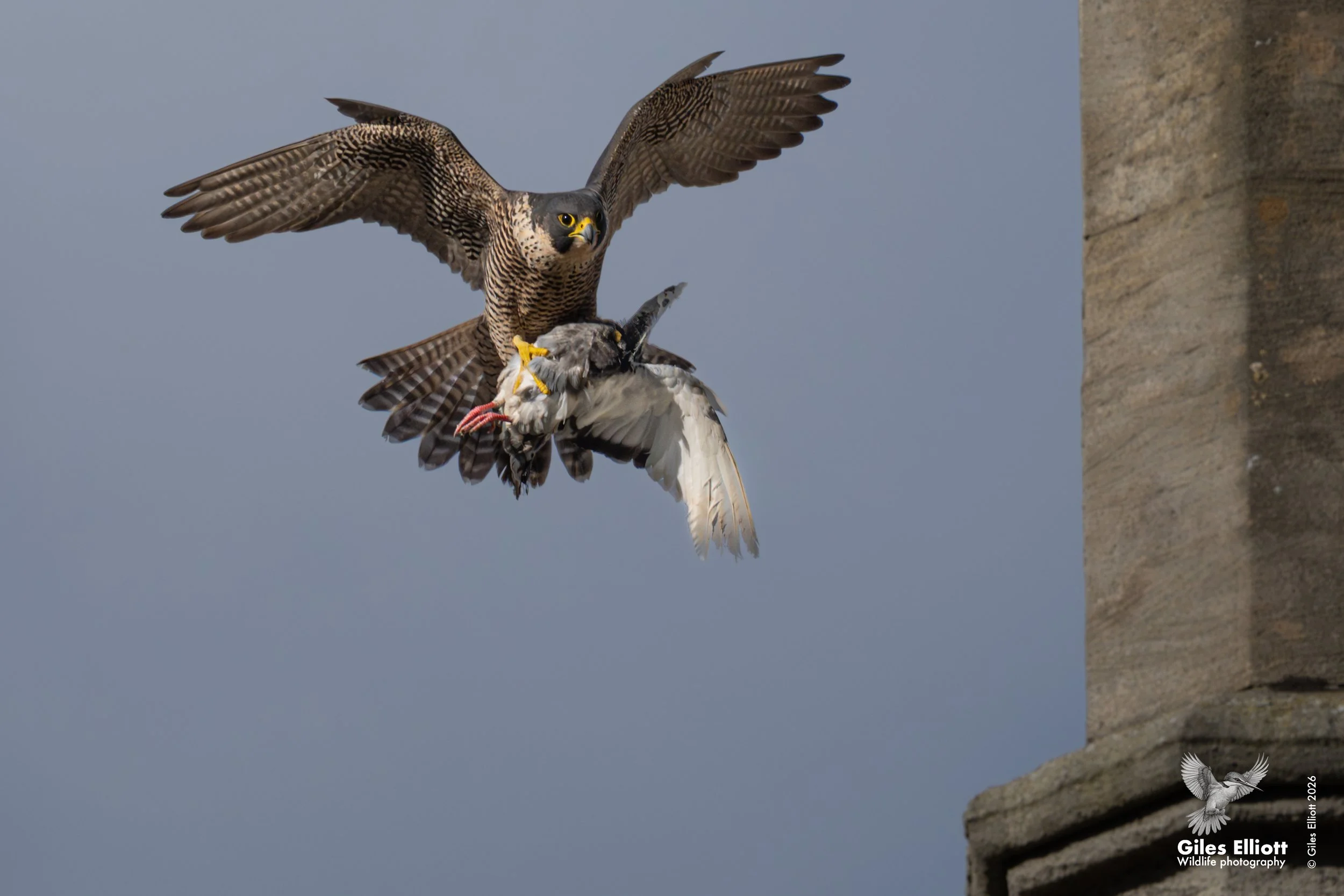
The peregrine had moved the last of their breakfast onto the flat parapet of the church tower, seemingly to keep an eye on other birds that might try and steal it. That strategy proved to be a bad one when they knocked their own meal over the edge, and even the peregrine’s speed could not save the pigeon remains falling to the floor.
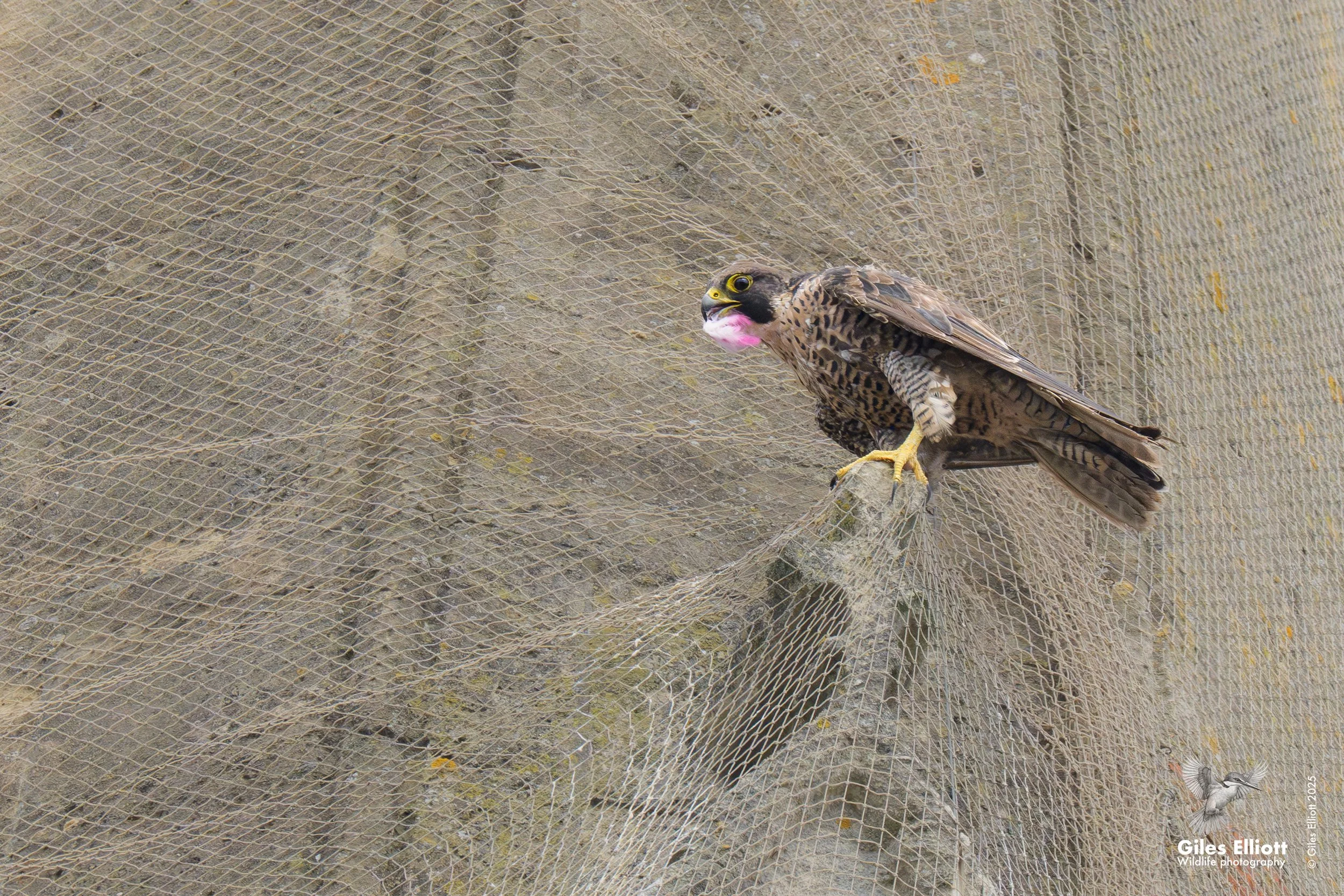
Windsor Pride.
Windsor Pride in 2025 was at the time the fledgling peregrine was learning to hunt for themselves. The parent birds had stopped feeding the youngster, ignoring their constant cries for attention and forcing the young bird to fend for themselves. Eventually the youngster flew off to hunt, only to return with the remains of a pink feather boa… Someone at the Pride event had clearly lost their costume to a young bird of prey!
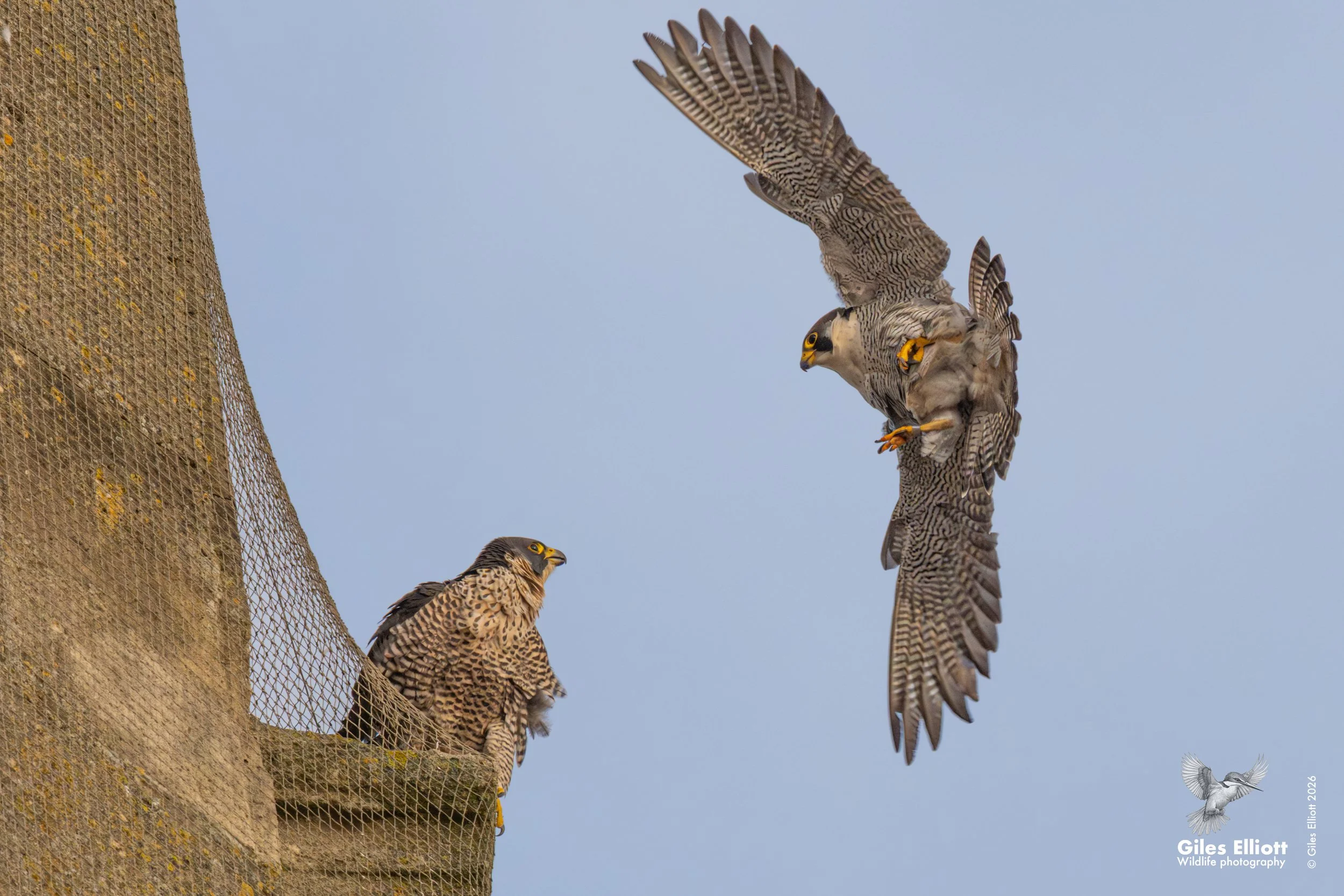
Intruder!
One of the things I love about wildlife photography is capturing details that we can’t see in real time with our eyes.
Neither of the Windsor peregrines is ringed (the practice of attaching a small, uniquely numbered metal band to a bird’s leg to identify the individual bird for research). So this photograph shows an intruder - a different male bird coming in to potentially challenge for the roost, or for mating rights.
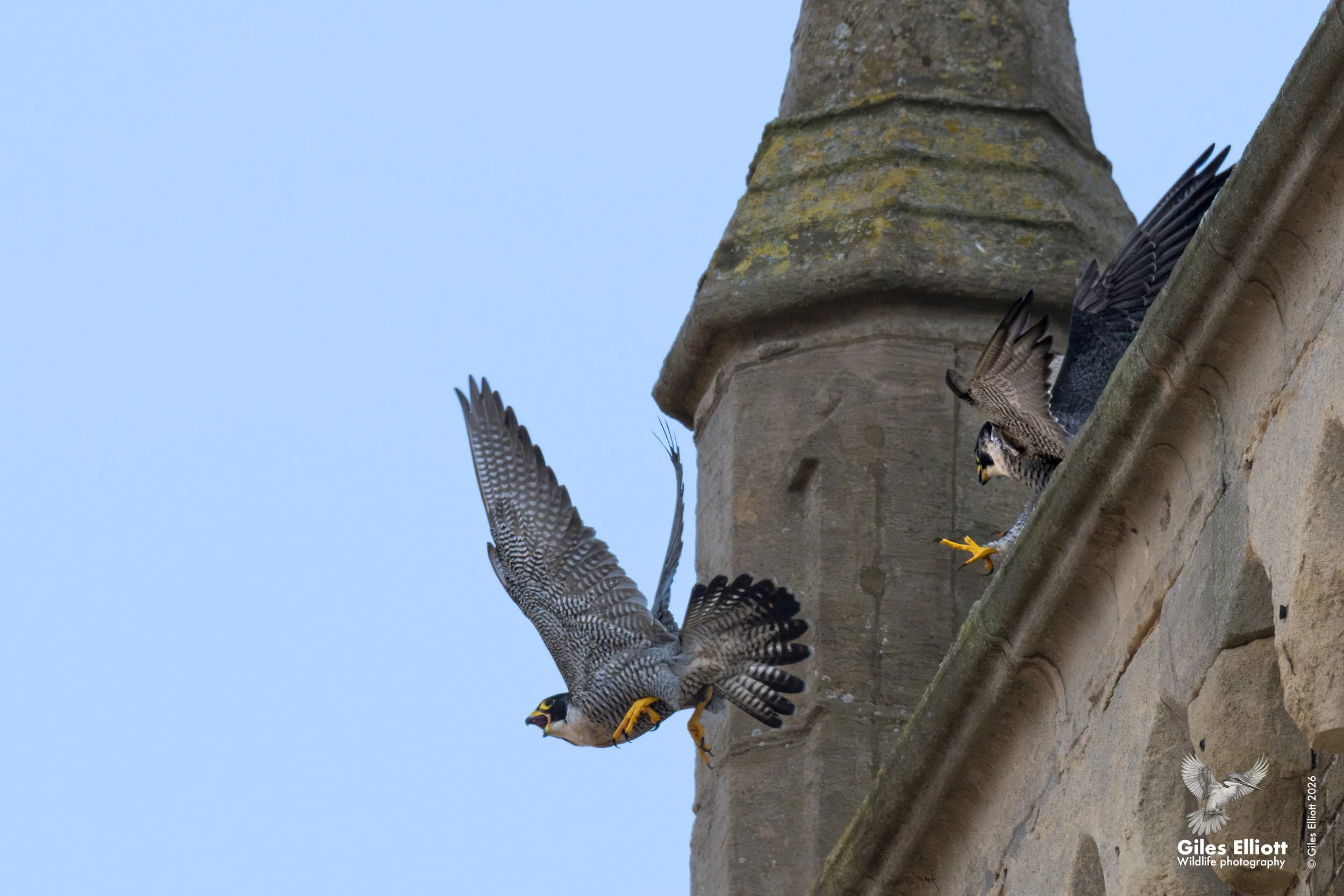
Intruder vanquished
We’d have never known about the drama that unfolded if we didn’t have the photographs to review afterwards. Just as soon as the intruder came, he was unceremoniously kicked off the property by the current owner.

British Wildlife Awards
I enter a small number of wildlife photography awards each year. One well known one is the BWPA awards where each year the selected entries are published in a book.
I was delighted to learn one of my photographs of the Windsor peregrines has made it to the 2026 book.
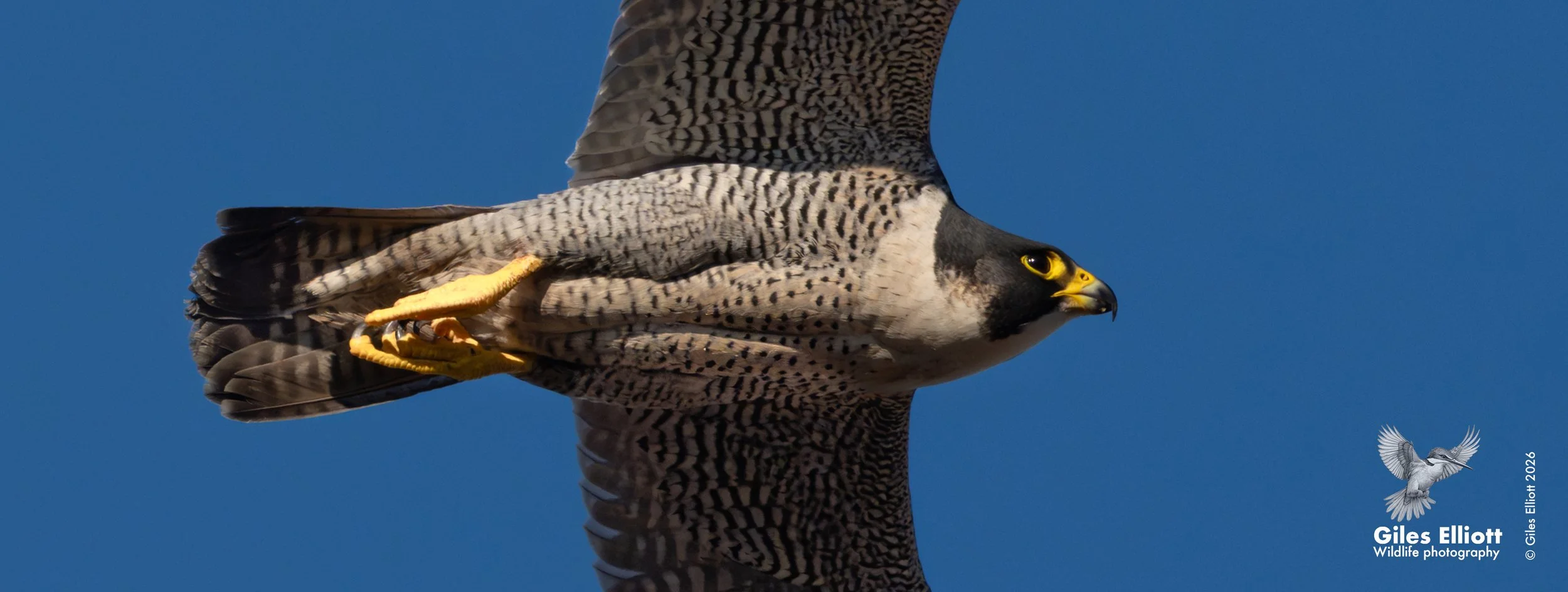
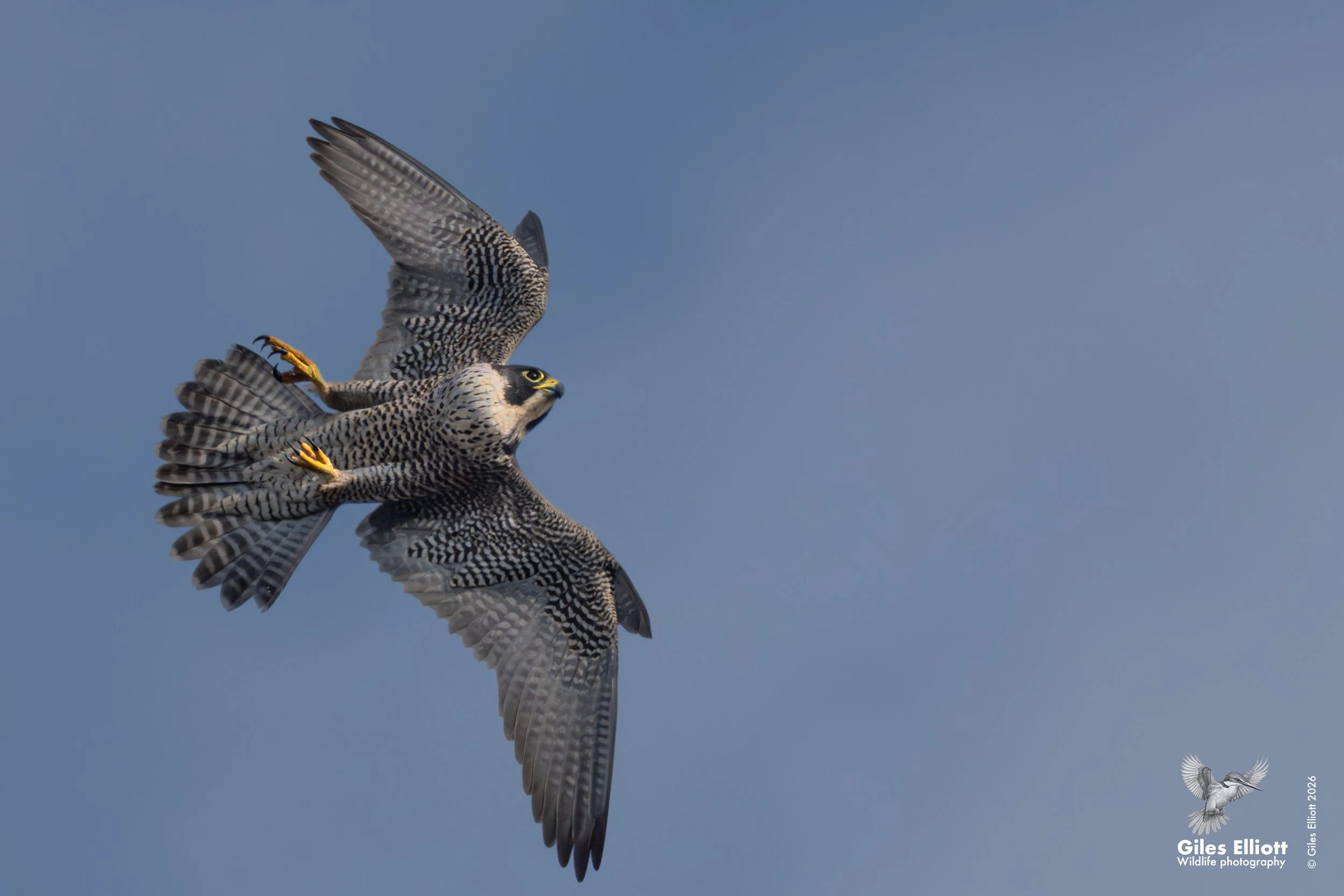
I will update this page with new shots as time goes on, and their story continues. It has given me great pleasure to find these incredible birds on my doorstep.
It has been a delight that so many people have stopped and asked what I am photographing. Universally people have been amazed and excited to know these birds have made a home in the heart of Windsor.
It is easy to be depressed by the state of nature and wildlife in the UK, but these birds are testament to how adaptable wildlife can be. Hopefully some of the people who now know the peregrines are here will be inspired to help protect nature more generally.