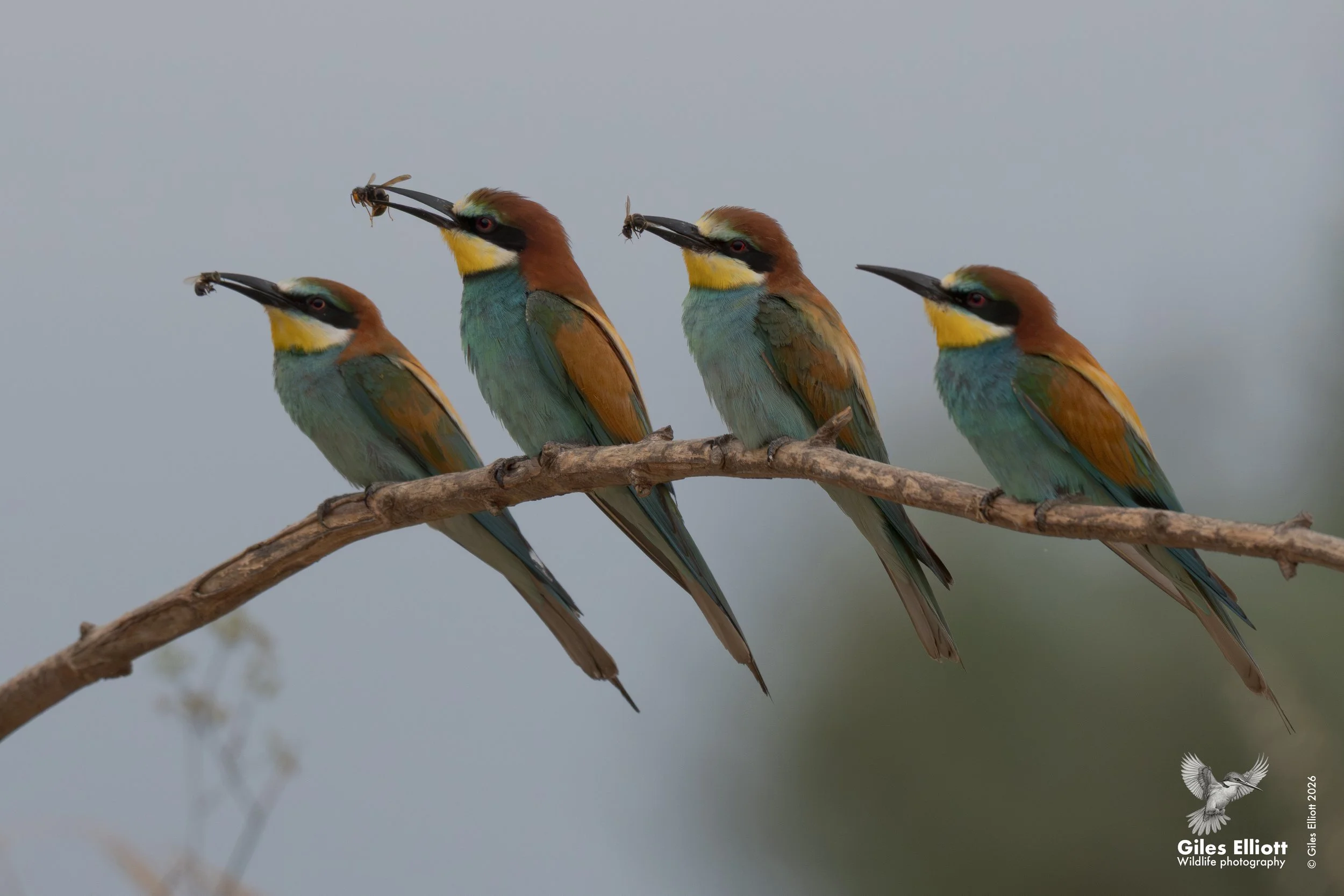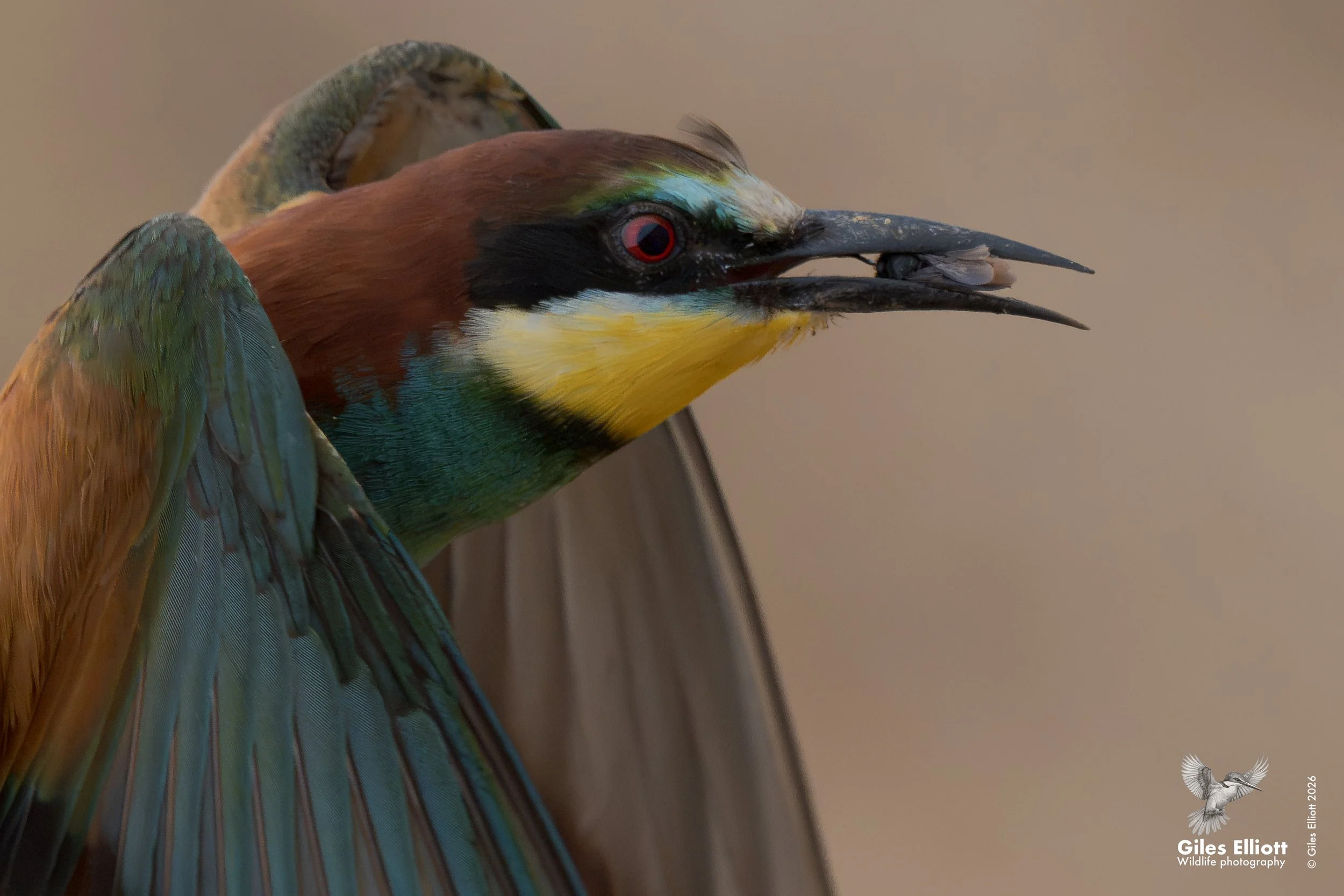
European bee-eaters
May, June July 2026
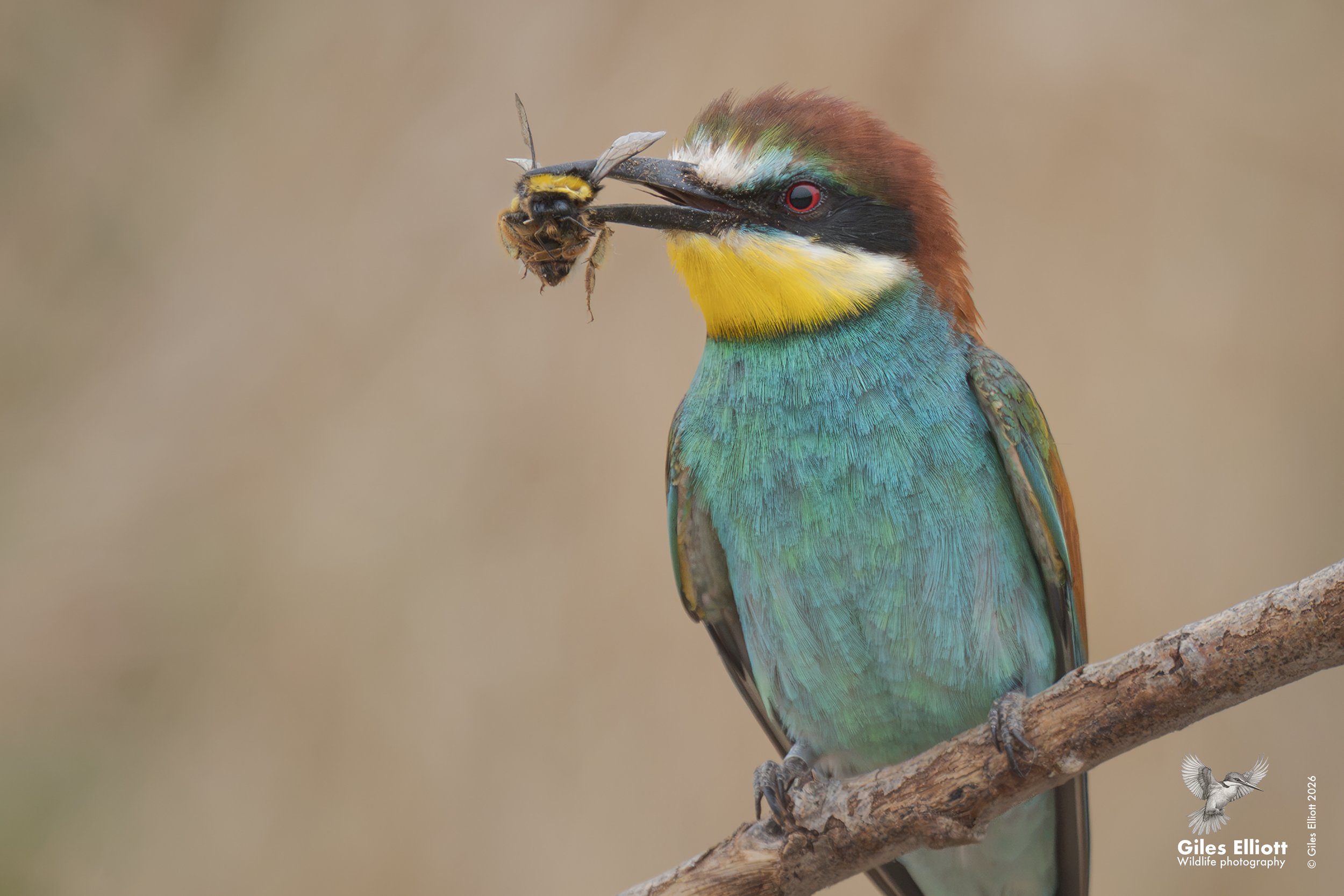
Bee-eaters around the world are some of the most spectacular and colourful birds a photographer can encounter.
In Africa I have been lucky enough to photograph many different species of bee-eater, like the Southern Carmine bee-eaters I travelled to see in Namibia. They are always among my favourite shots of any safari trip.
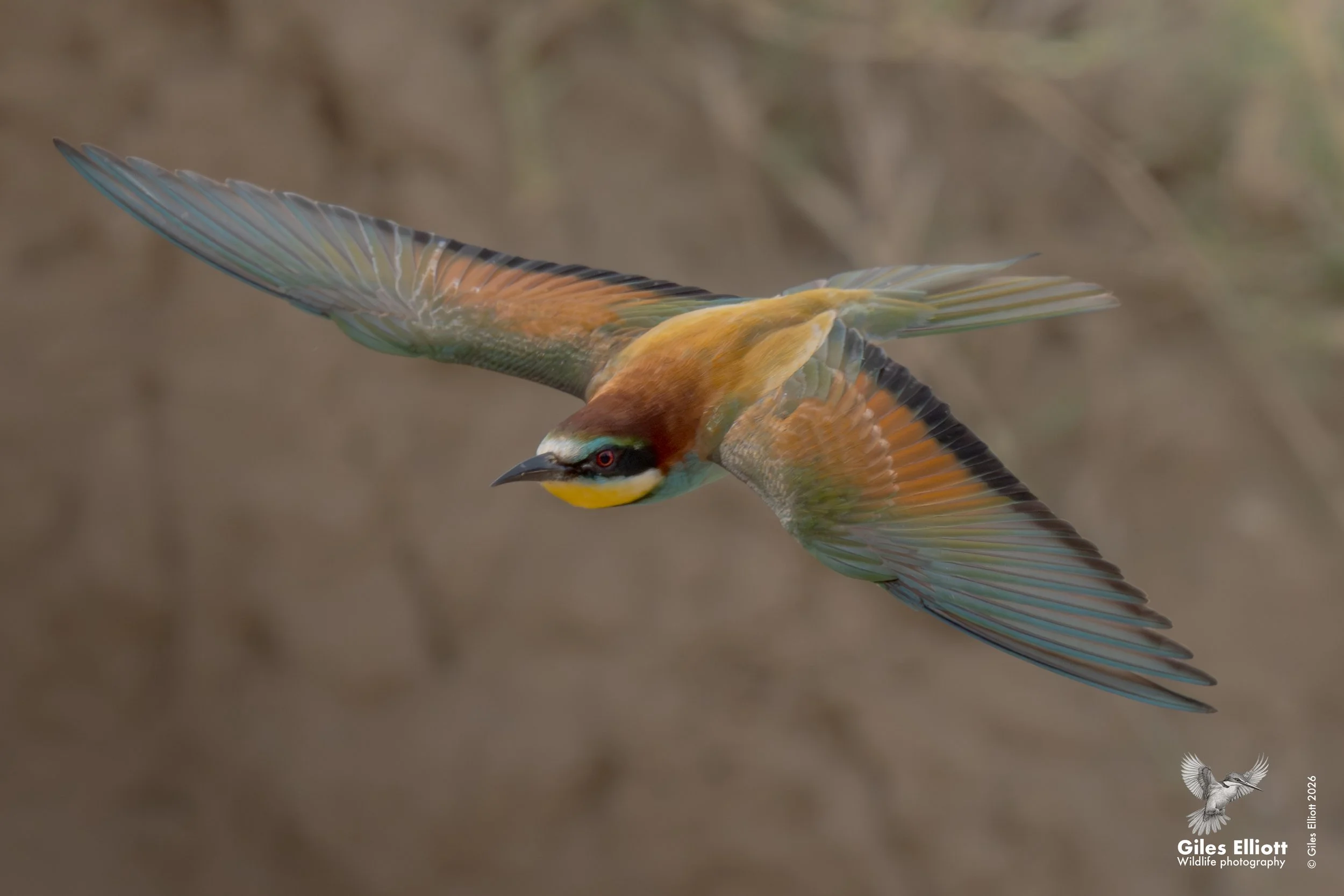
The European bee-eaters spend the Northern Hemisphere winters in Southern Africa, and their call and flash of colours can be heard and seen alongside their African cousins, but they seem not to settle and are constantly on the wing, making shots tricky.
So, I set out to find a European bee-eater nesting colony in Portugal. For the last few years this has been a focus for my summer trips in Portugal - and I am delighted that in 2026 I have been able to spend considerable time with a colony - from their arrival back from Africa, pairing up, mating and breeding.
The story of their summer
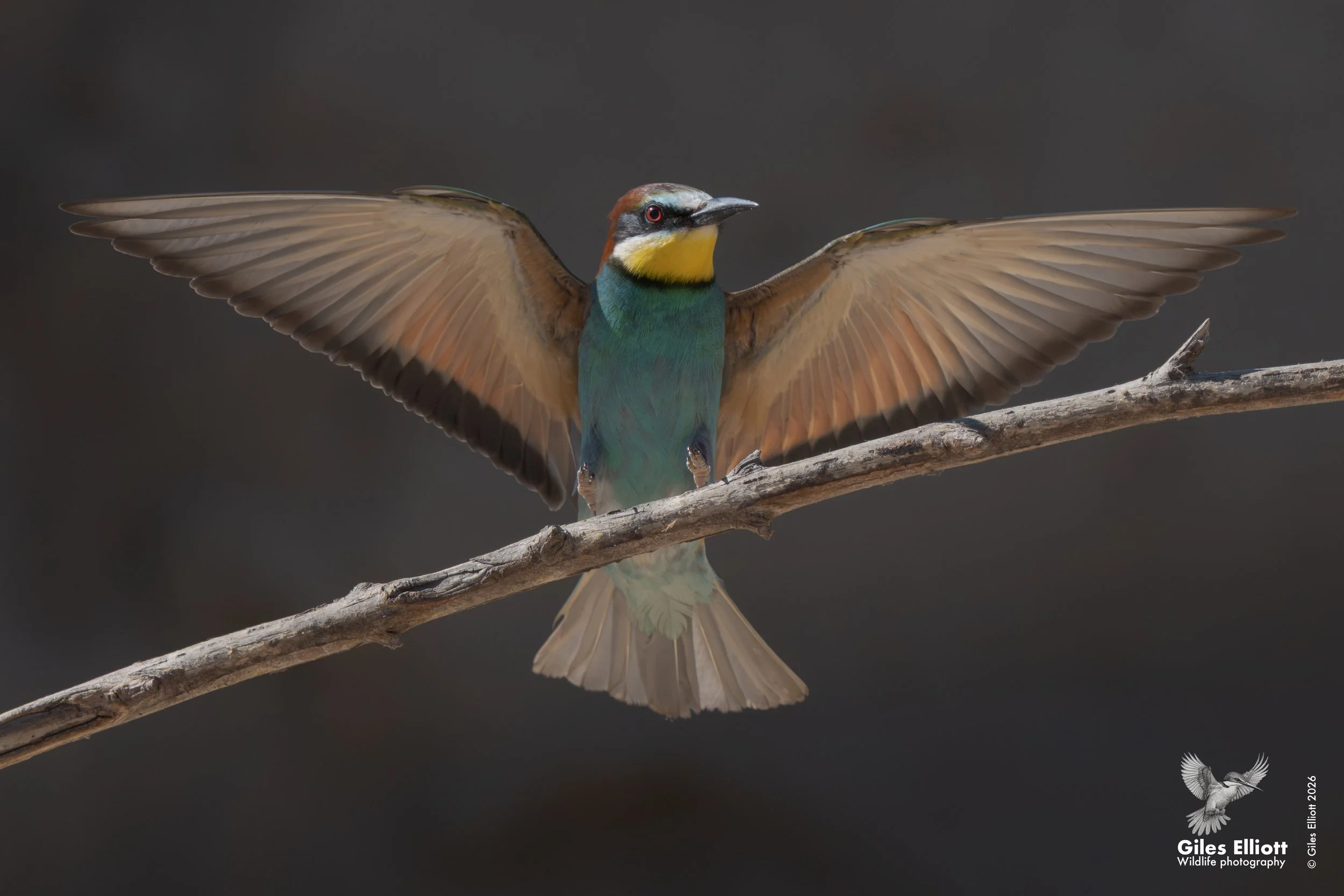
Showing off
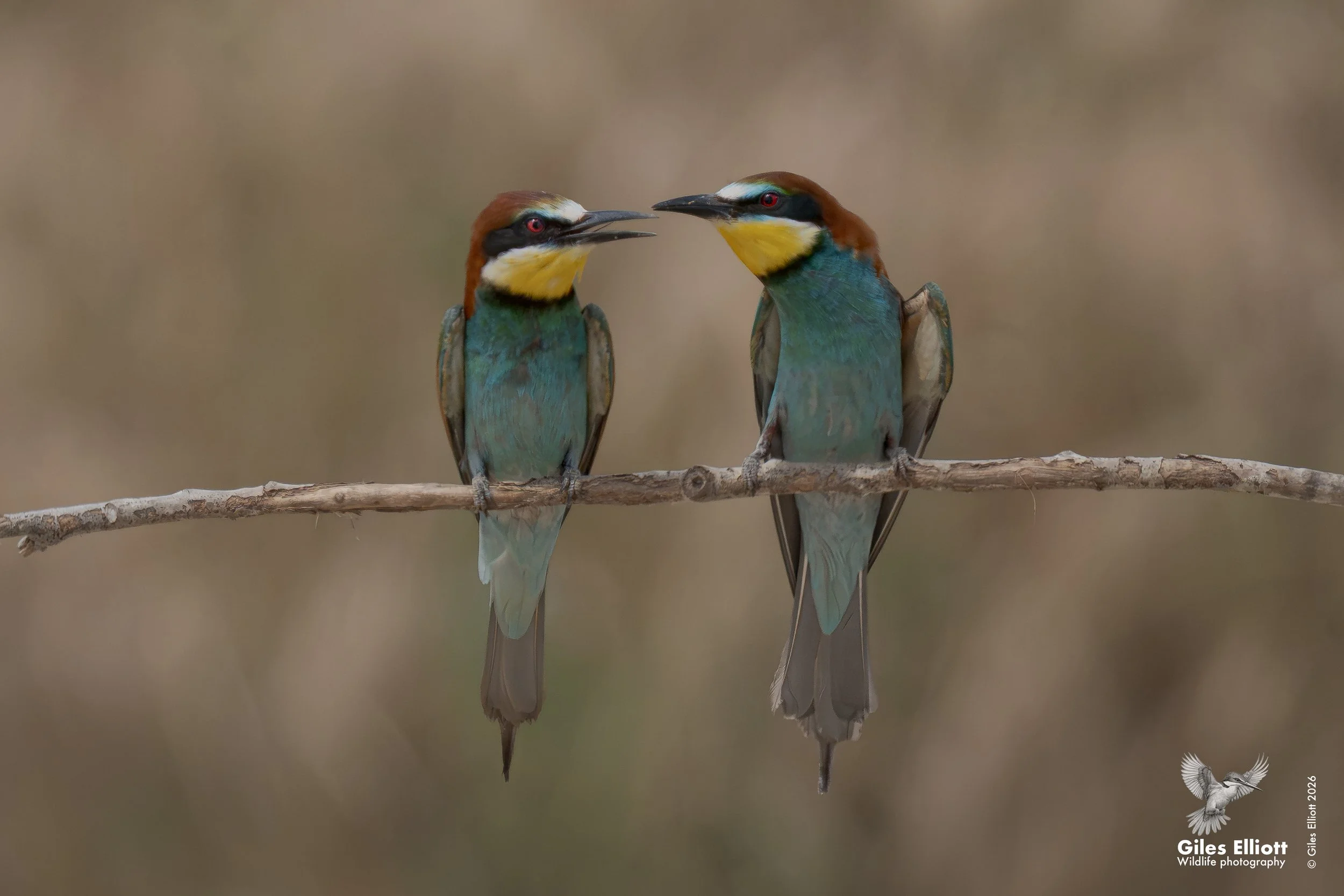
Getting to know each other
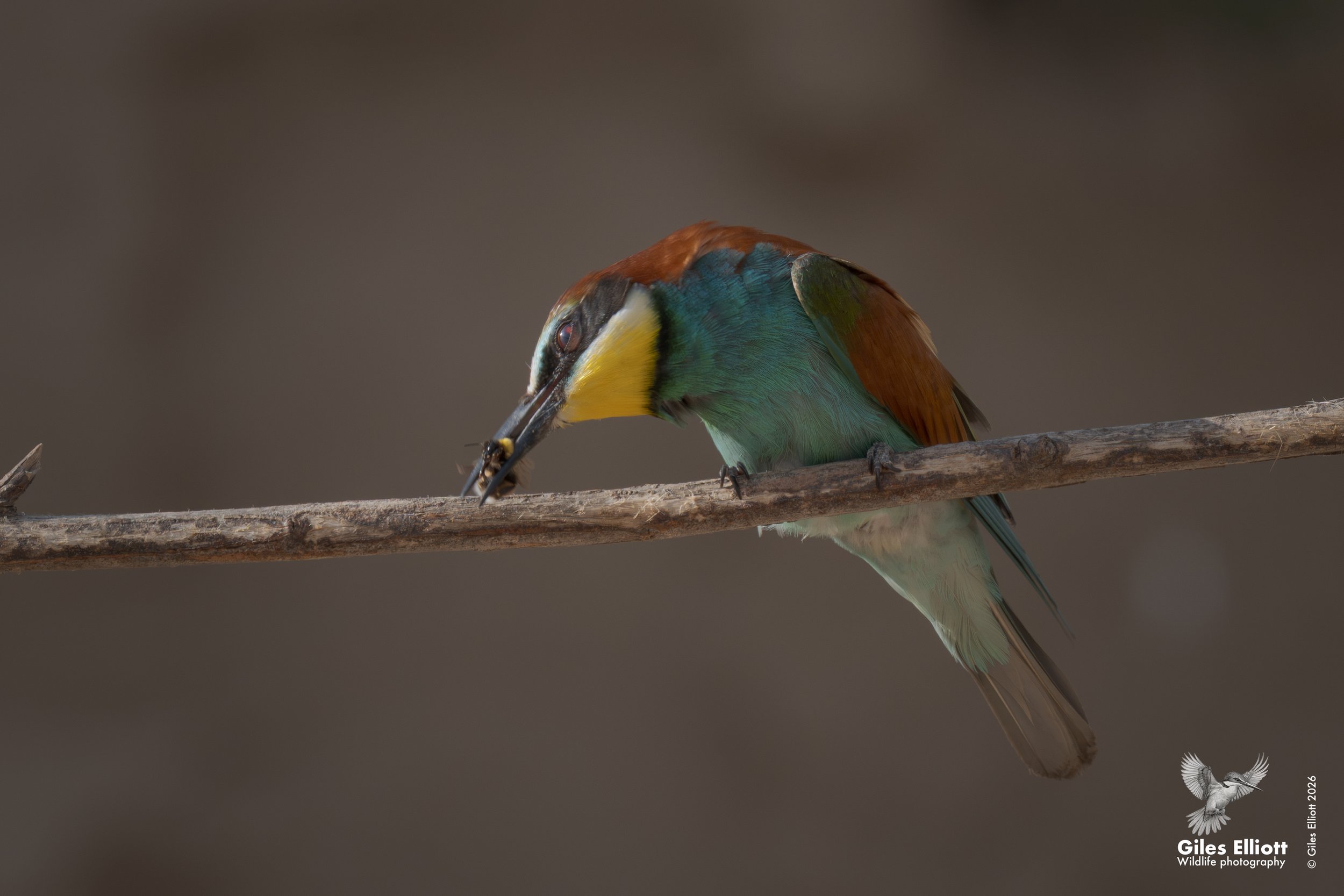
Tenderising supper
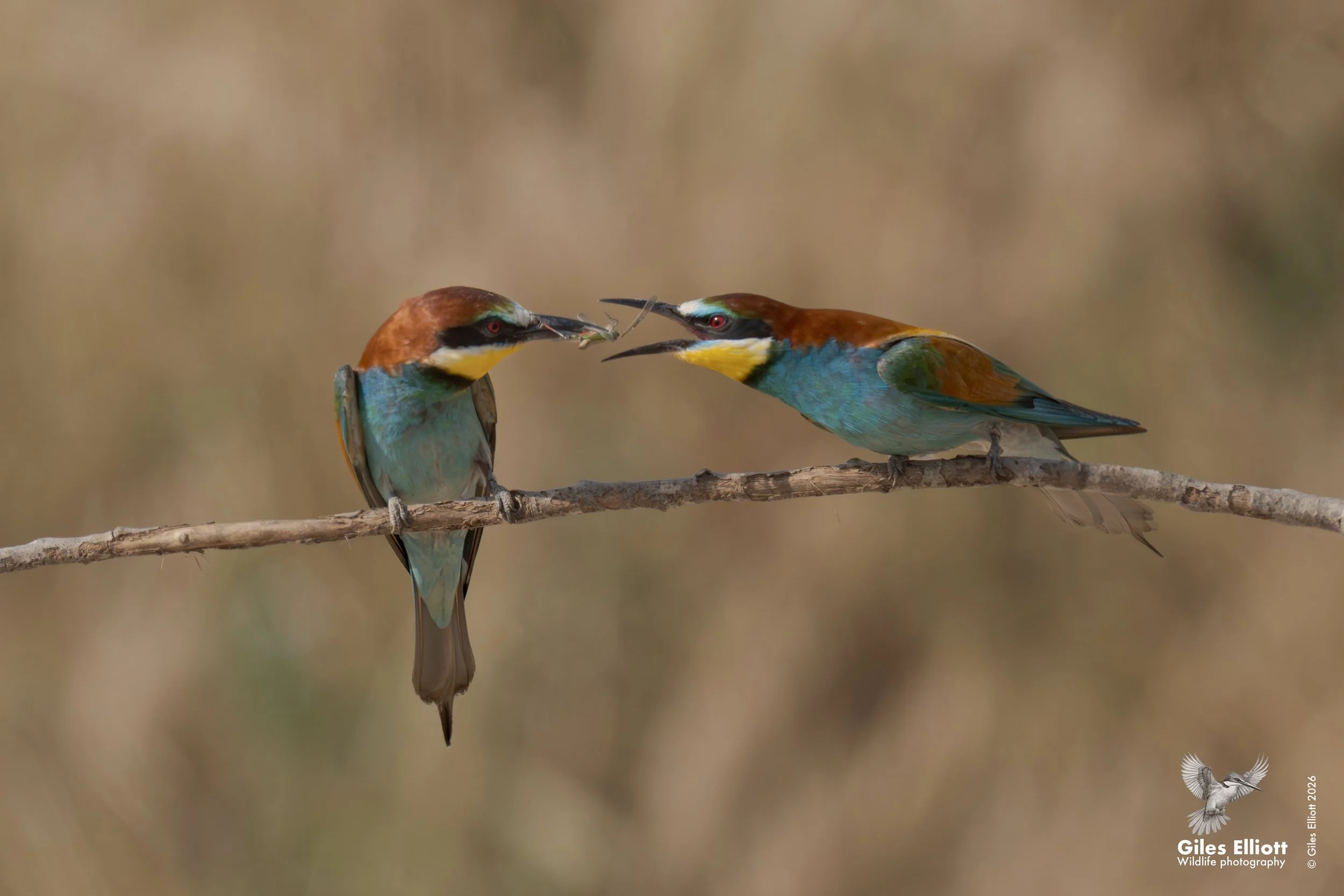
Pairing up
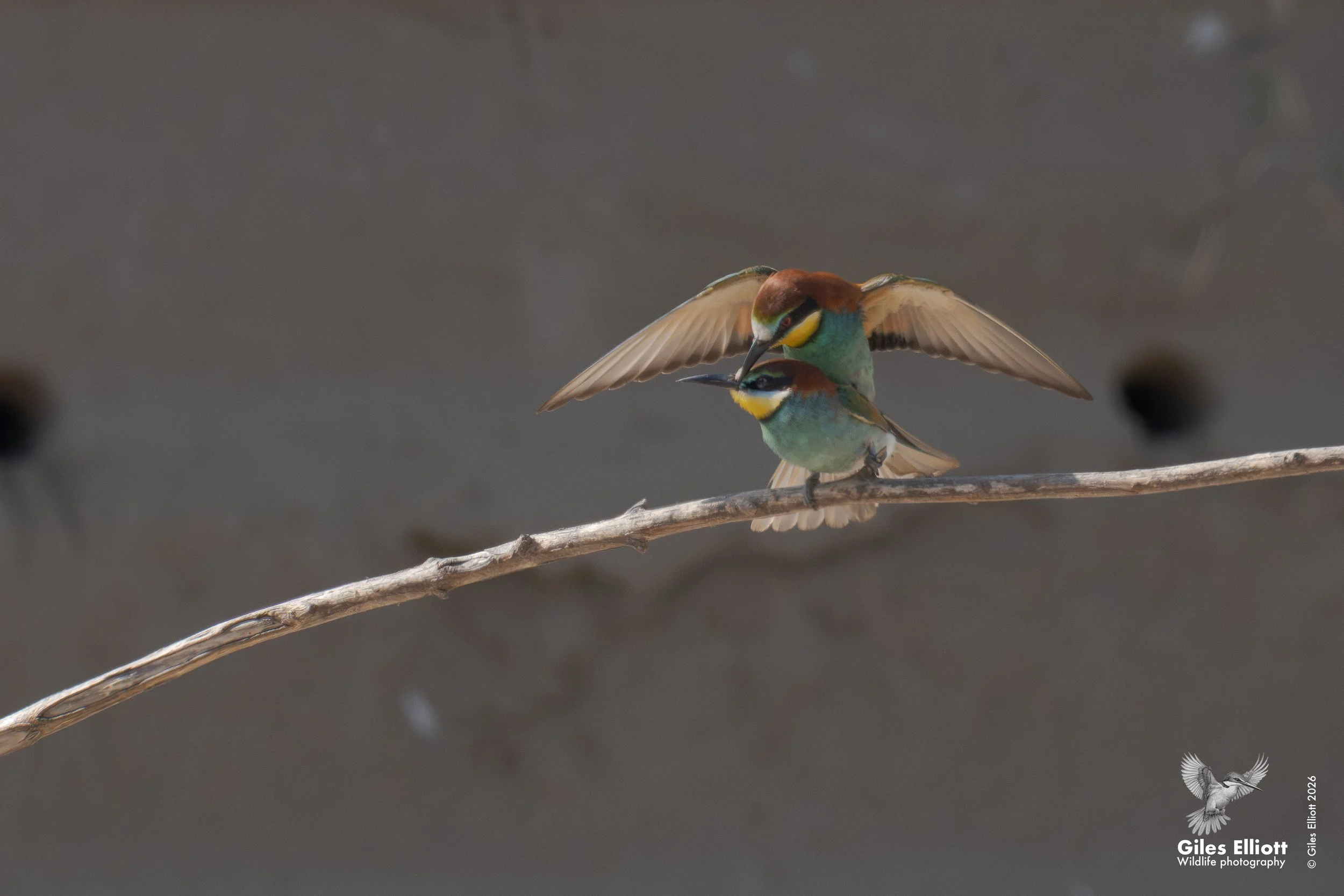
Mounting up
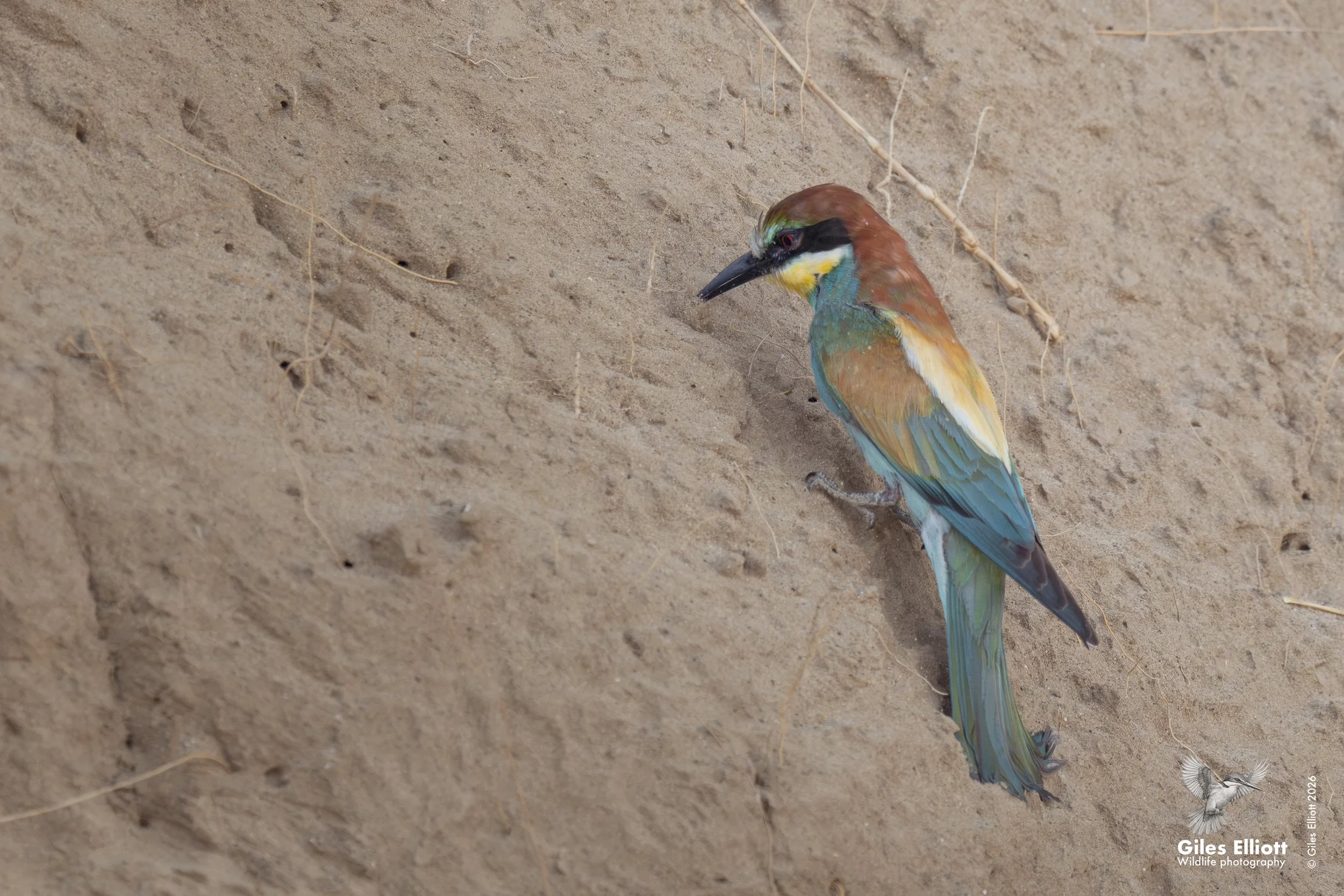
Nest building
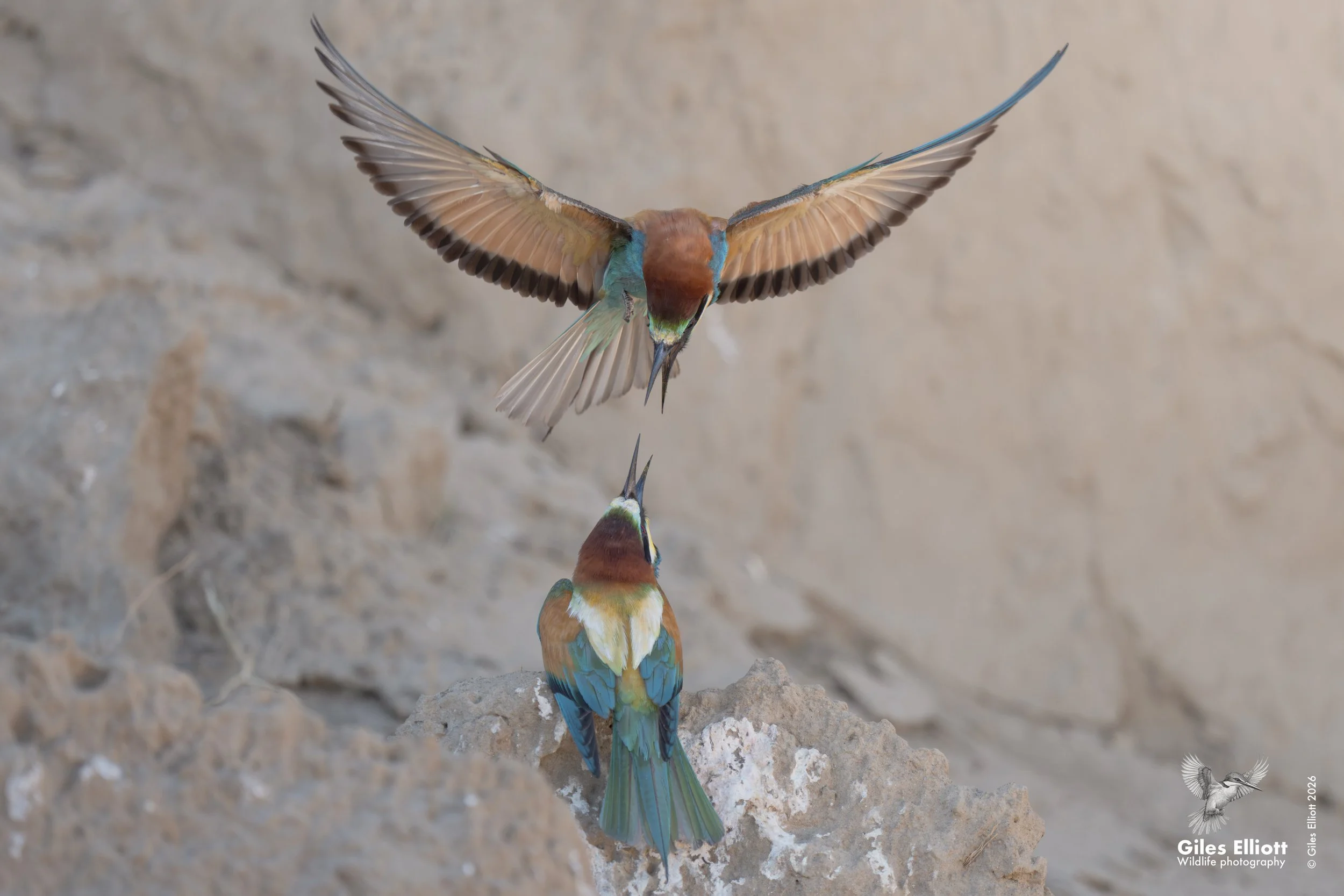
Falling out
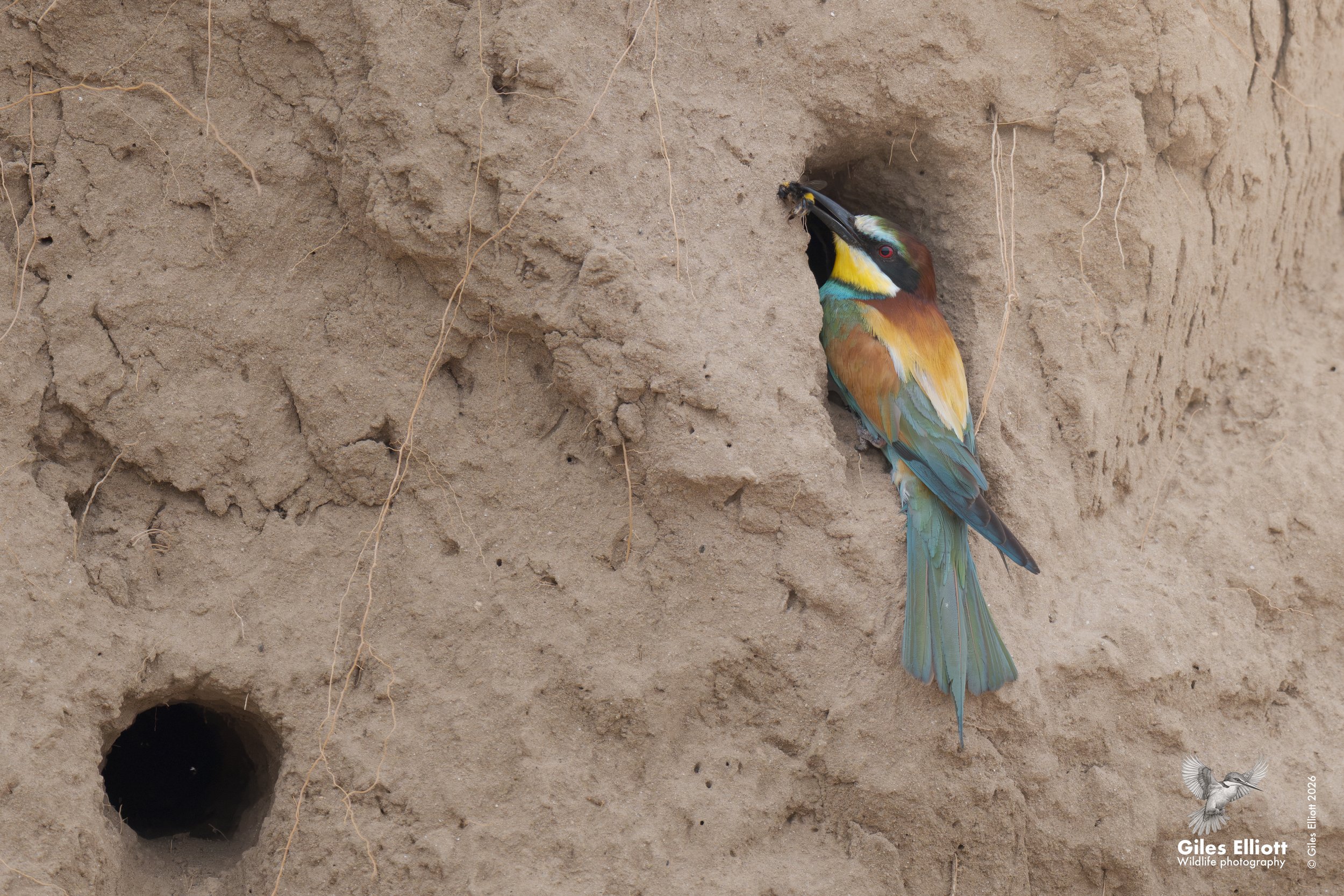
Deliveroo
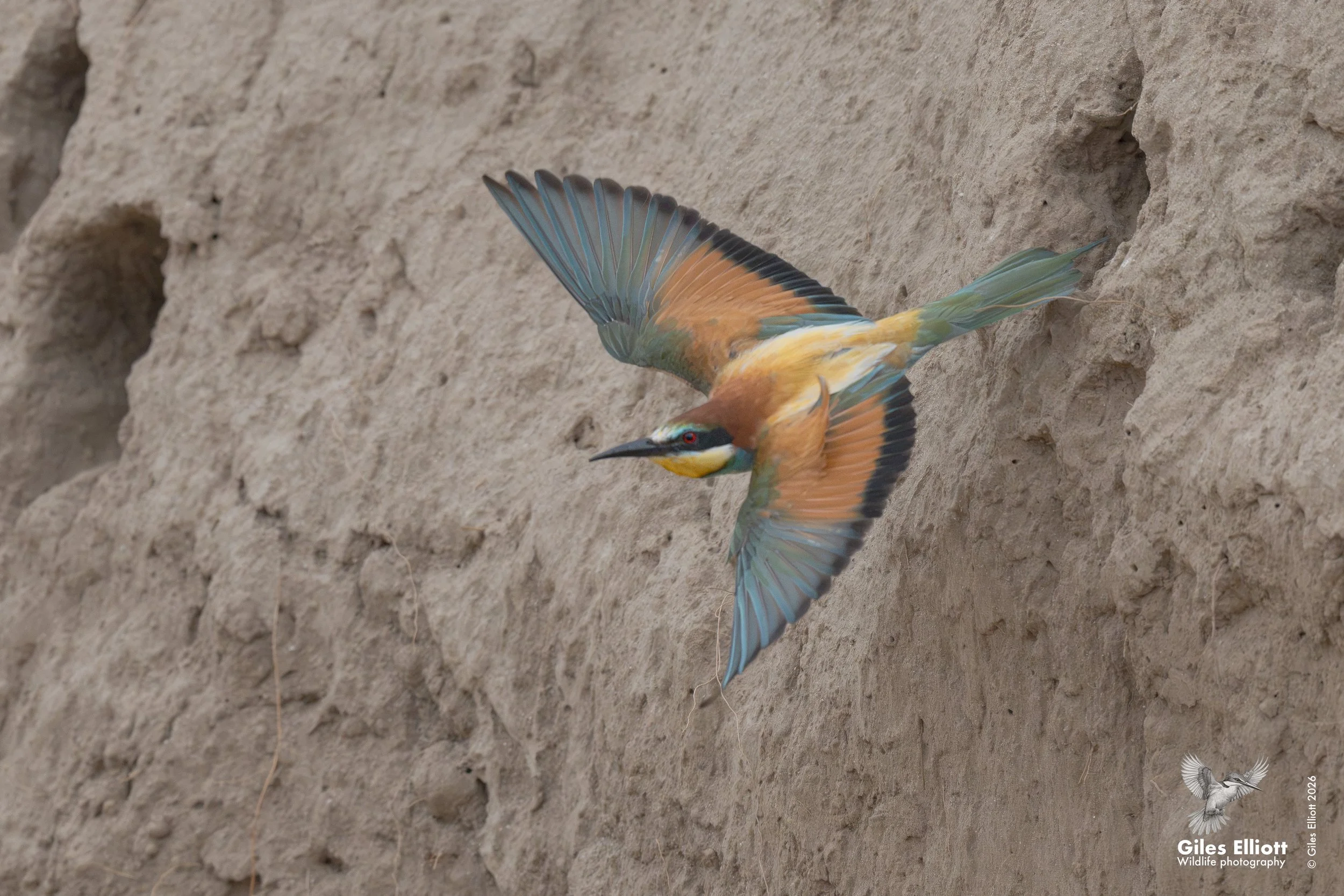
Off for more food
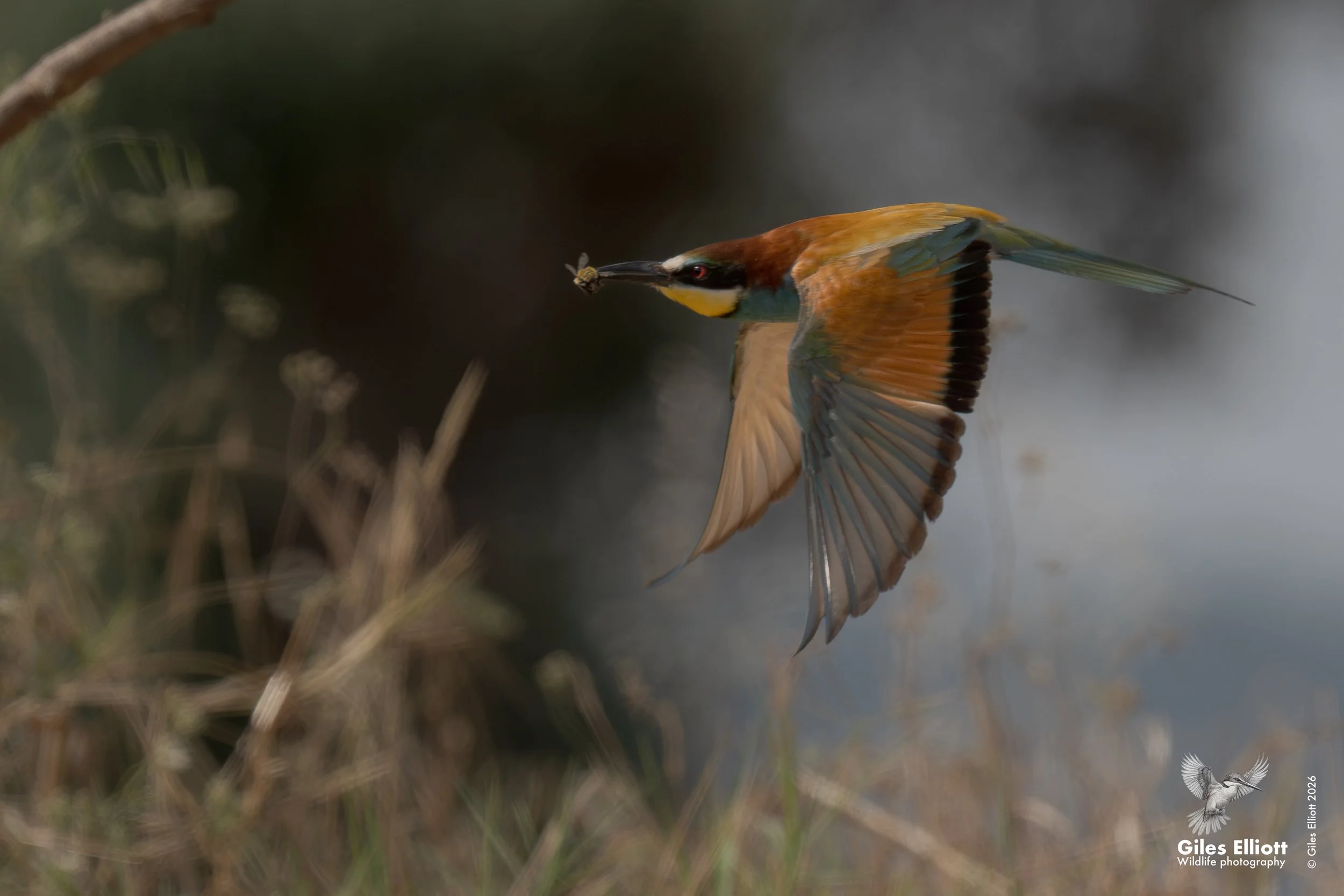
Back to feed the family
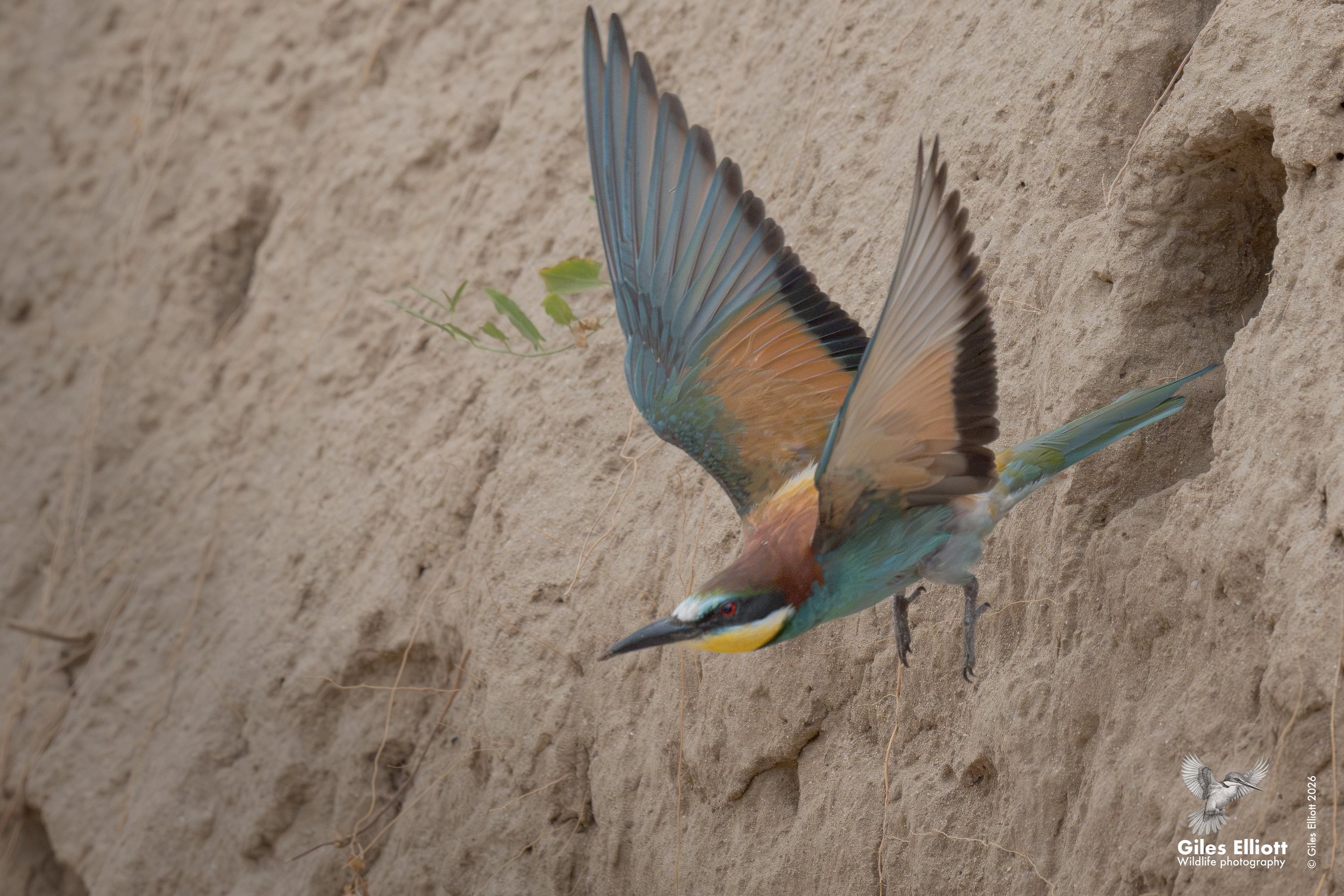
And again...
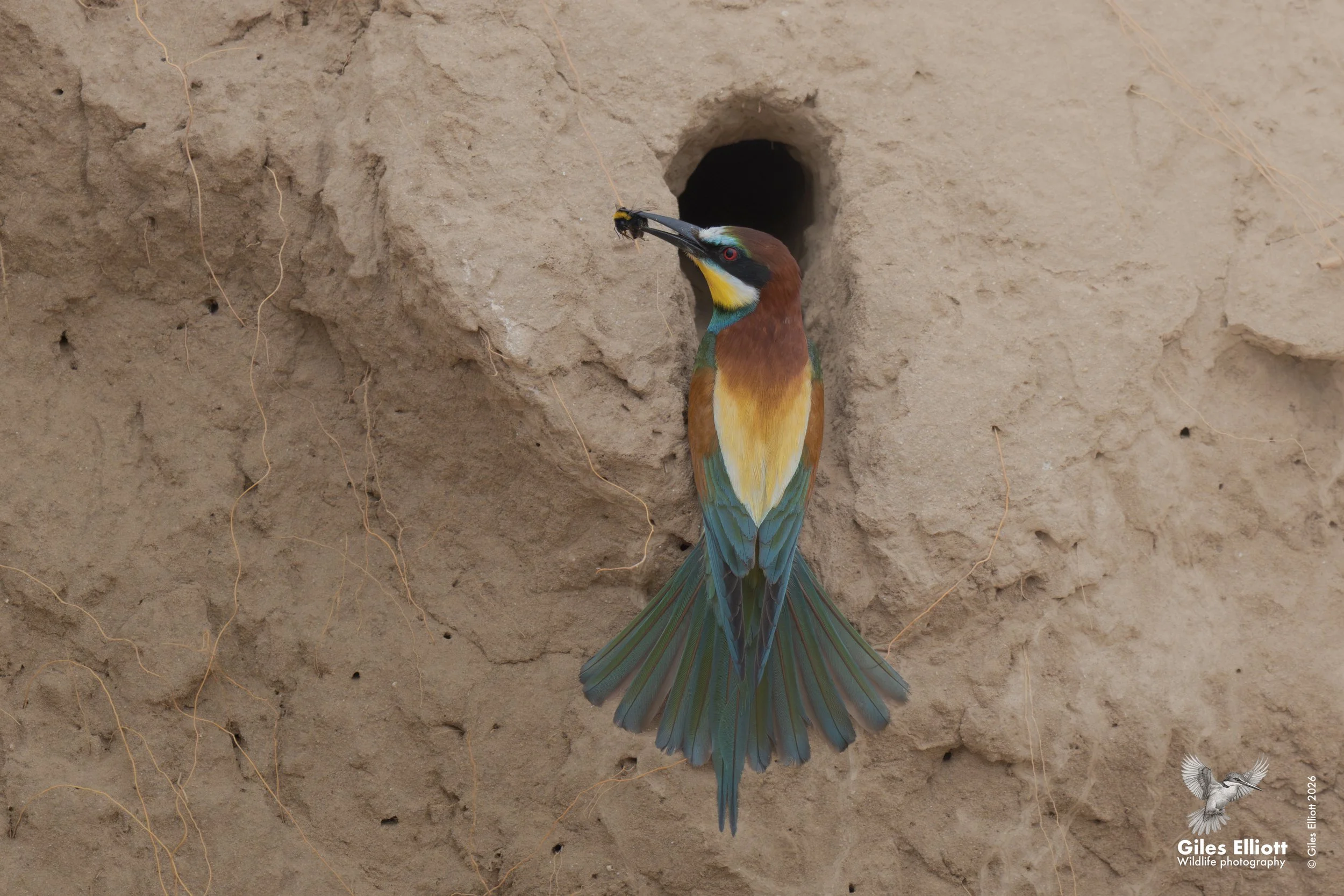
And again...
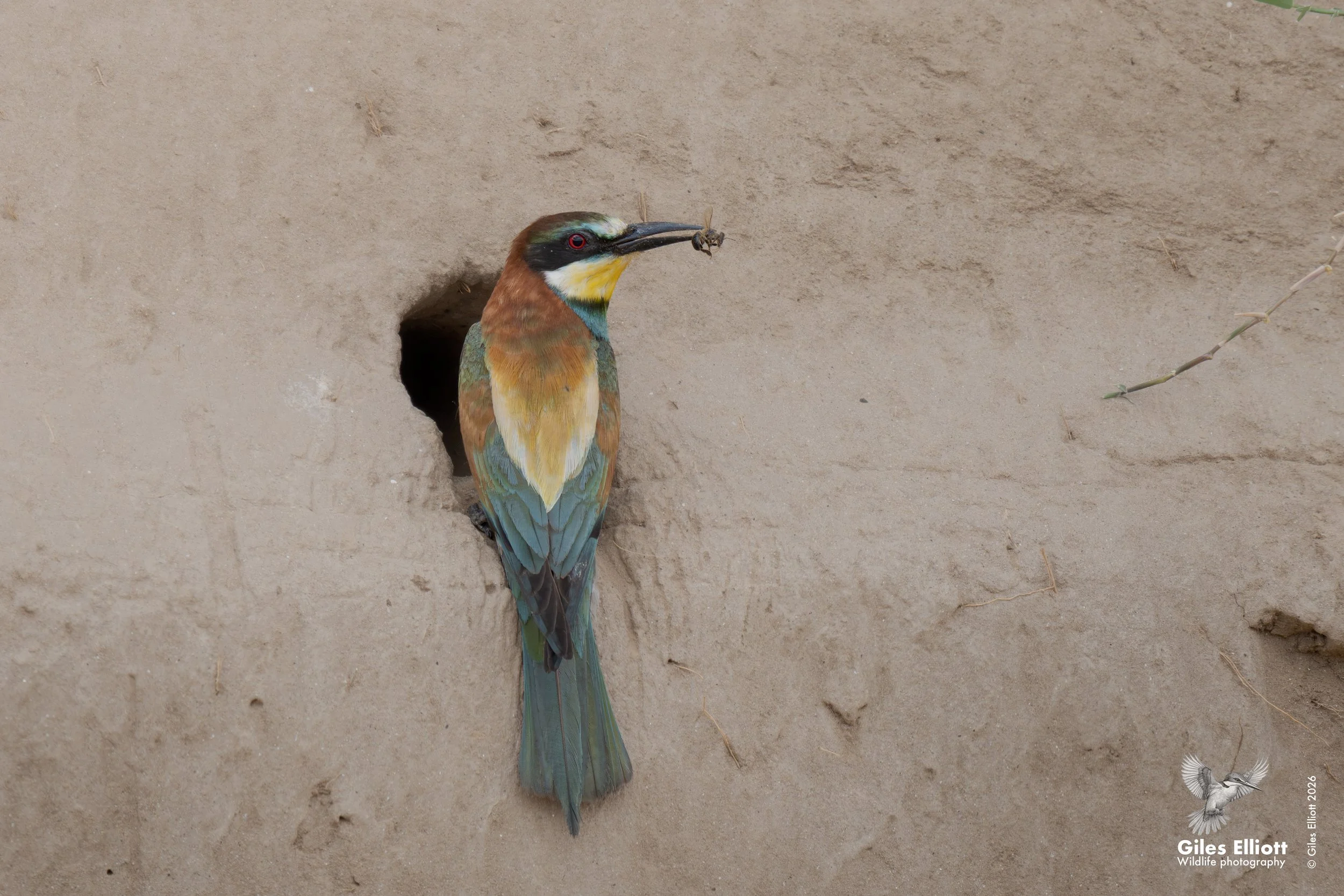
And again...
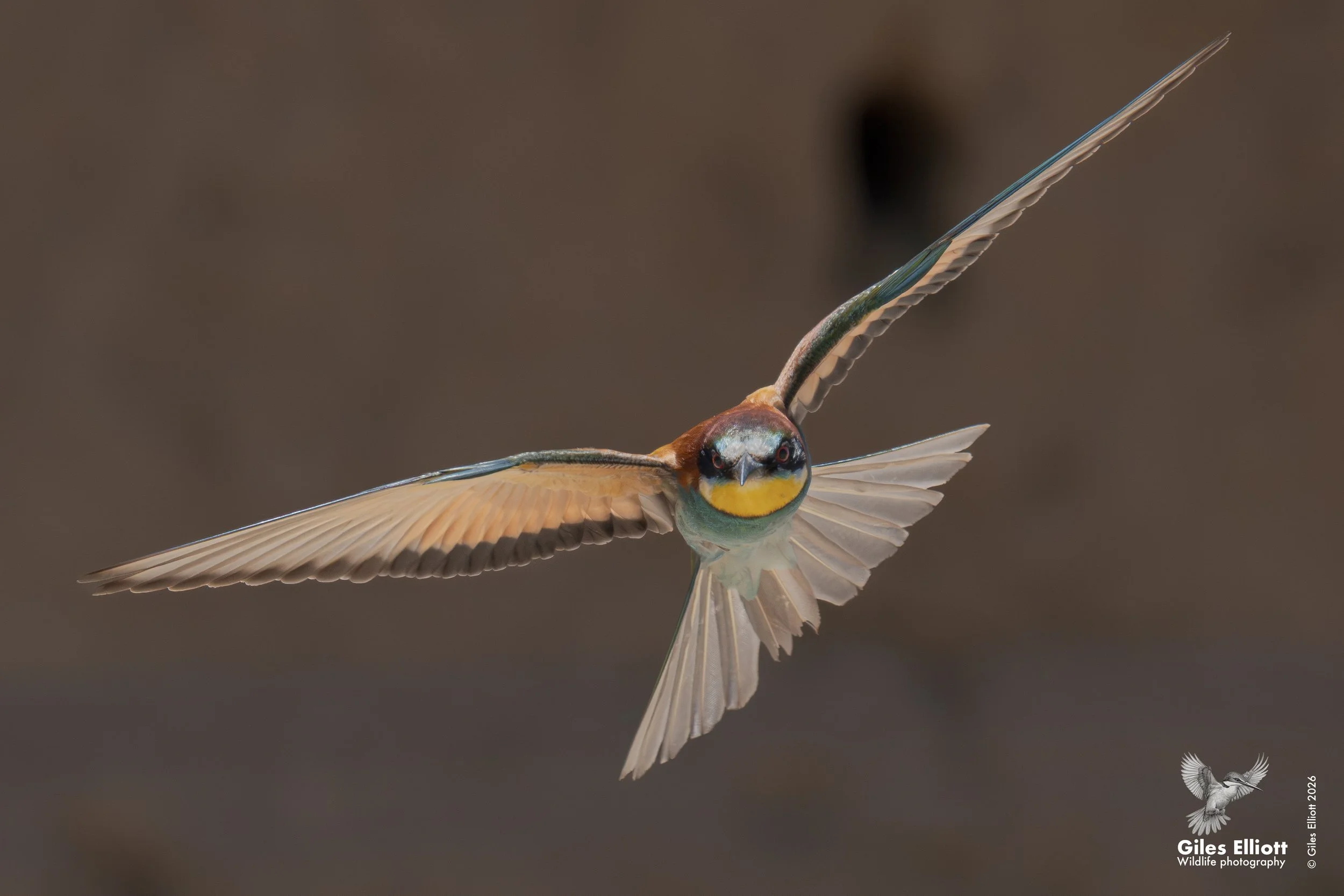
Off again...
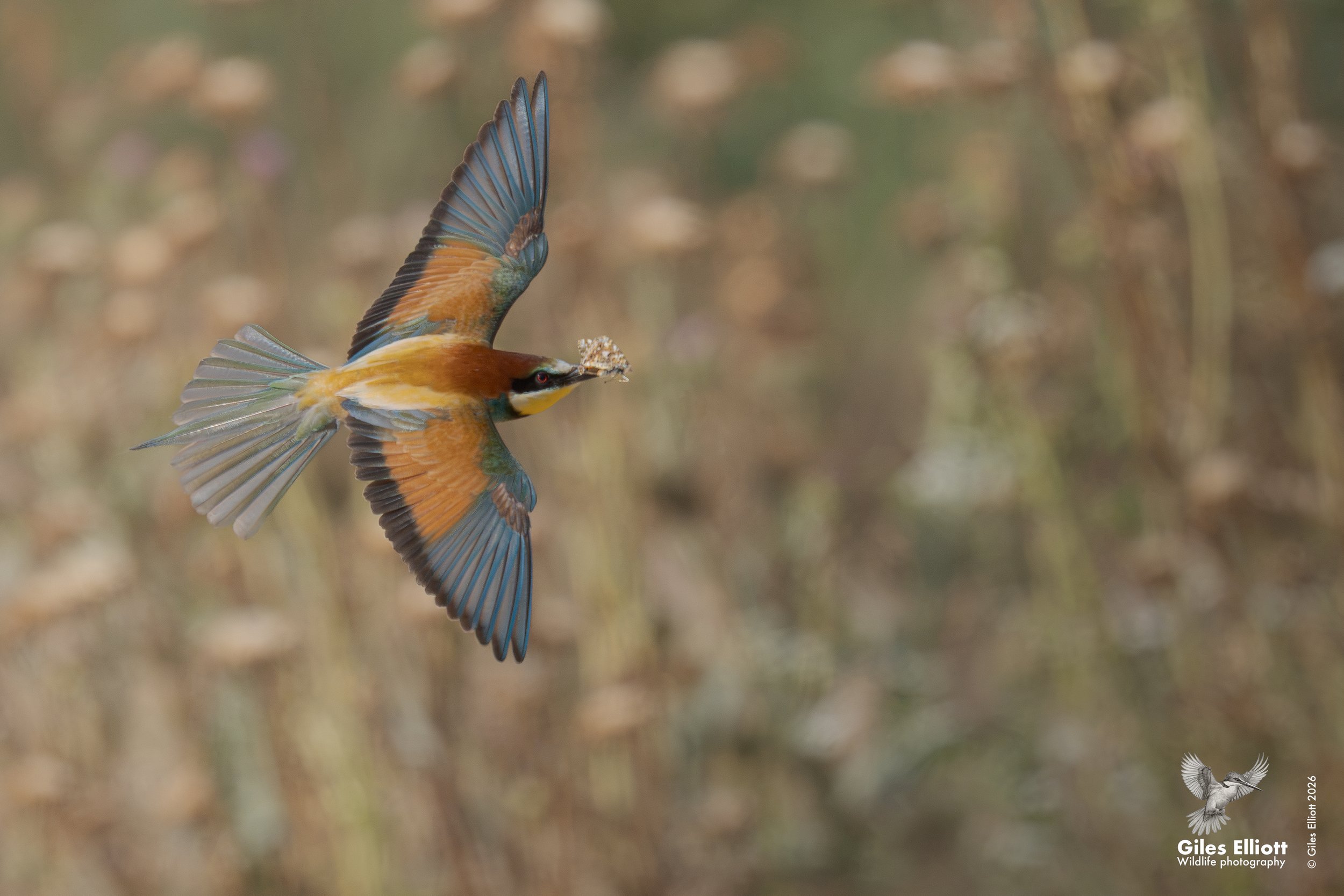
More food...
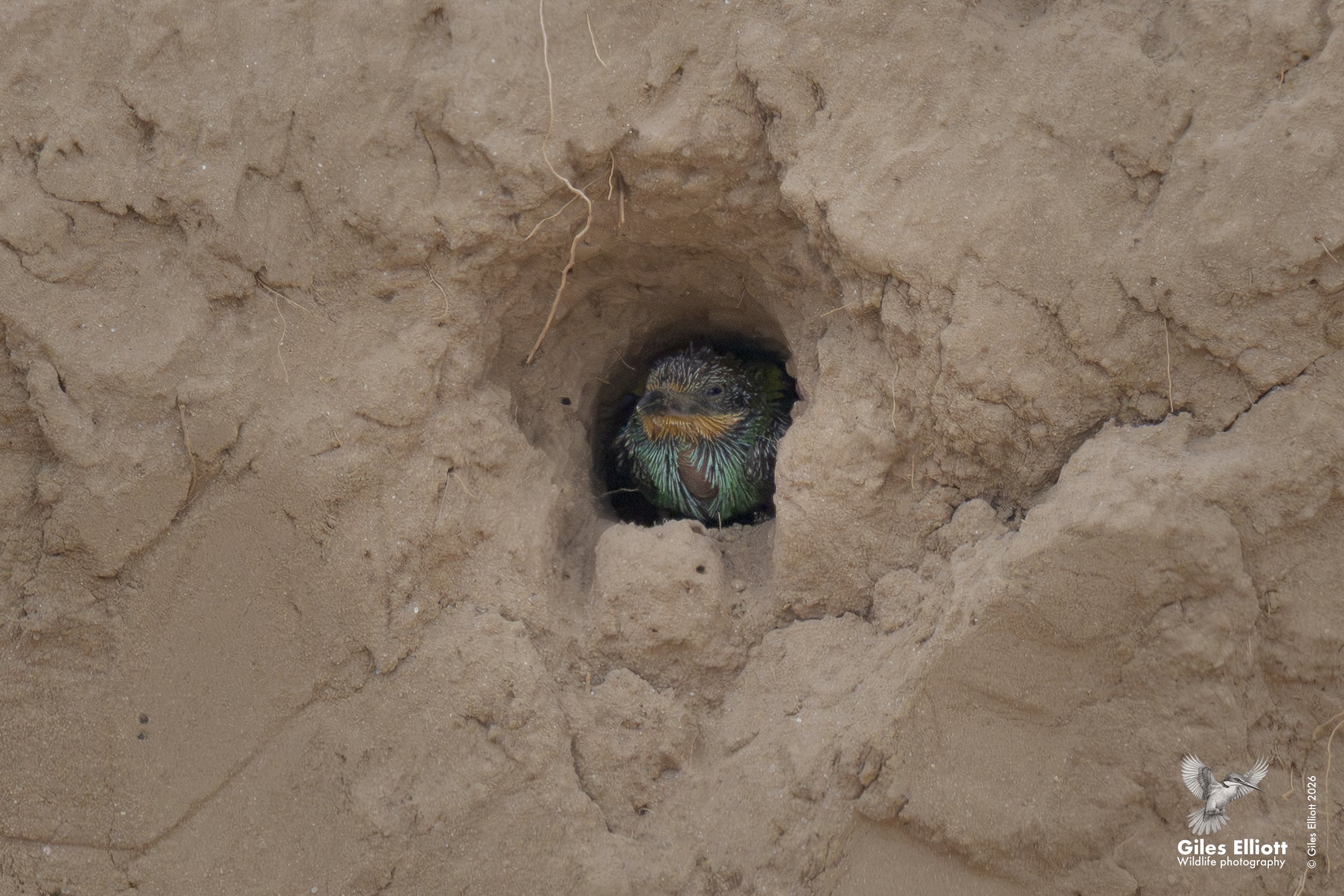
Growing feathers
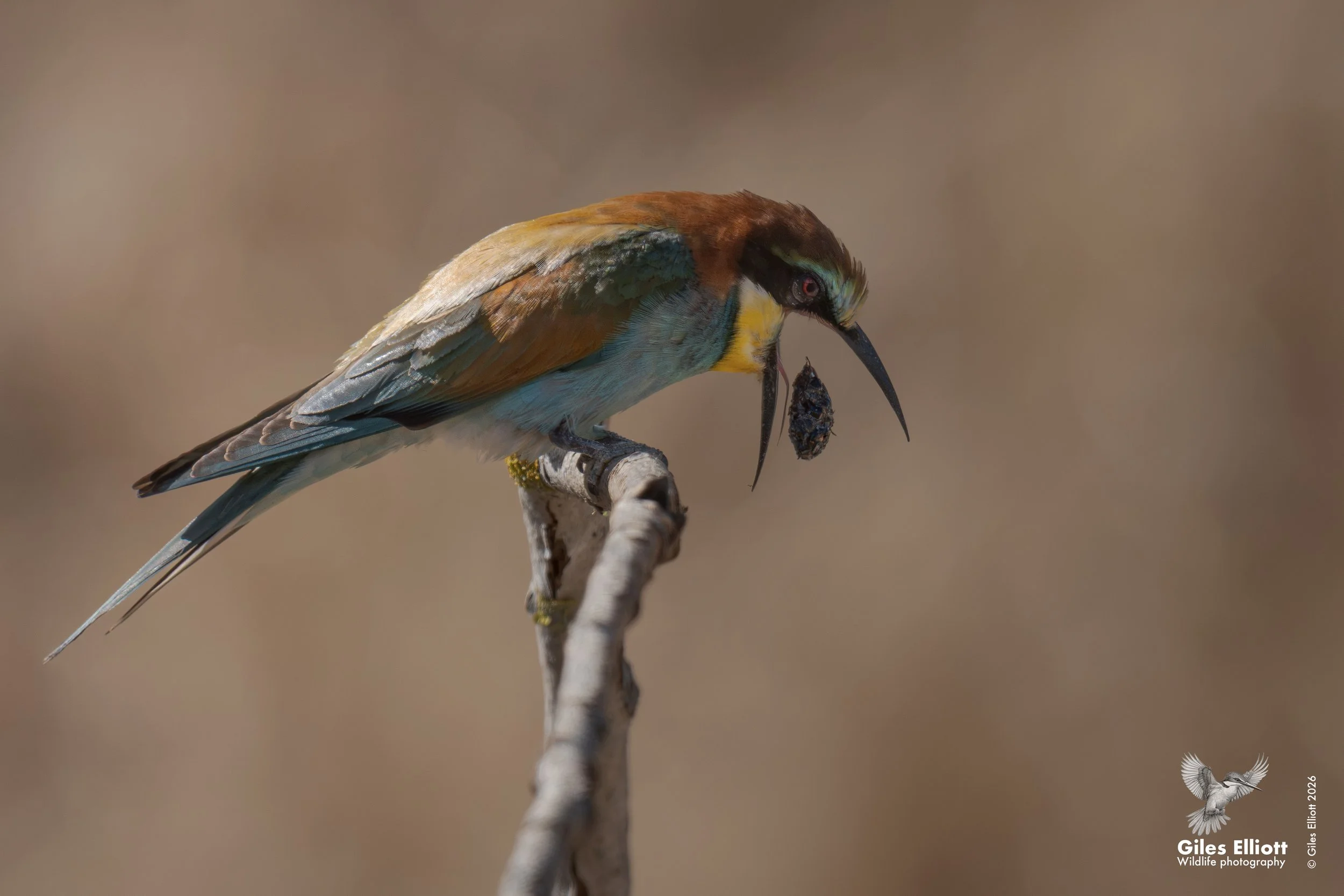
Coughing up
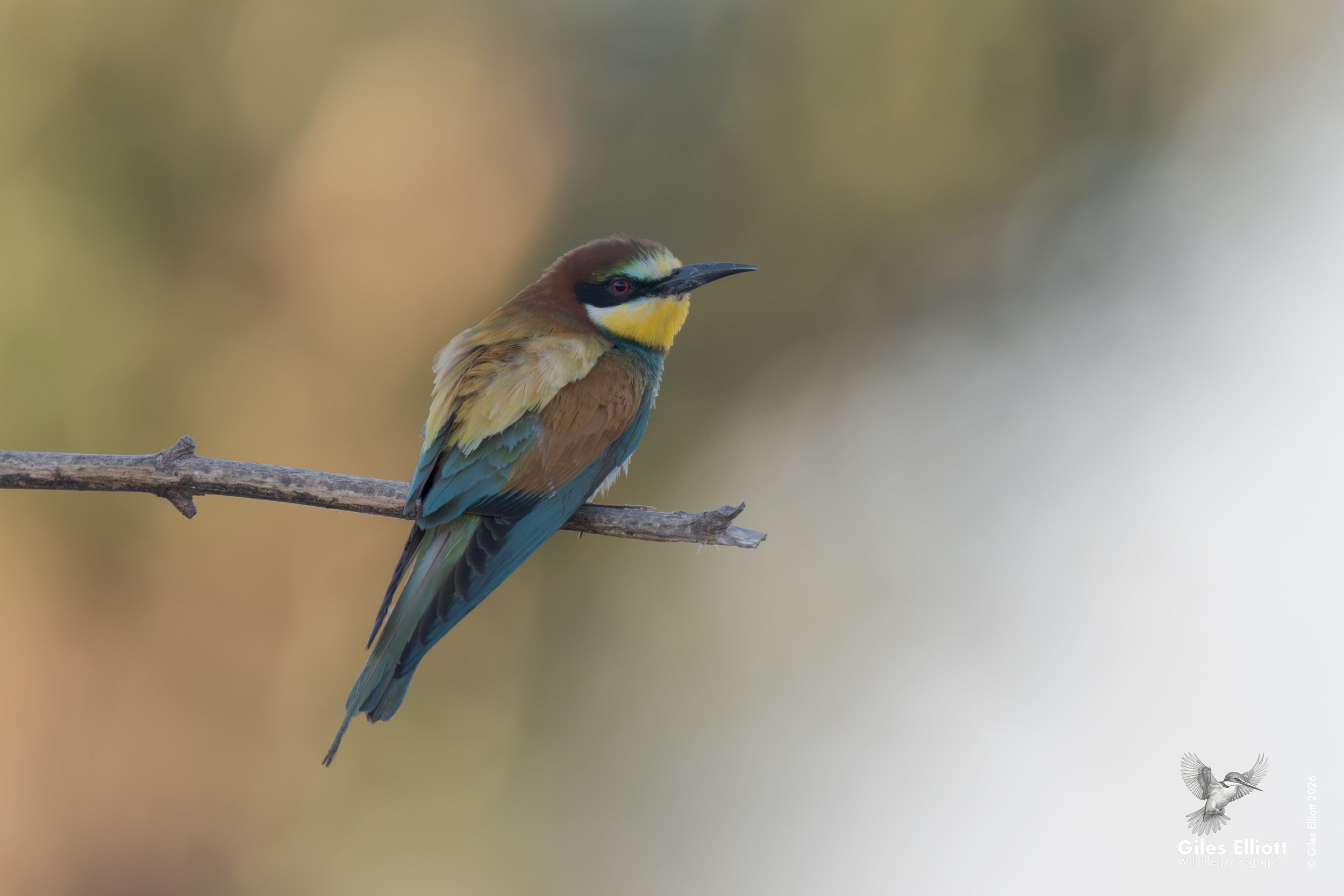
Just hanging
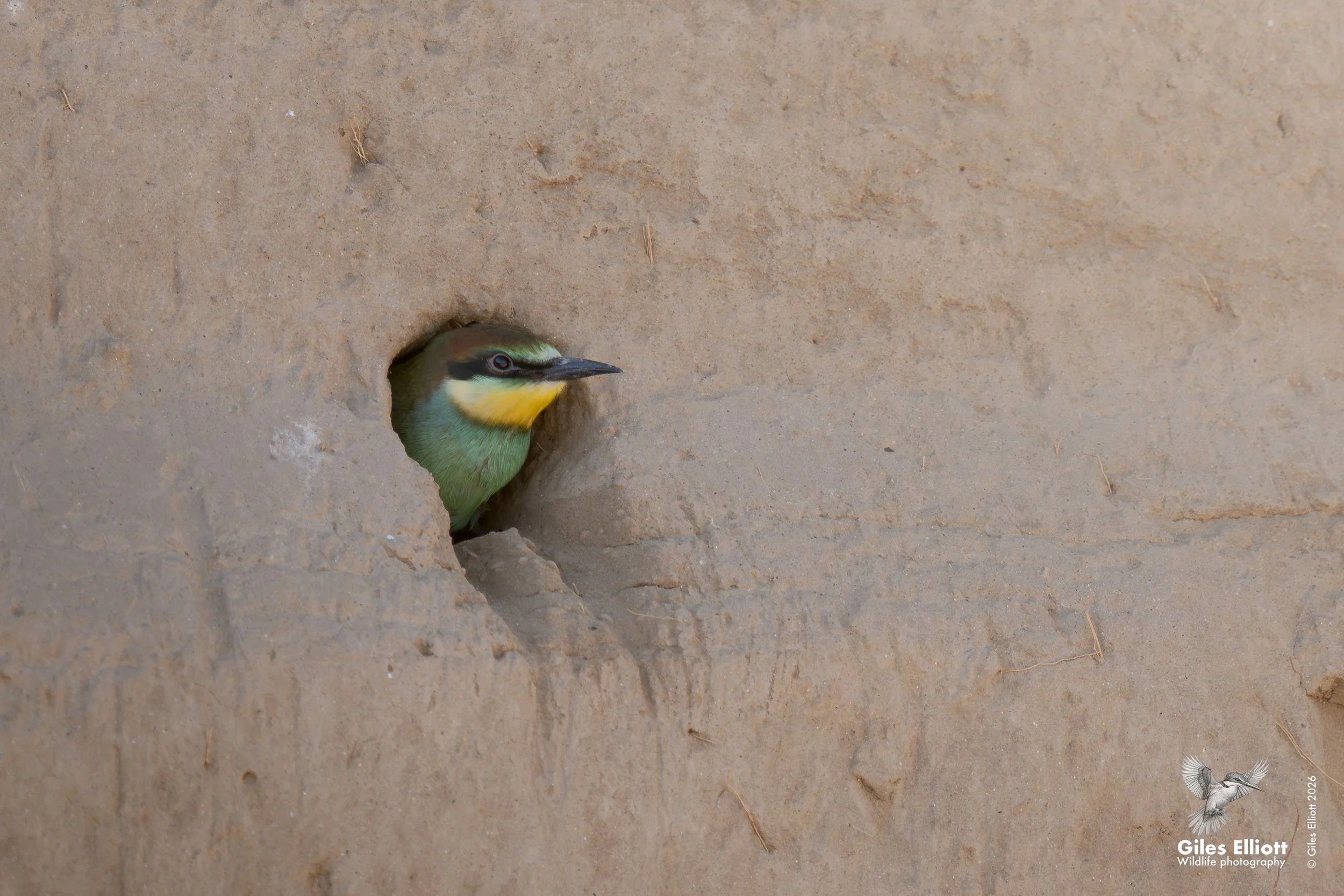
Looking around
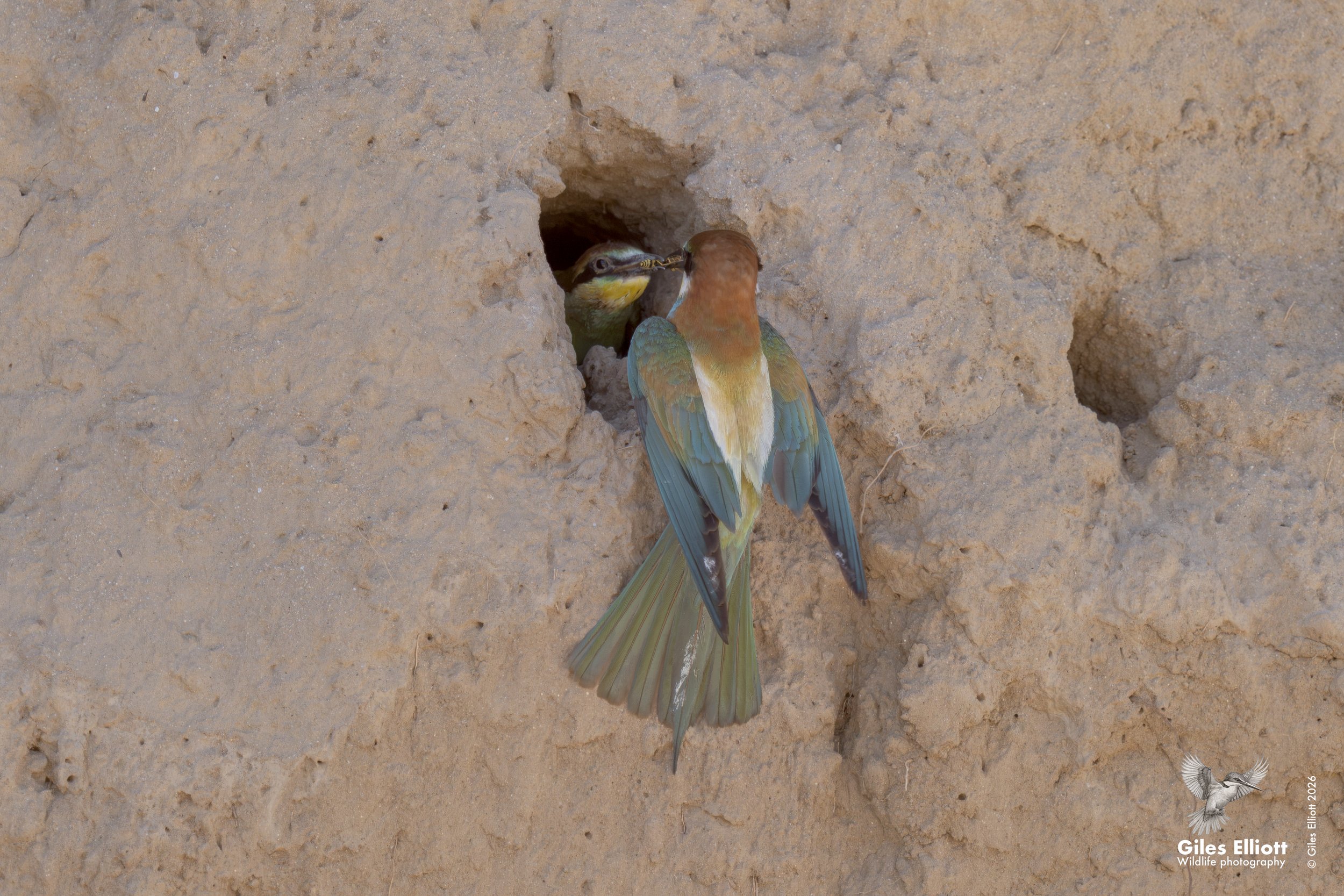
Coaxing out
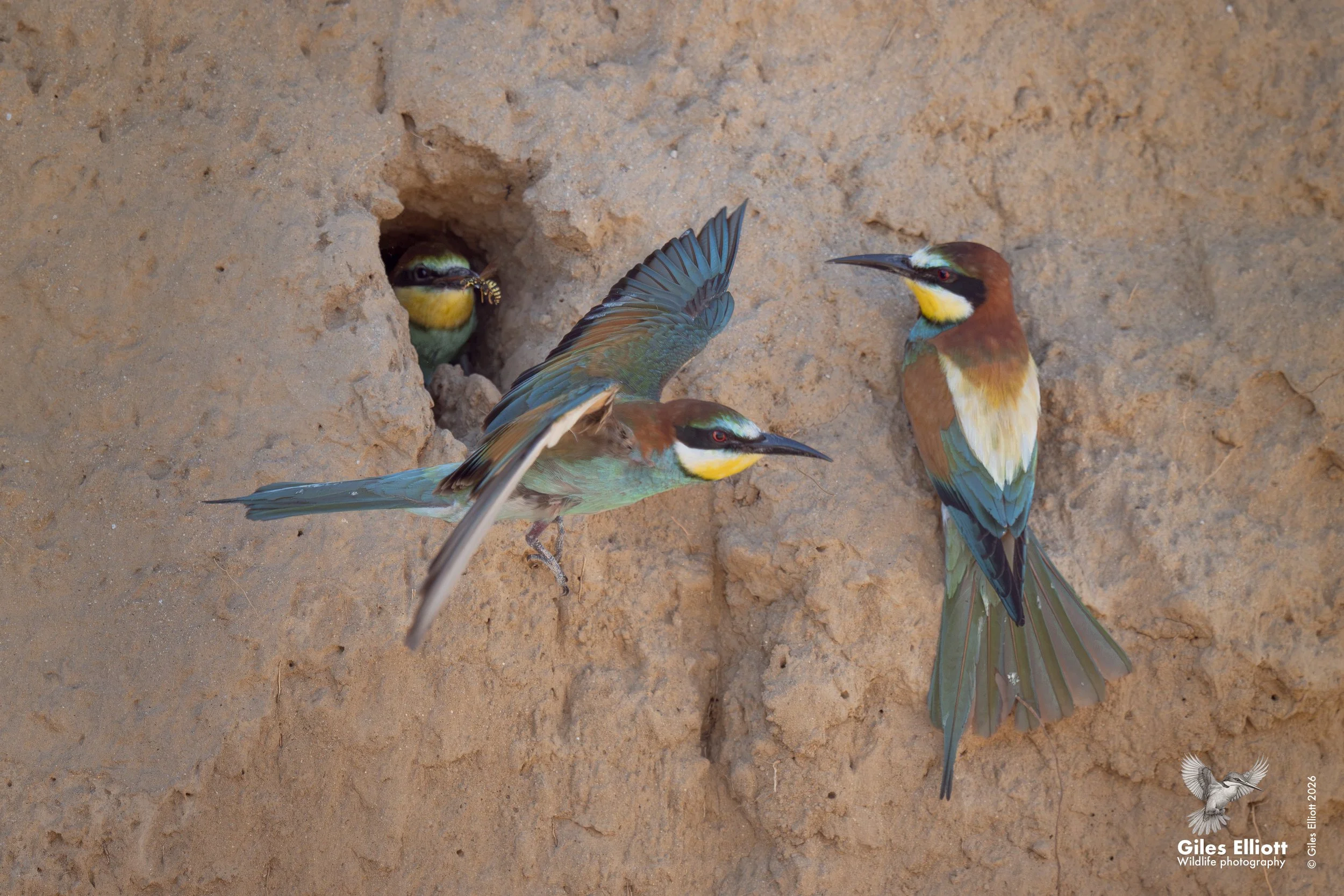
Final preparations
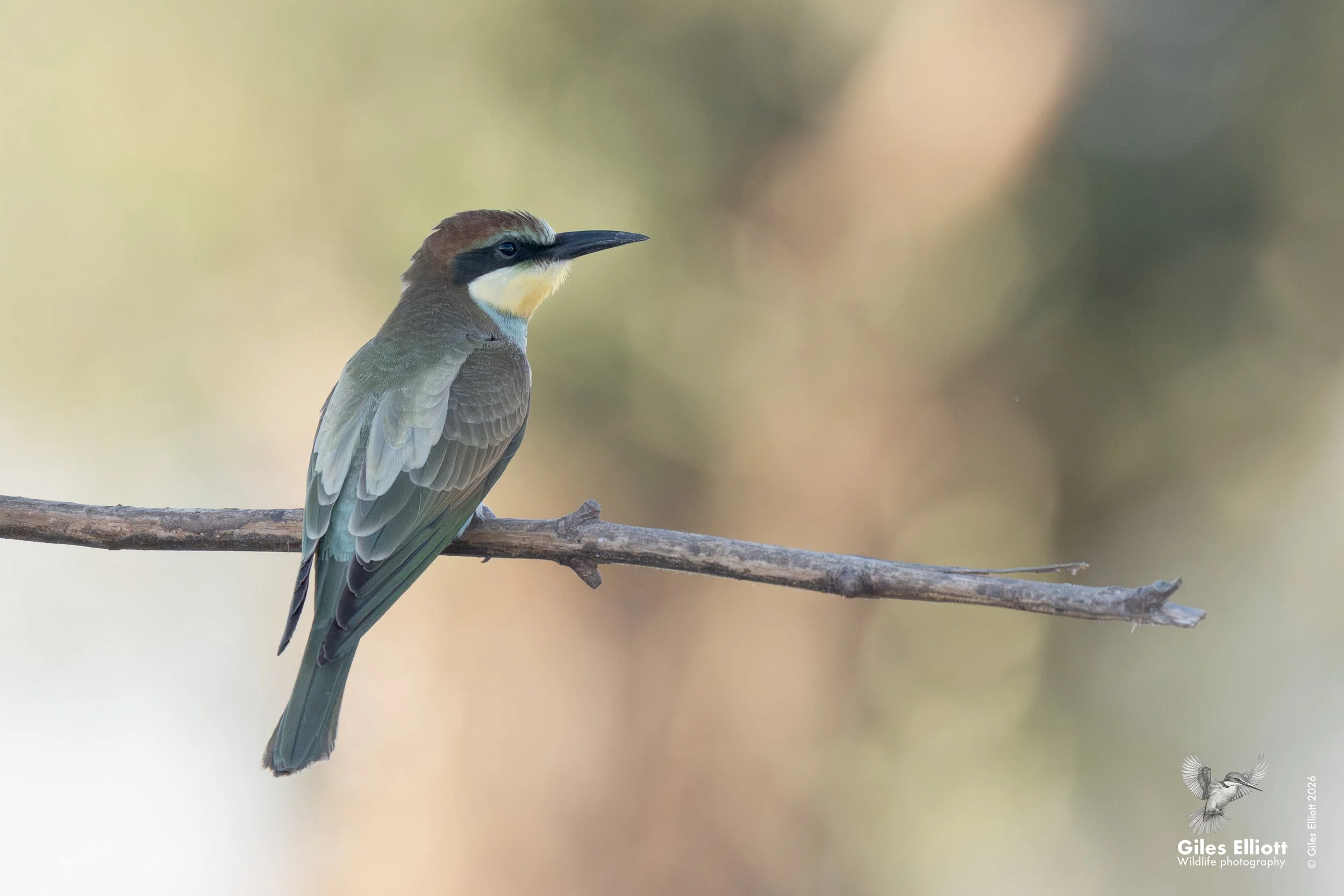
Fledged!
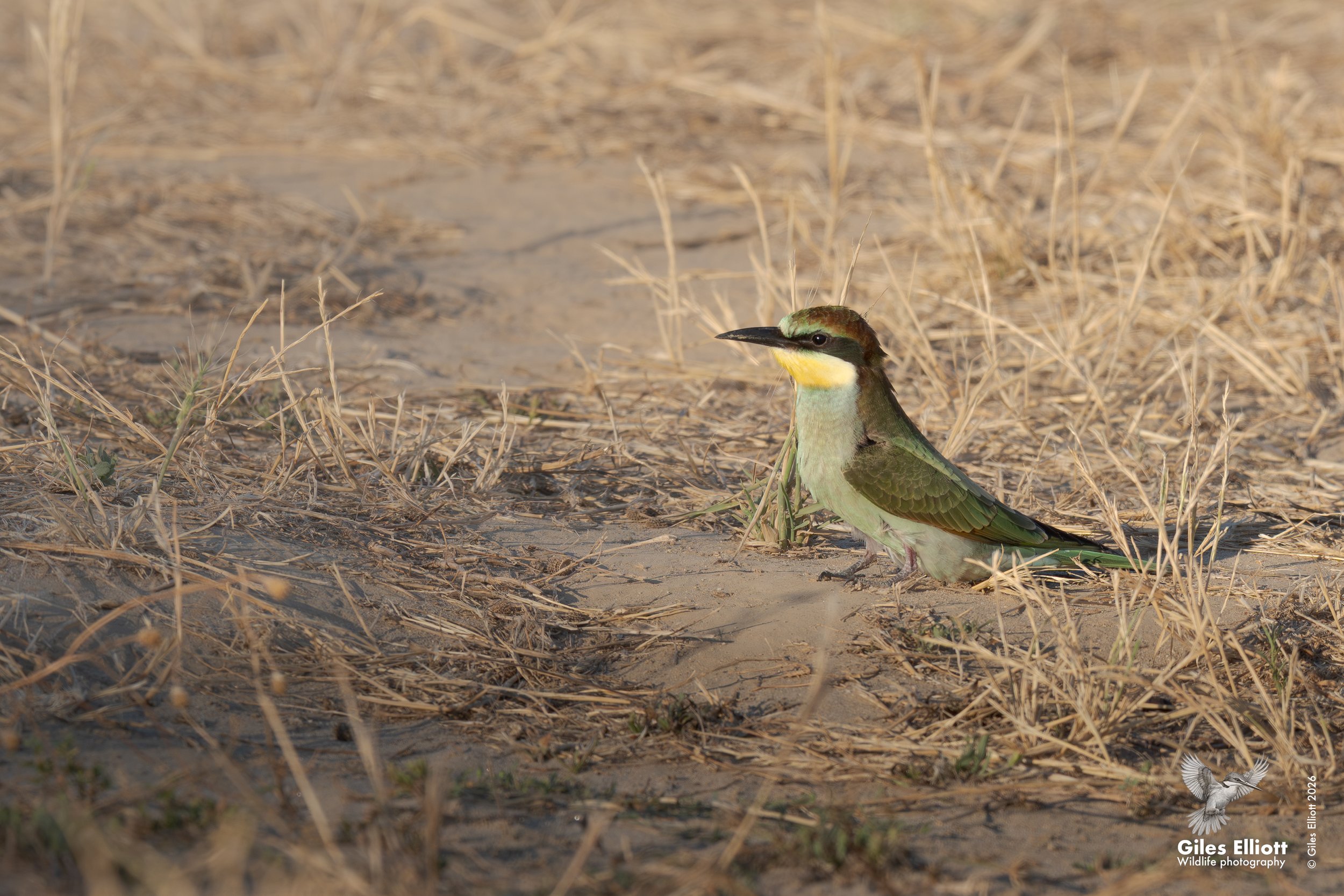
Learning to forage
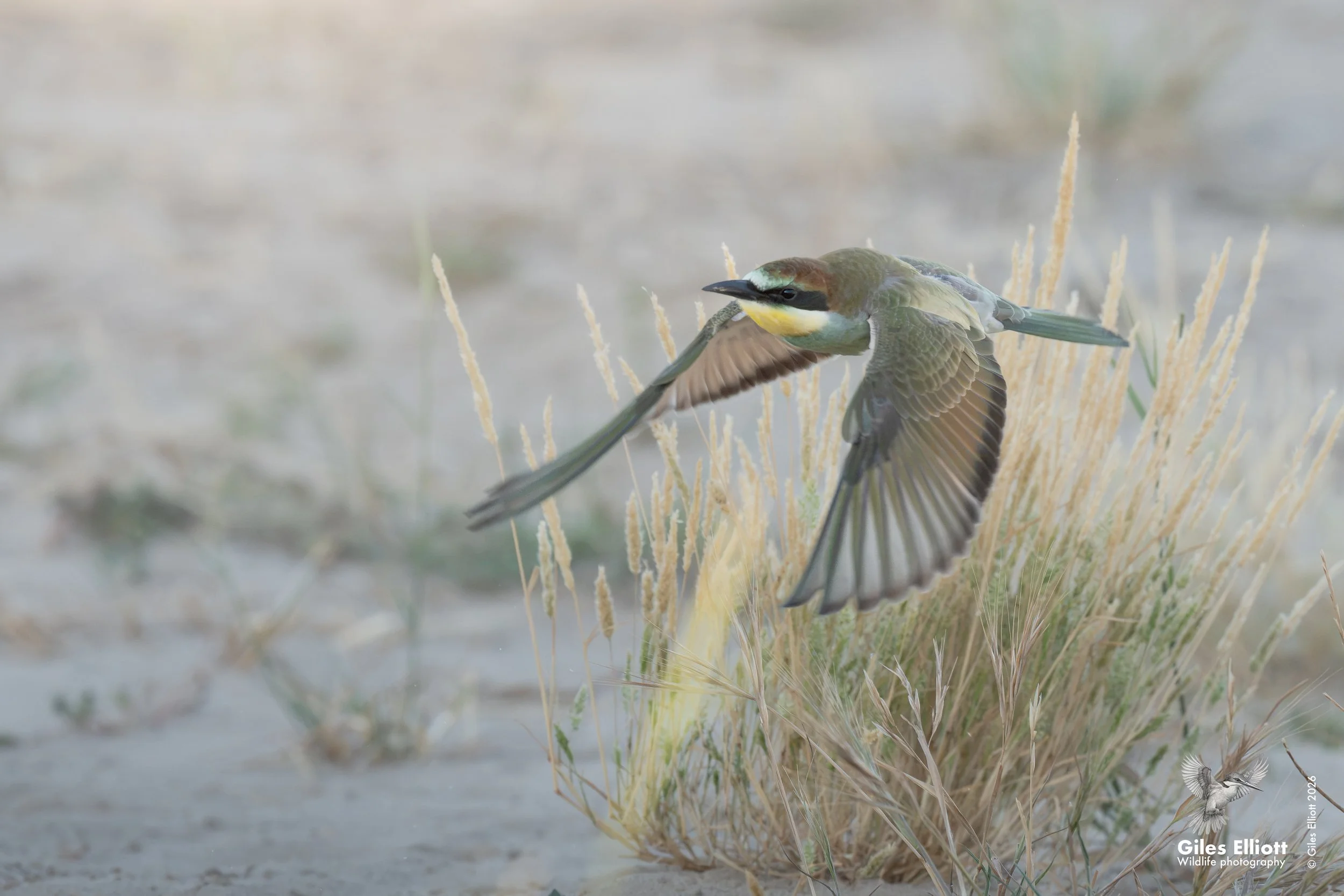
Learning to fly
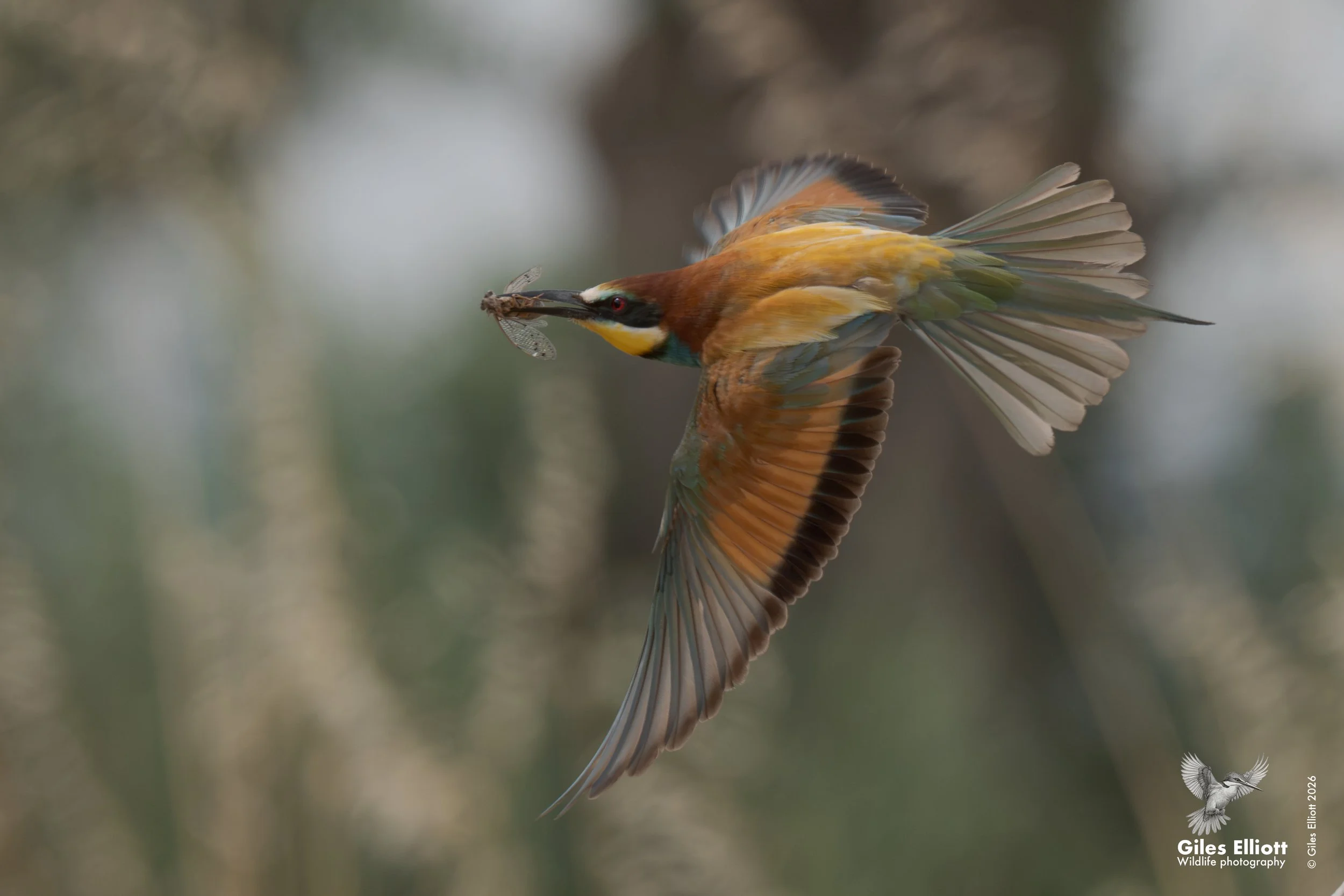
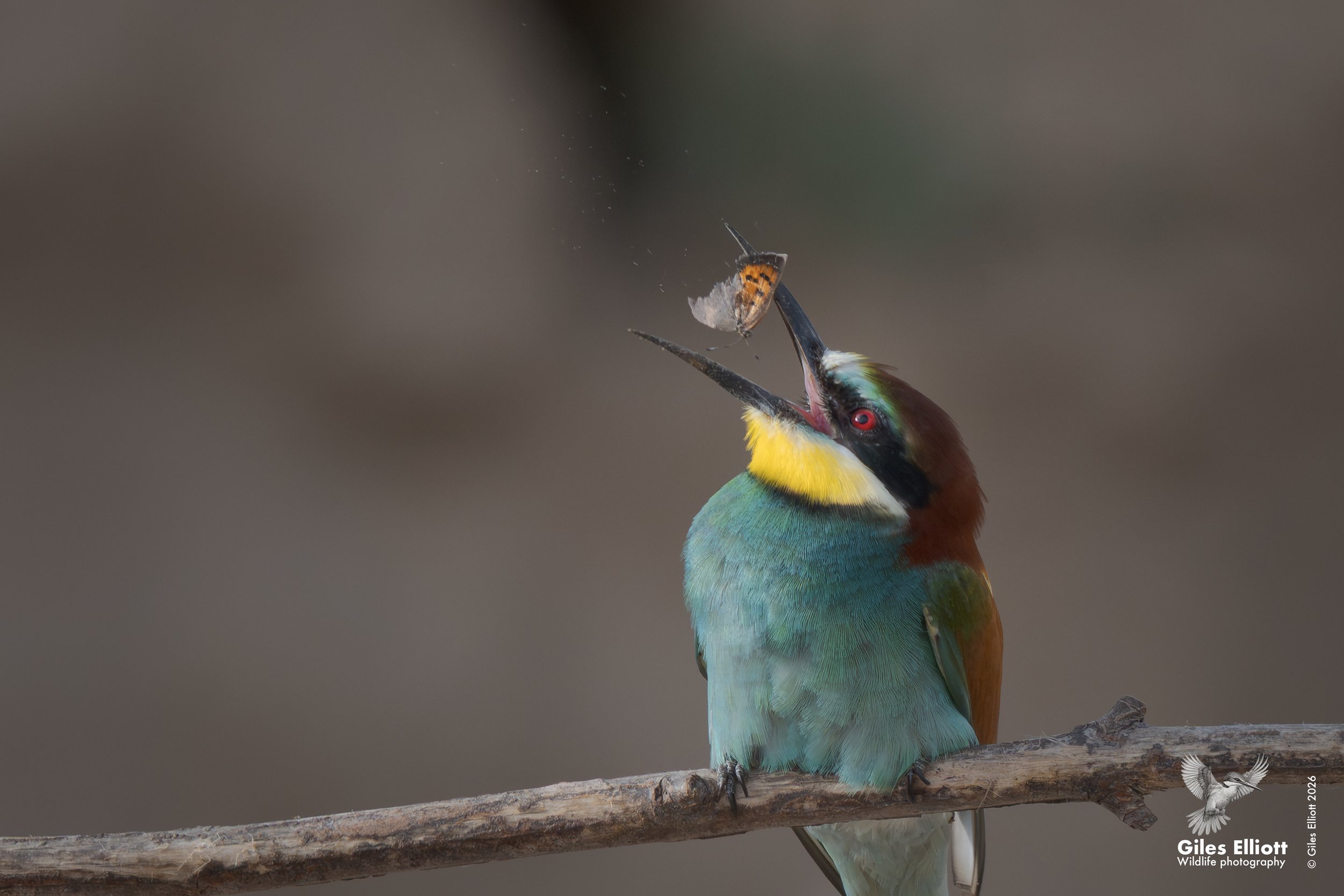
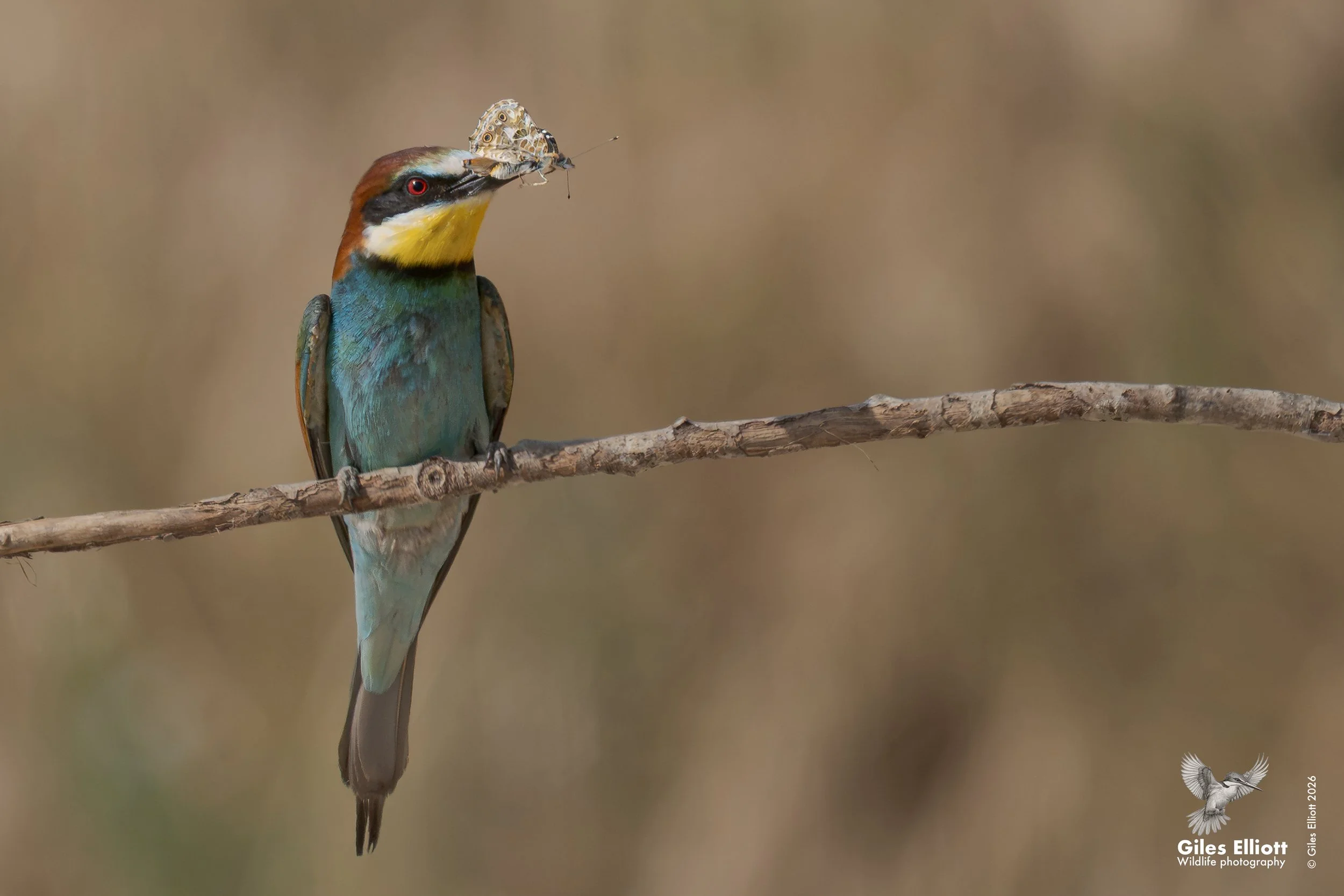
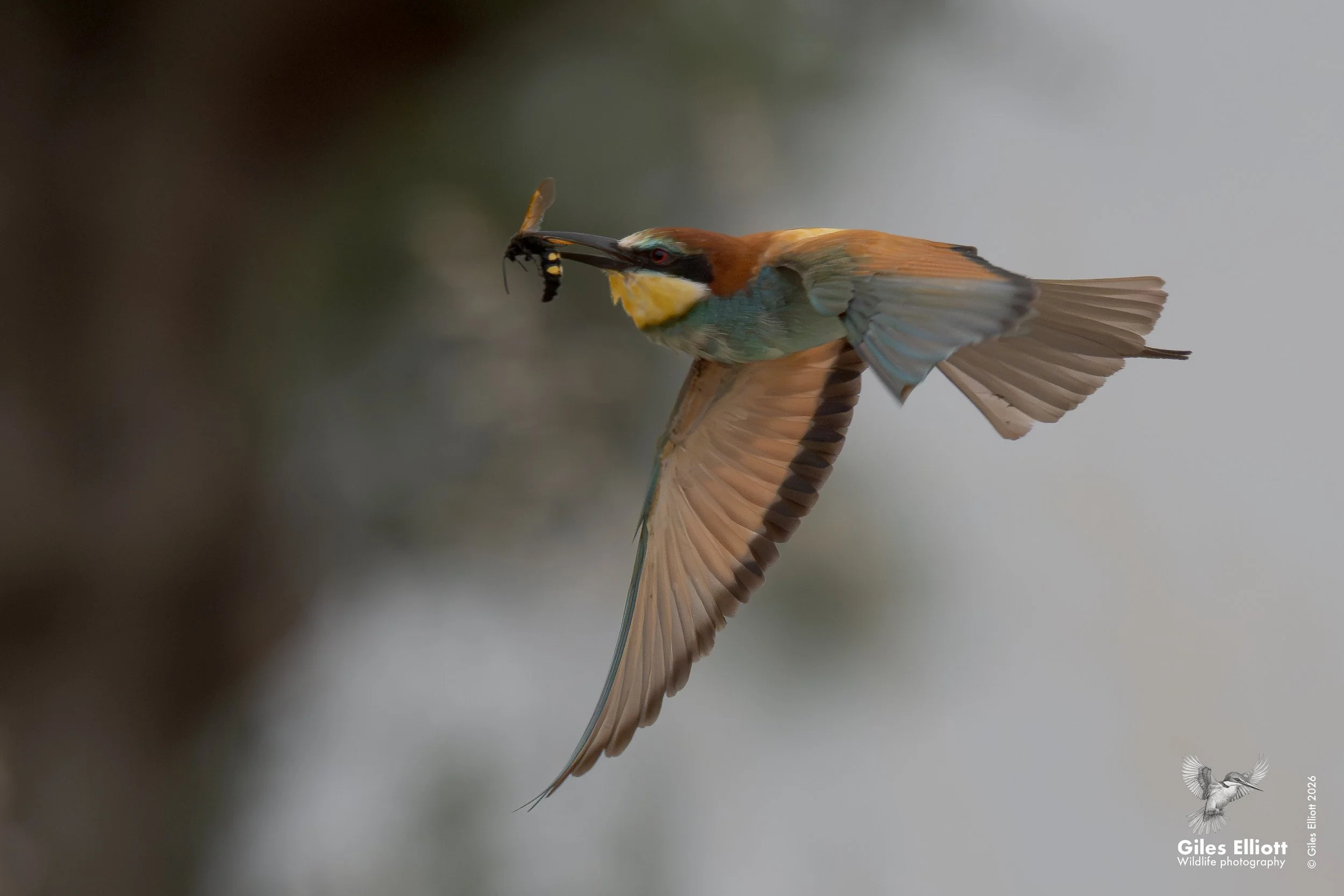
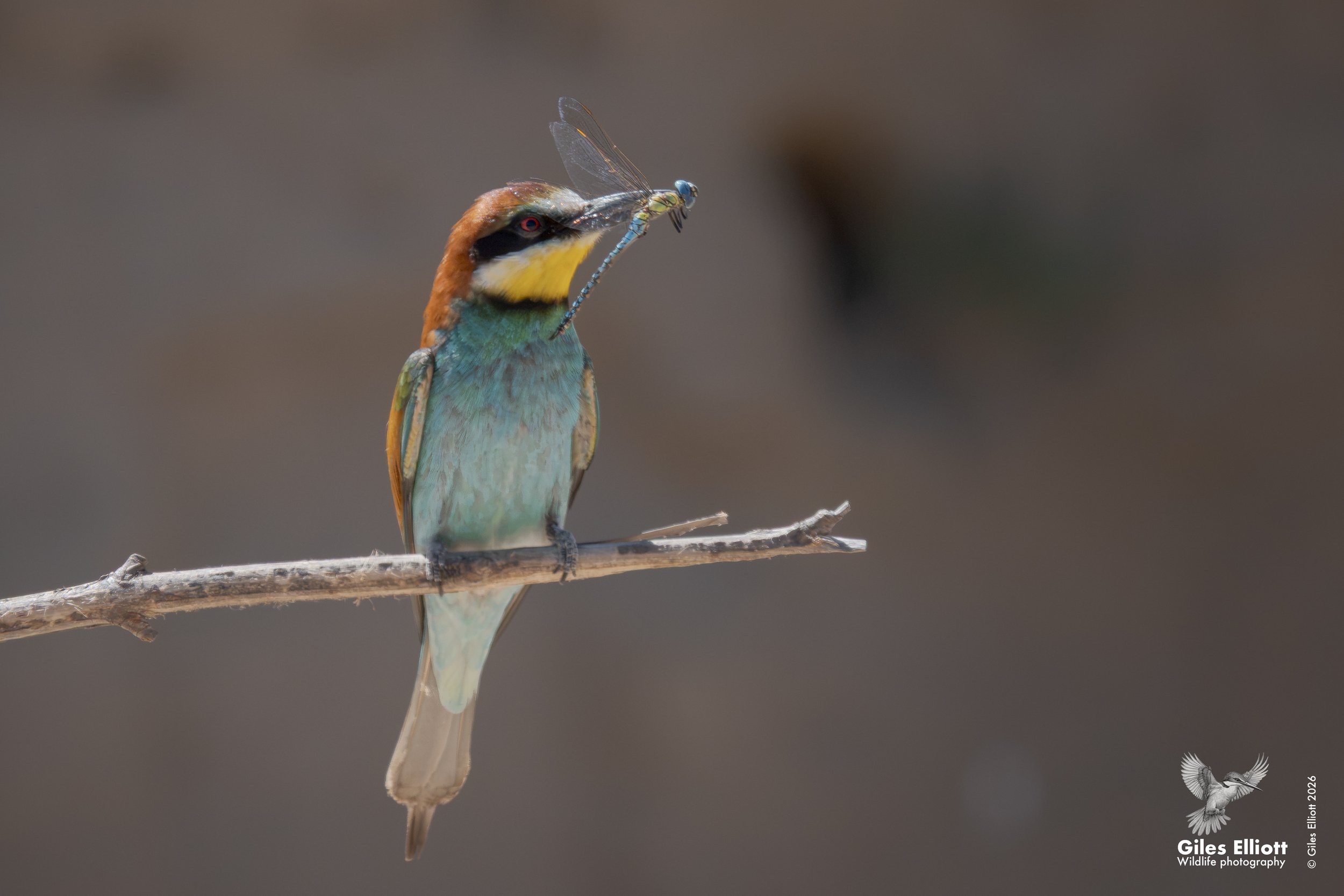
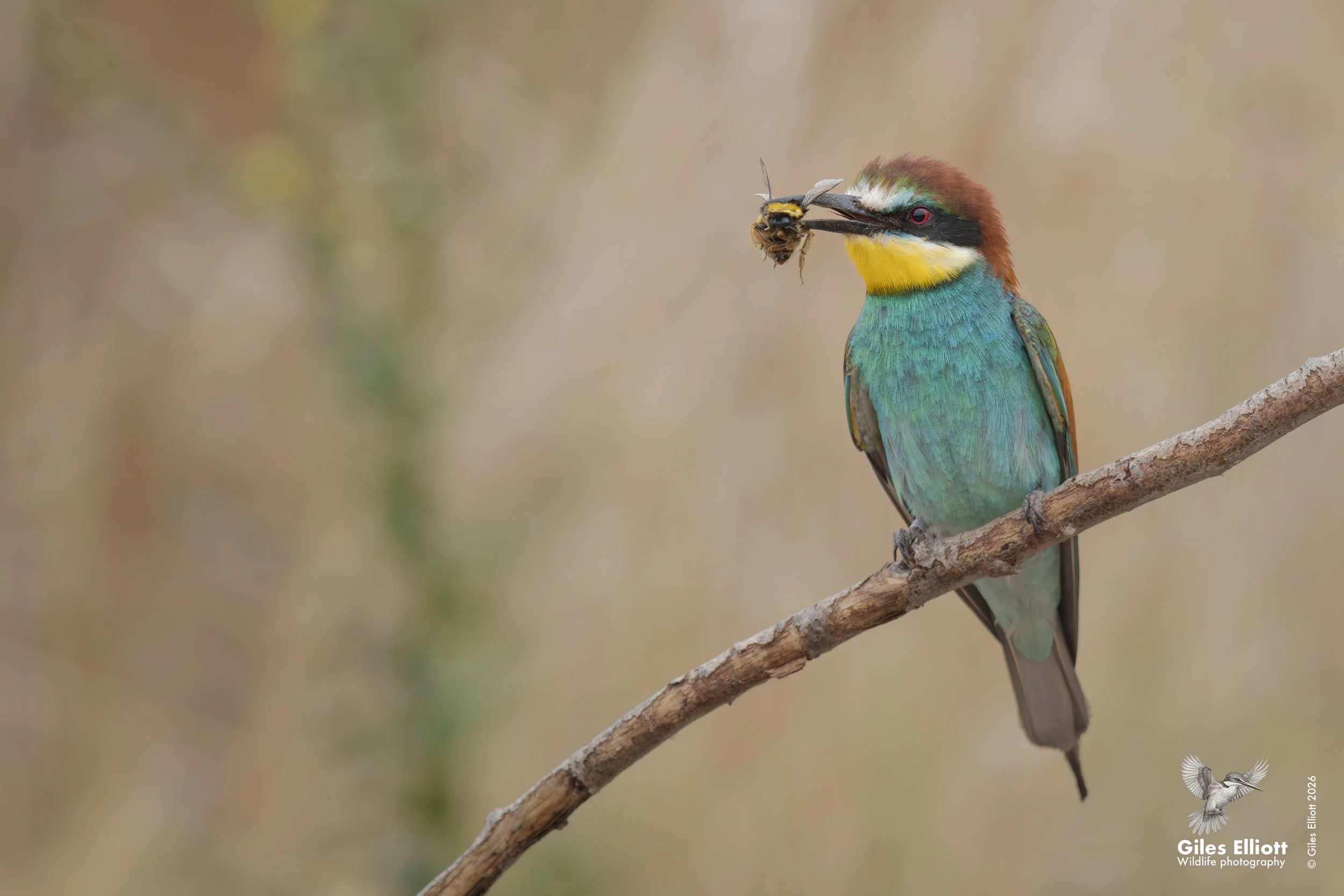
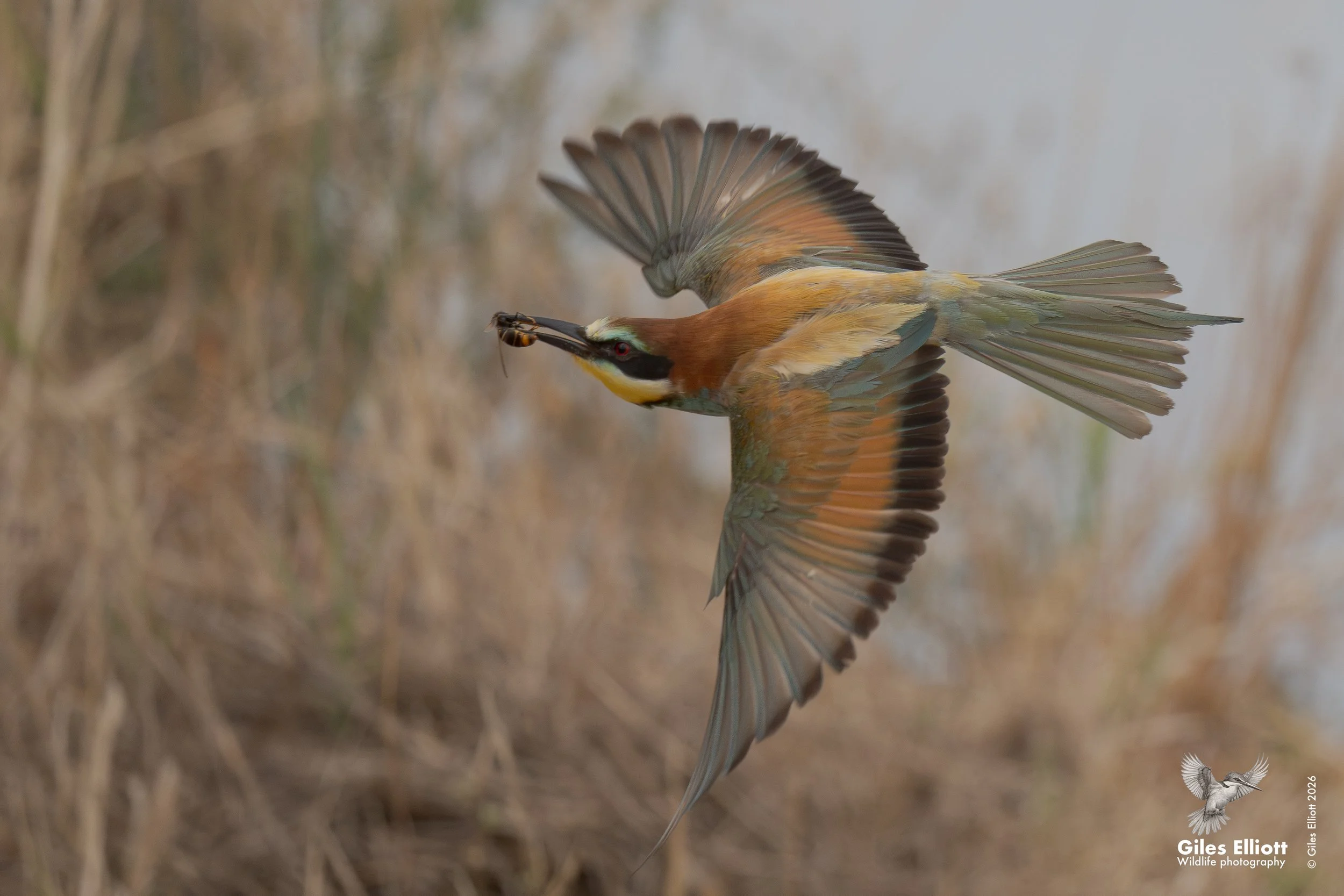
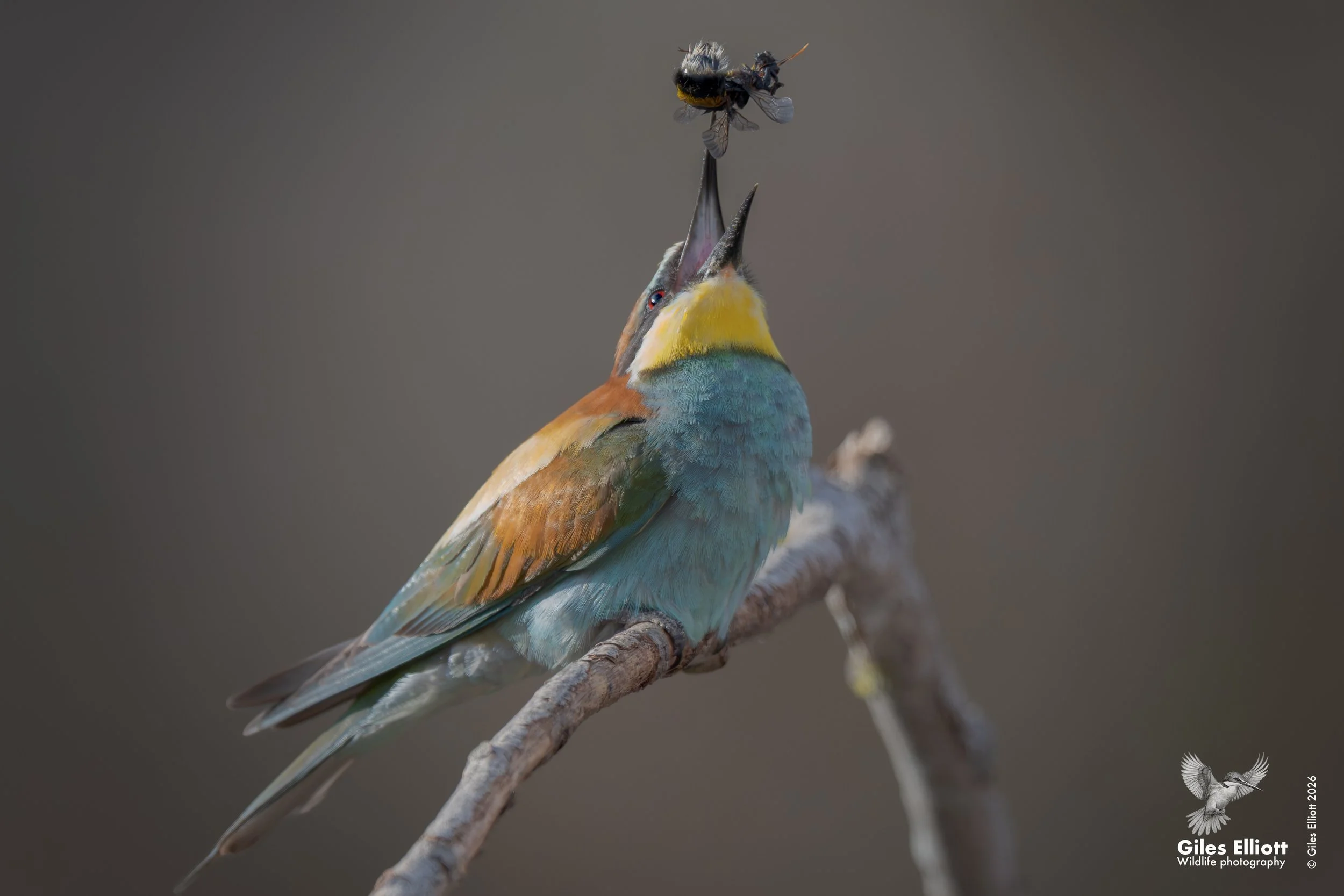
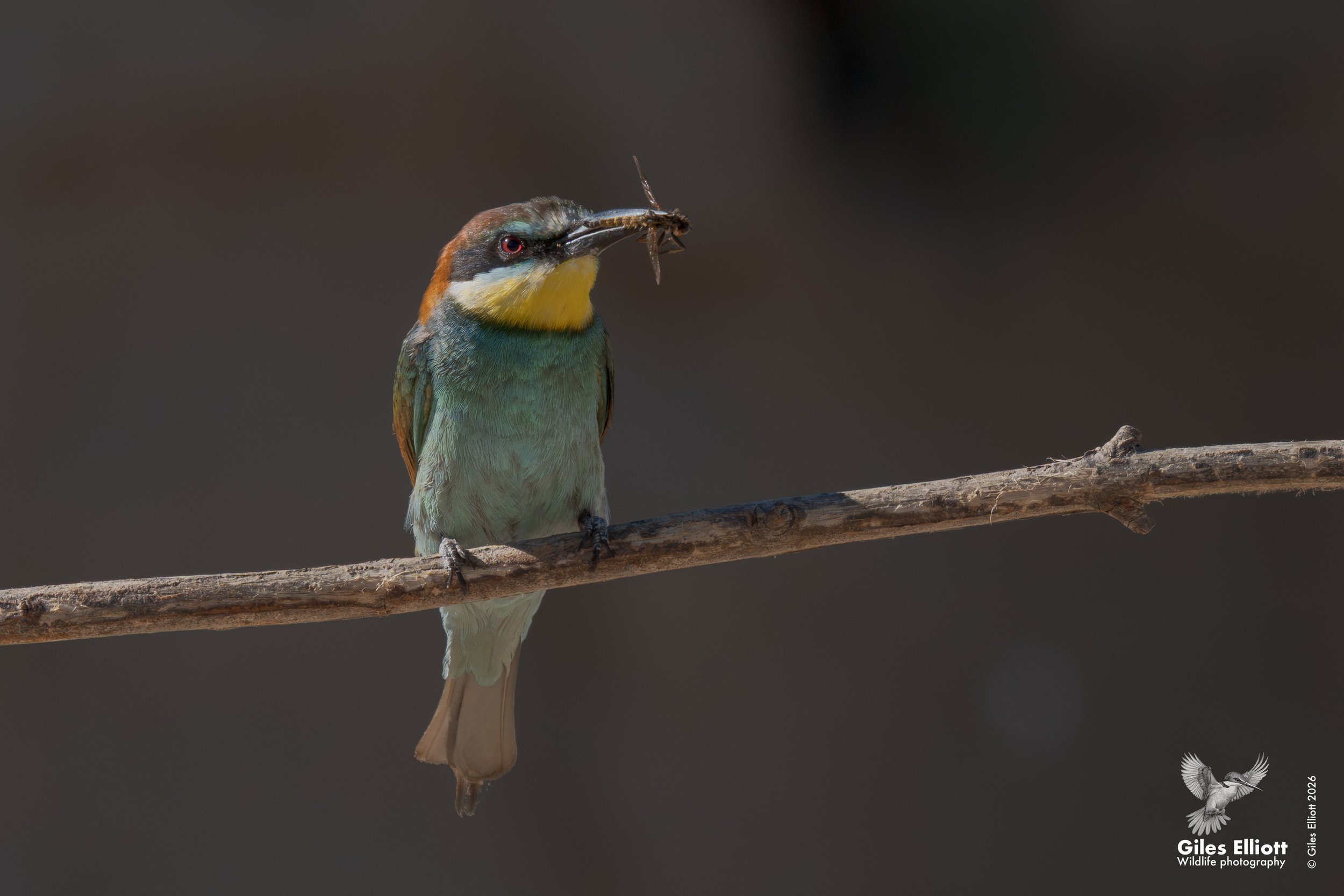
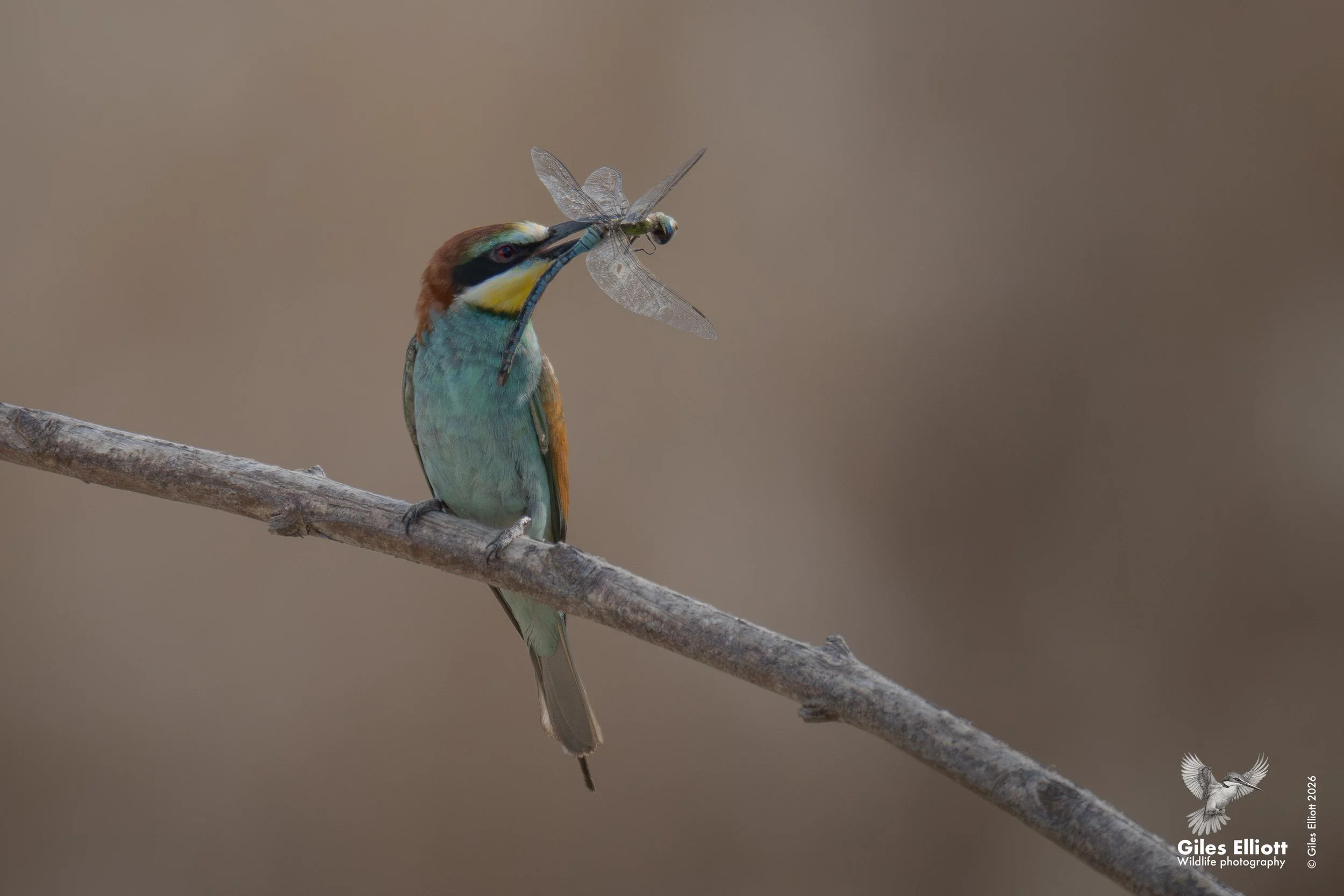
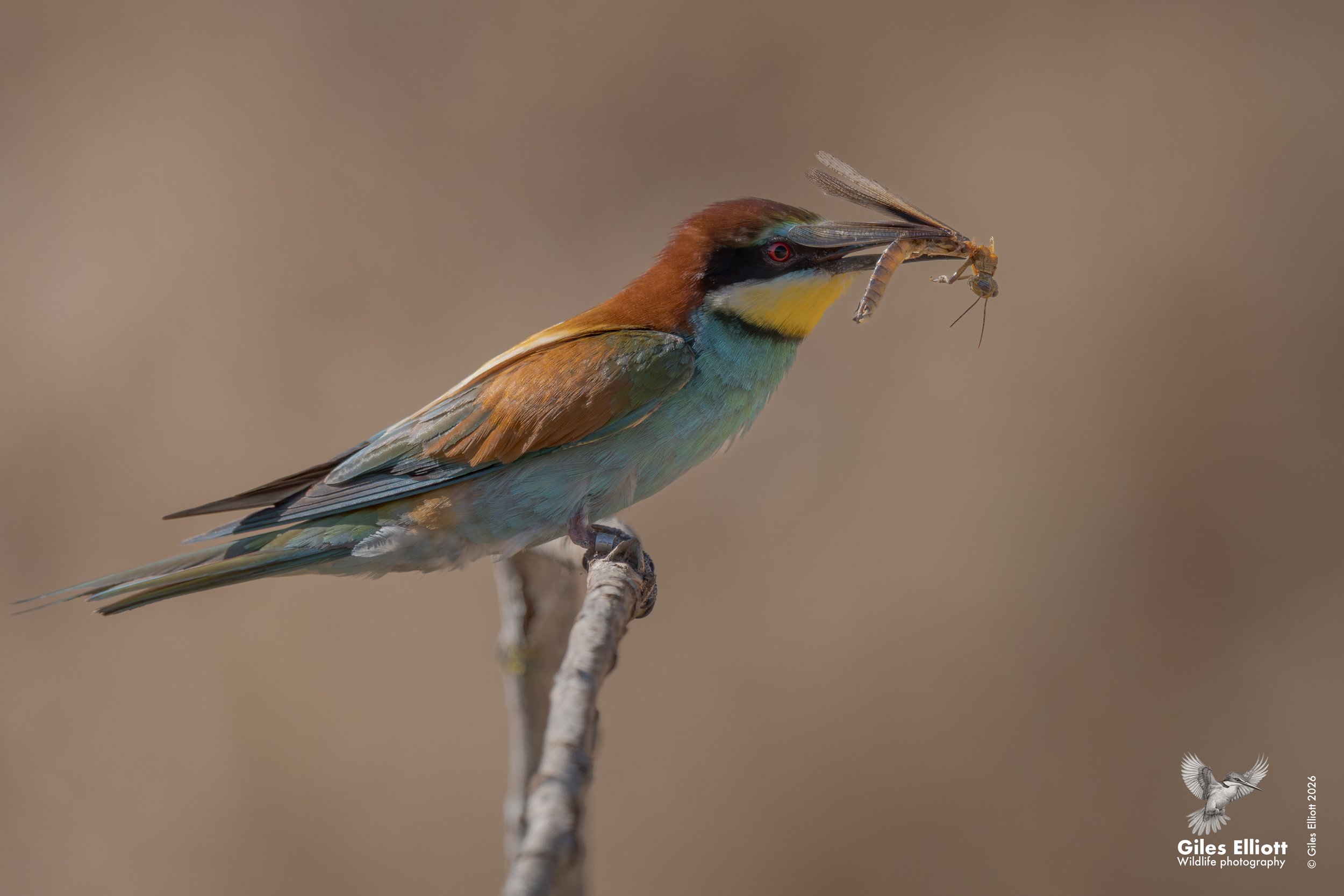
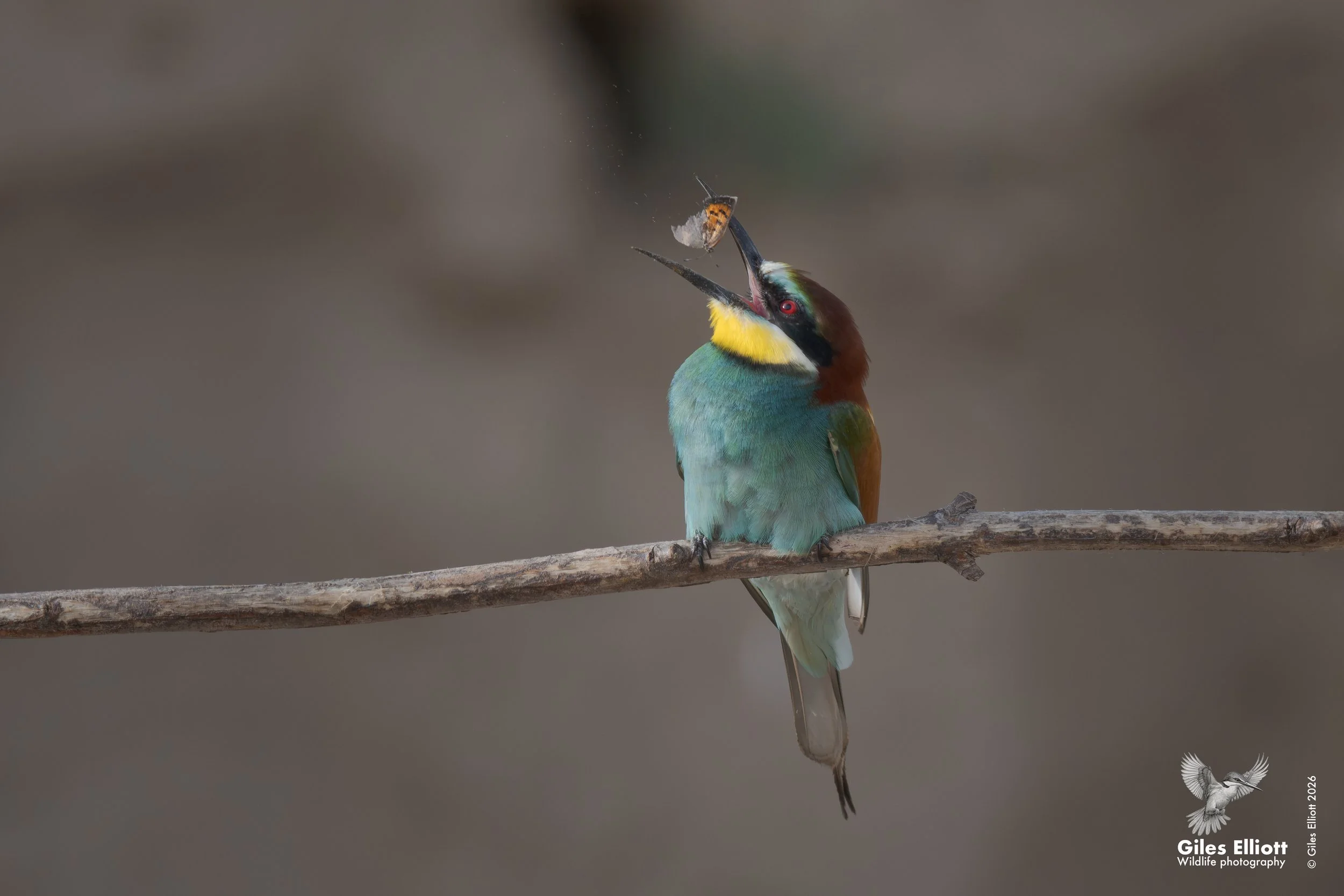
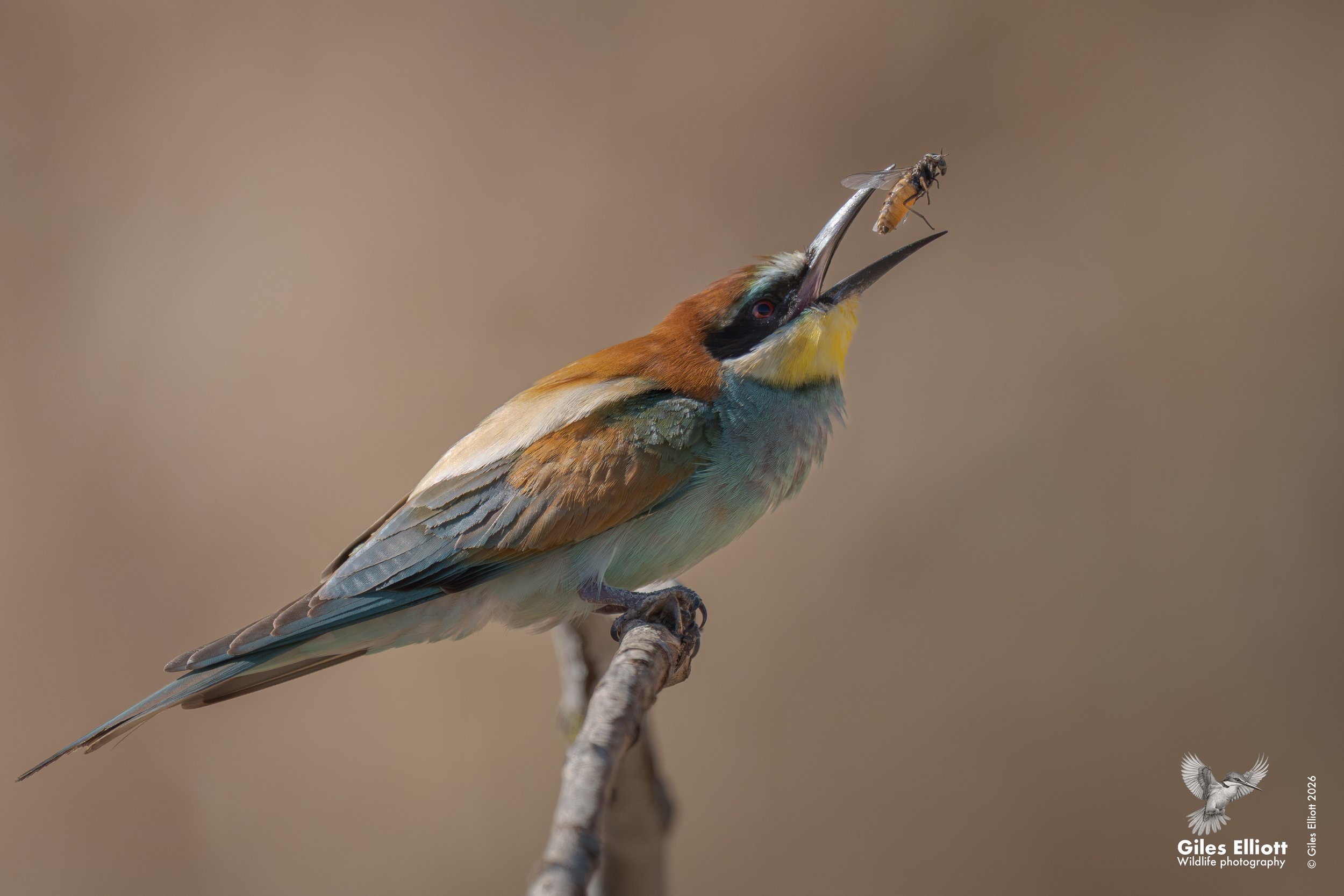
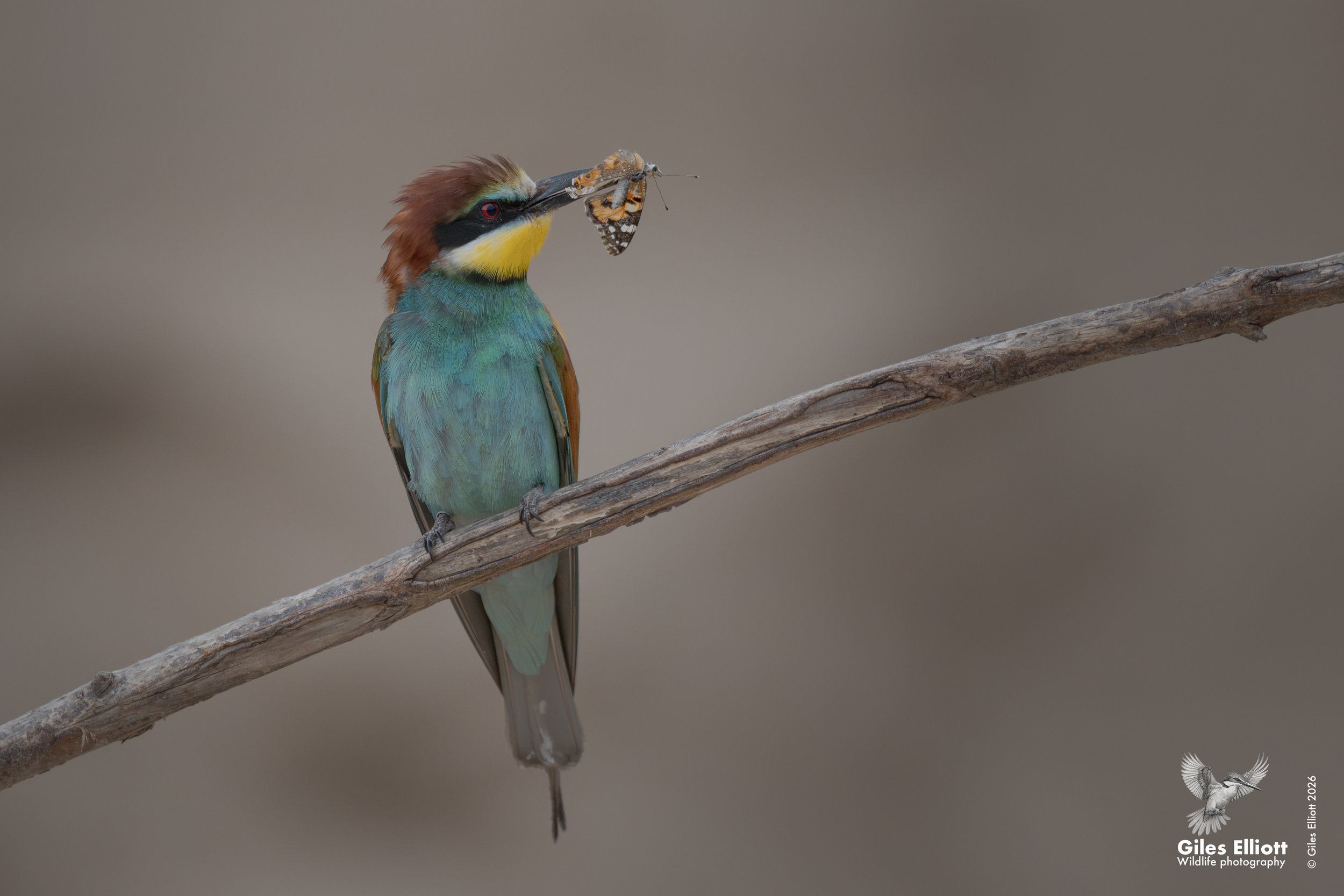
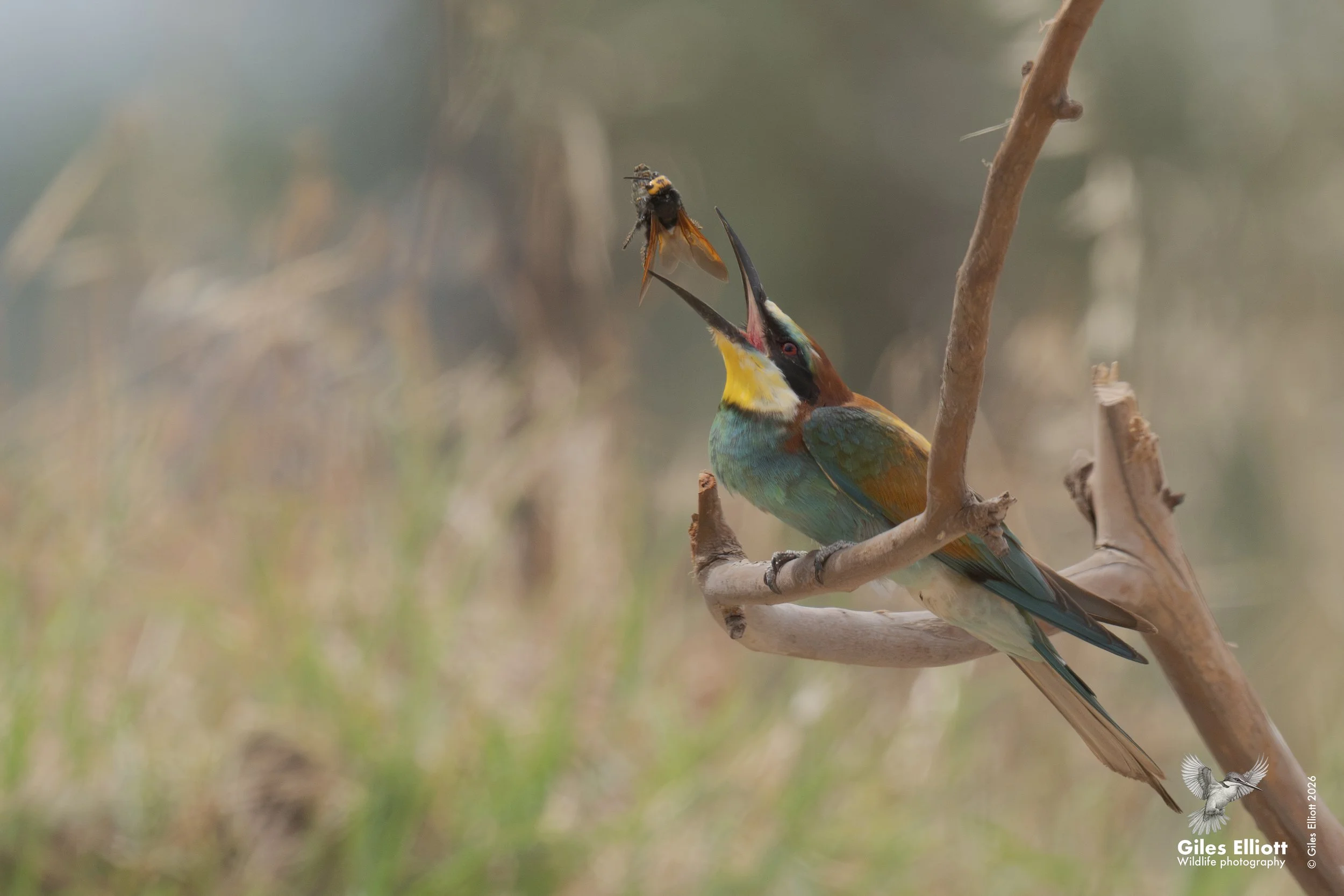
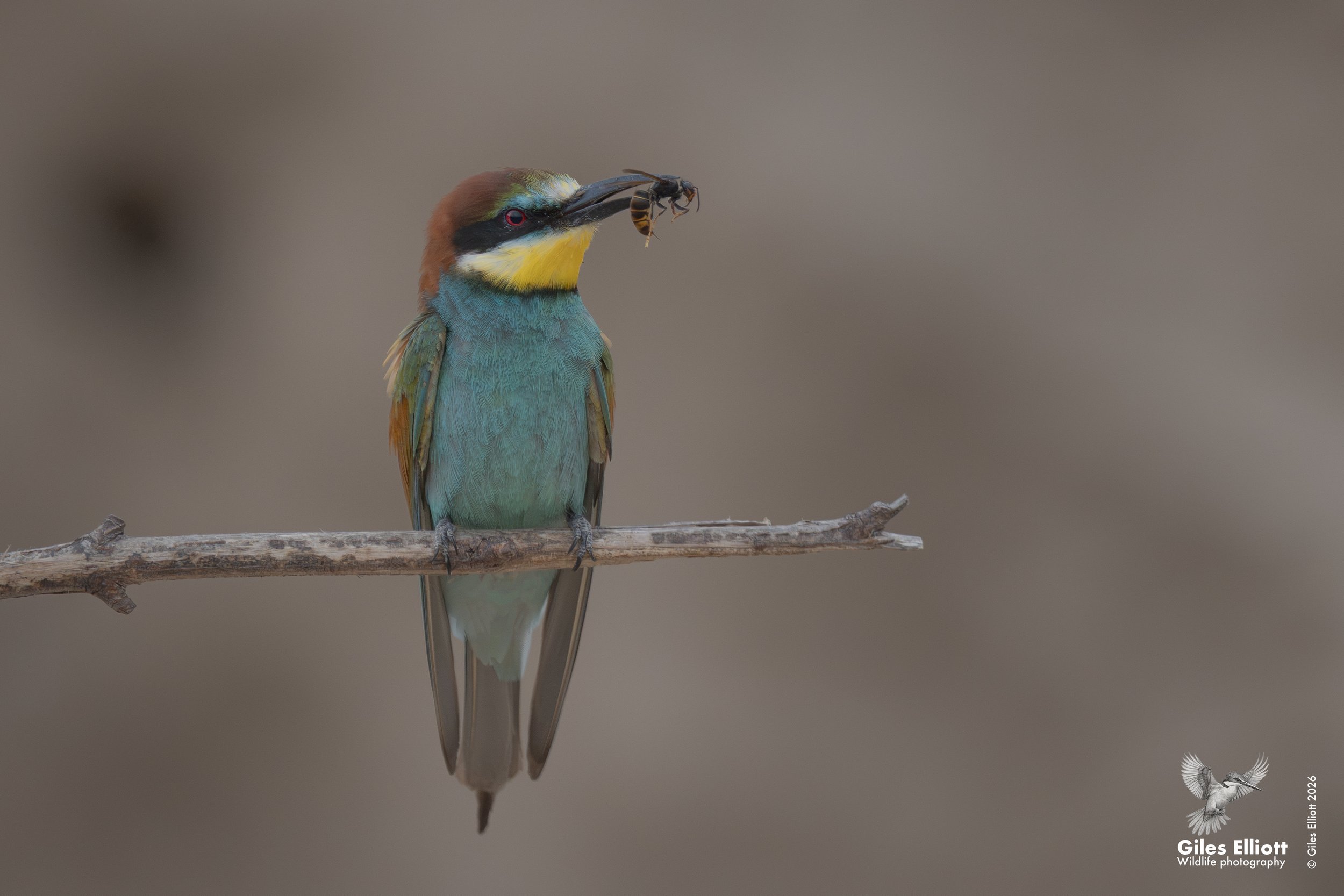
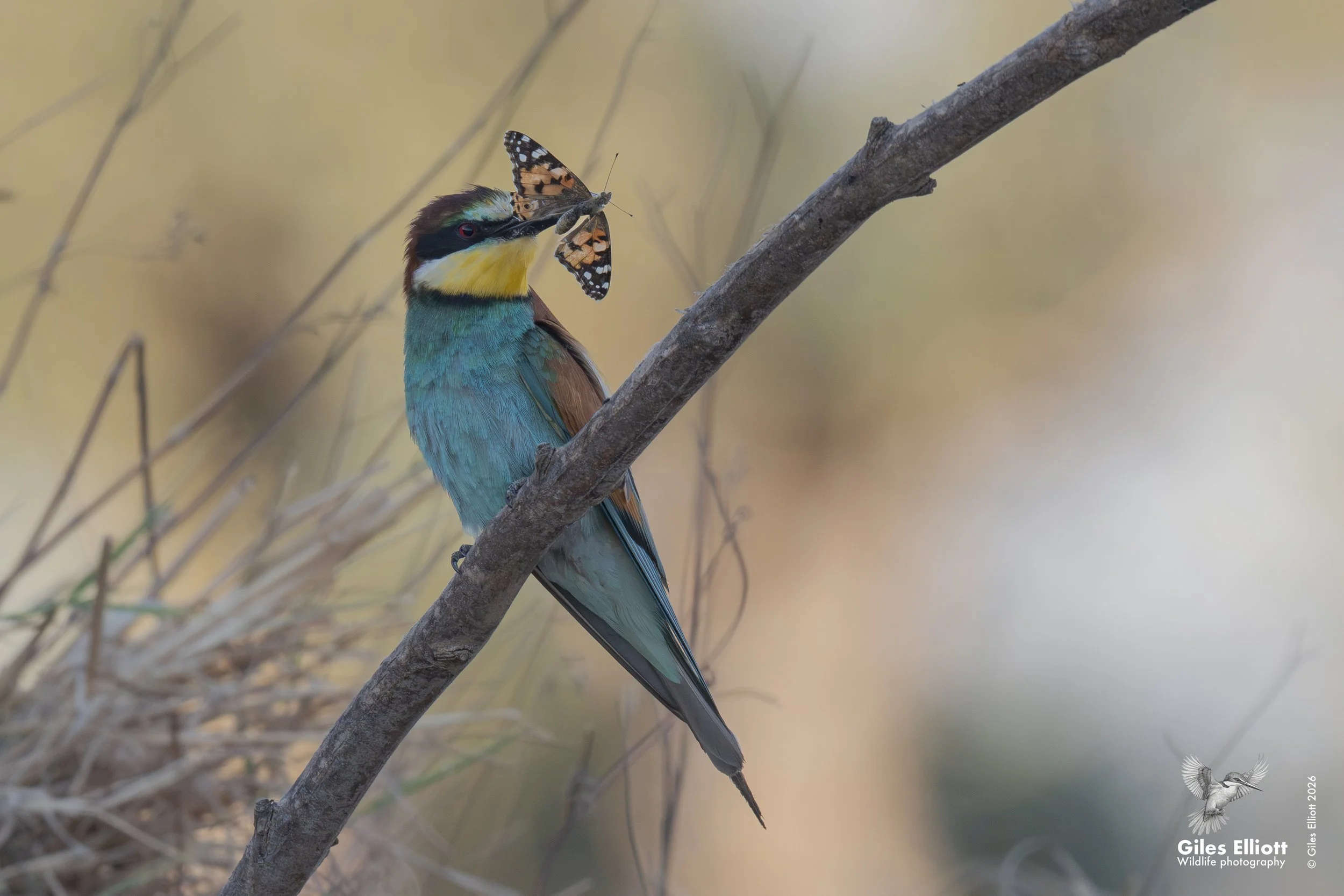
Calling them ‘bee-eaters’ is a bit on a misnomer - they eat any insect they can catch on the wing: butterflies, moths, grasshoppers, dragonflies, hard shelled bugs, and yes… bees, wasps and hornets.
Whatever the prey they are dispatched by being thrown in the air, and beaten against branches to dislodge shells, scales and stings.
Like kingfishers, from time to time they regurgitate the crunchy indigestible bits of their food in the form of a pellet..
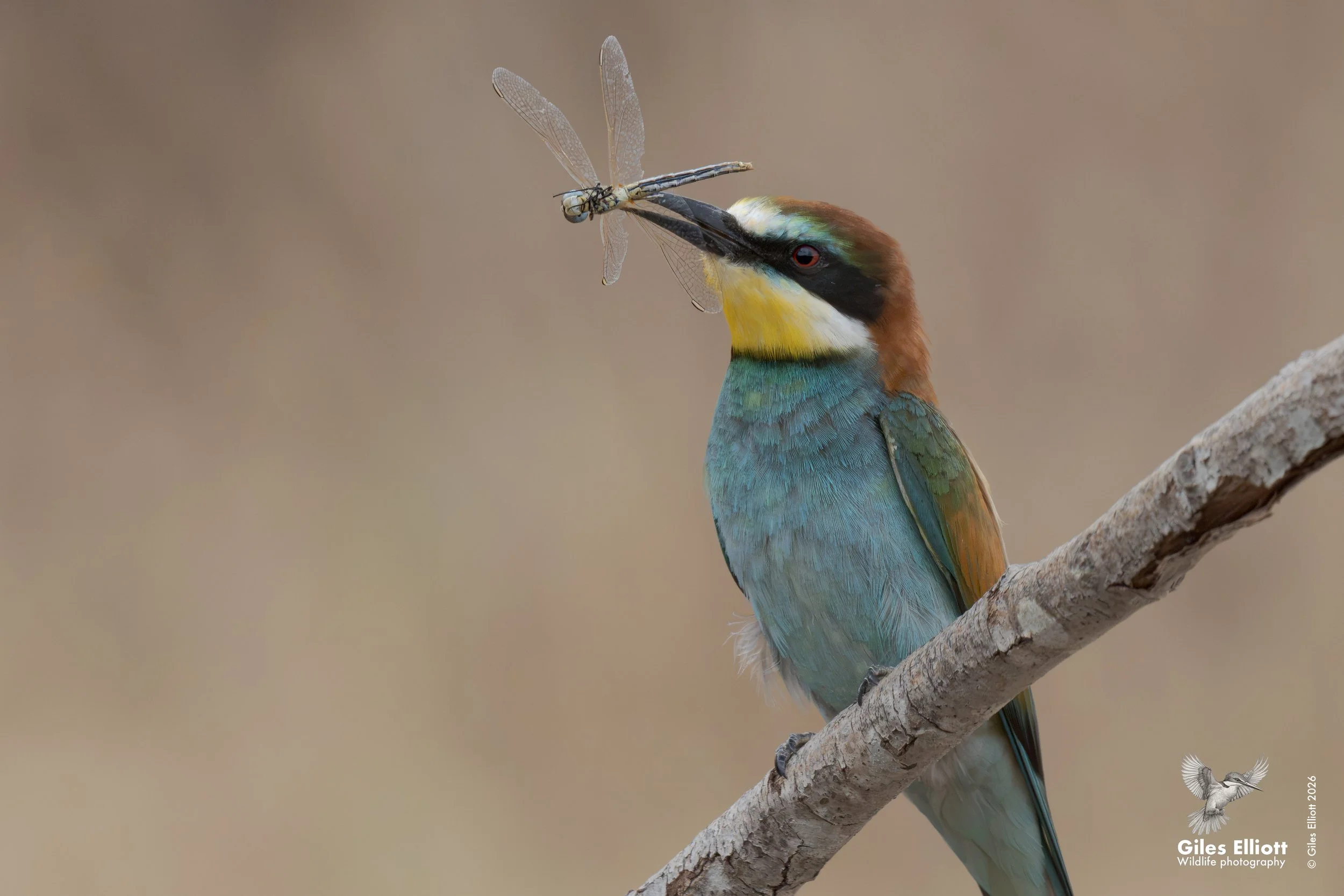
Use the left and right arrows below to scroll through and see the varied diet of the bee-eaters…
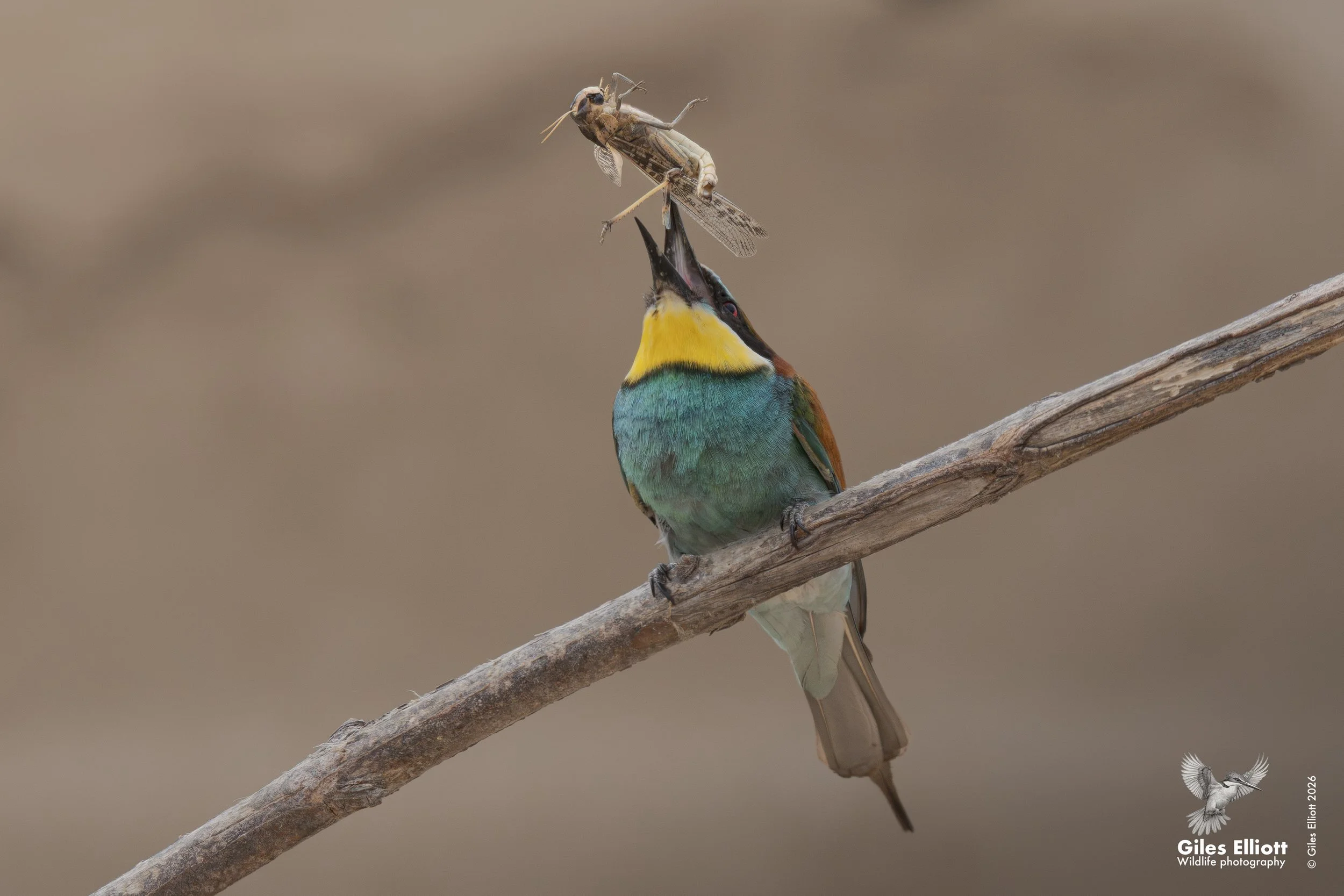
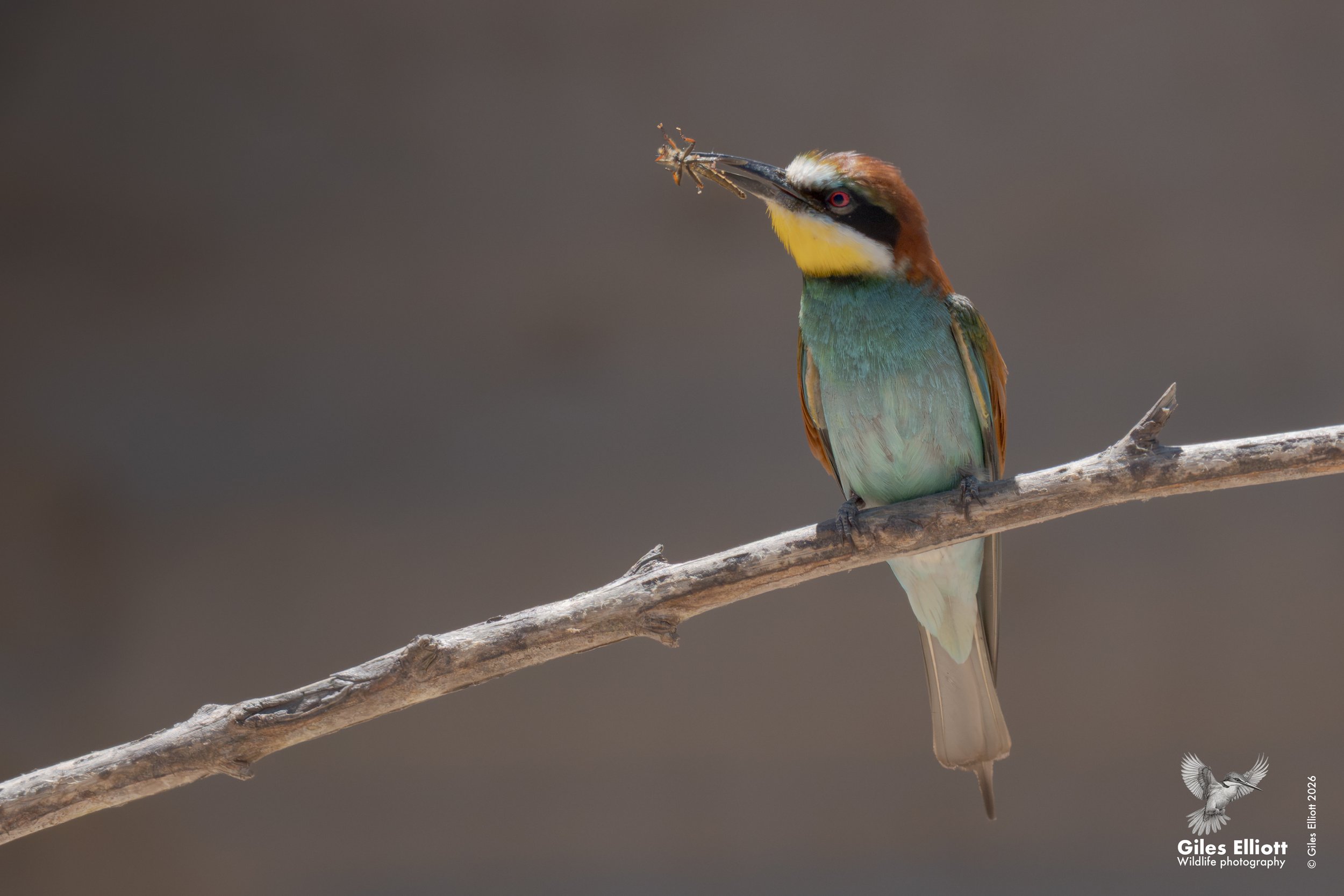
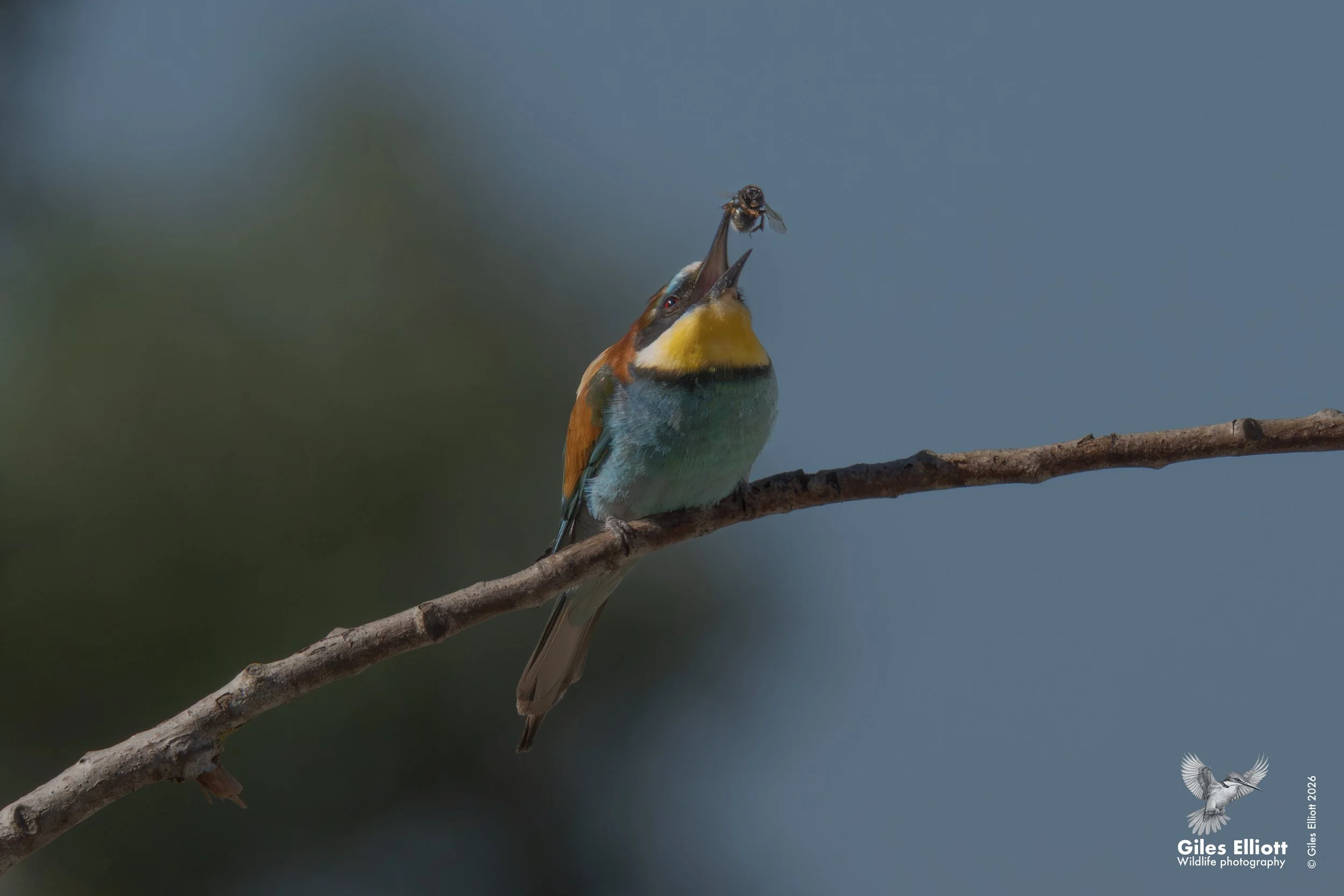
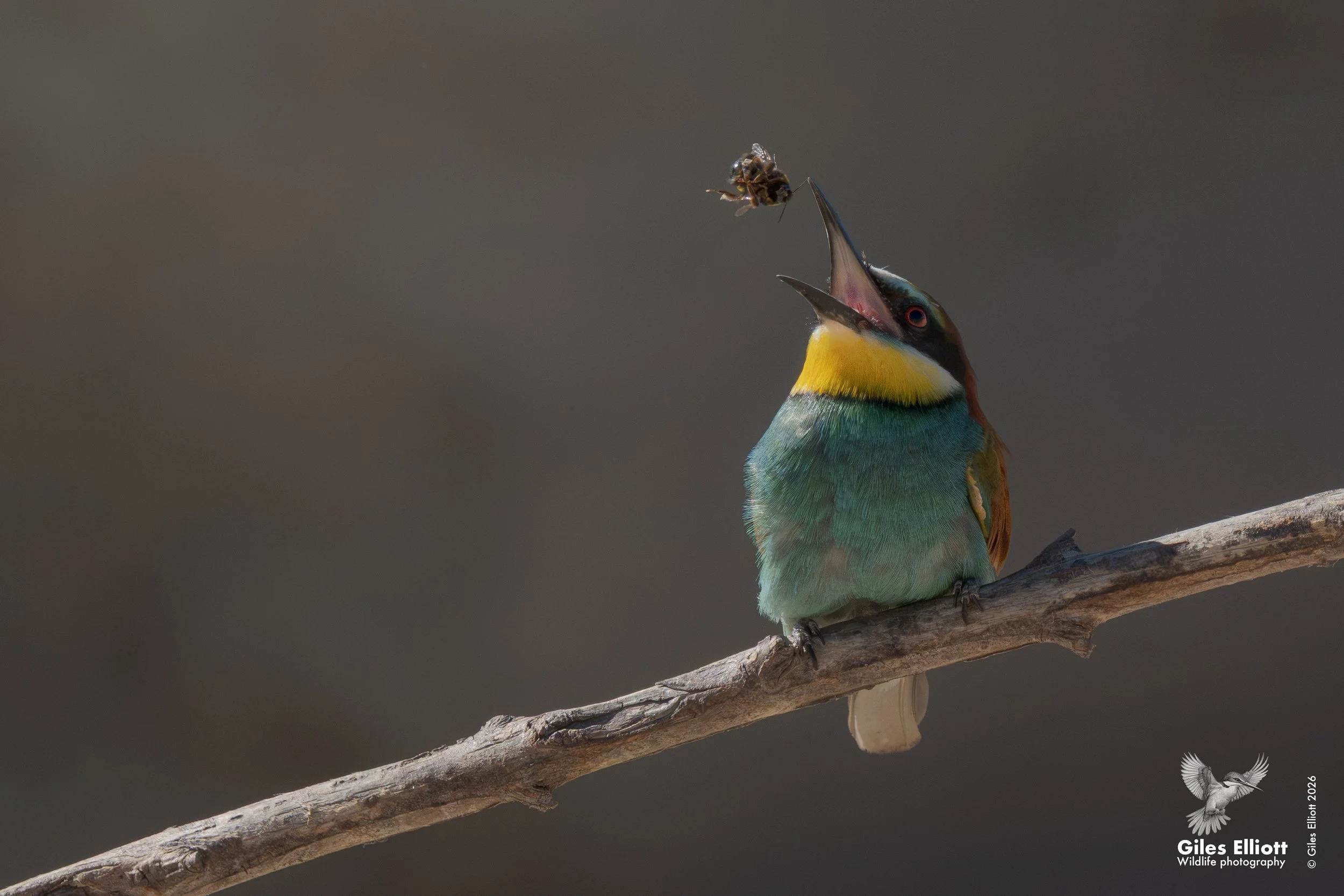
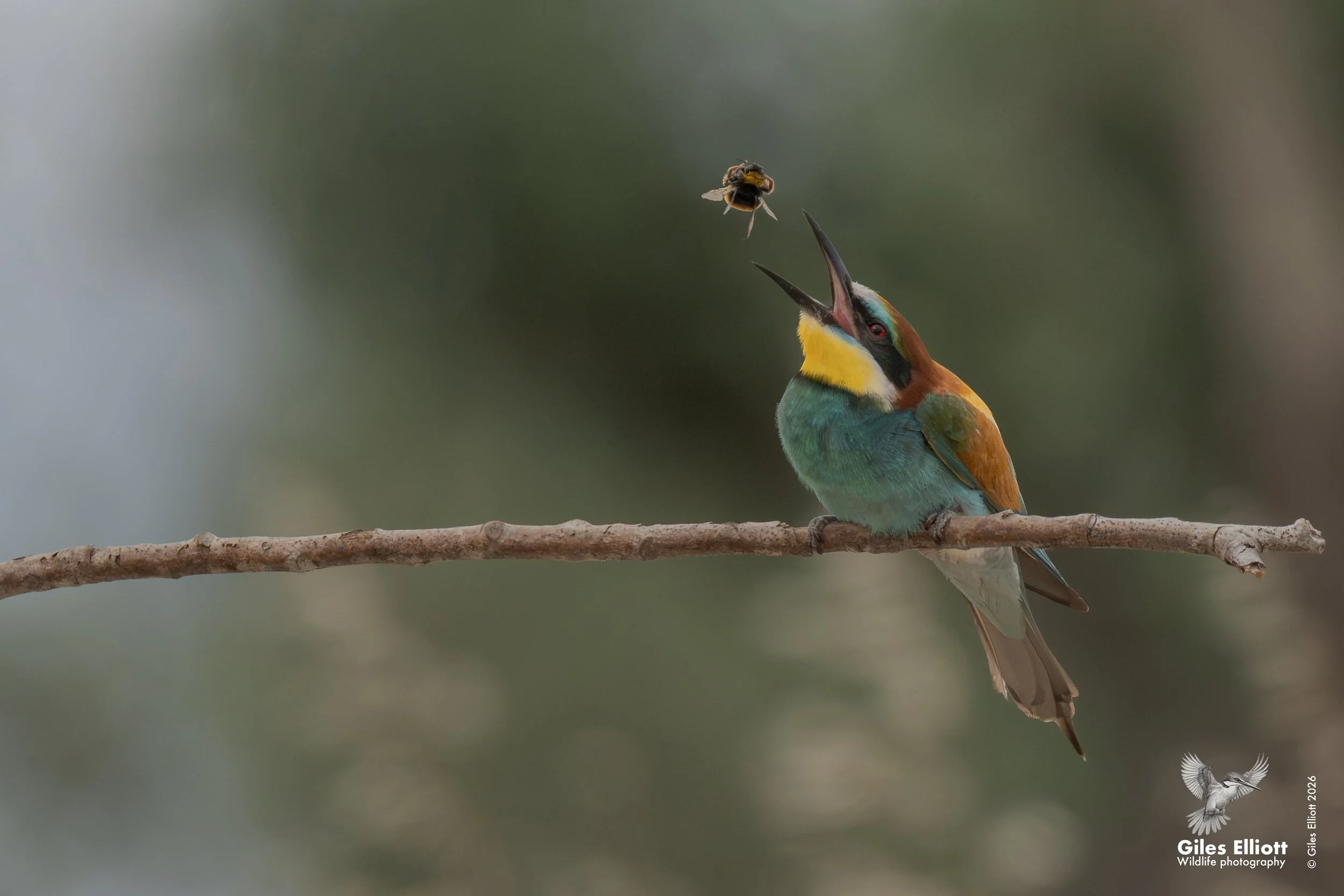
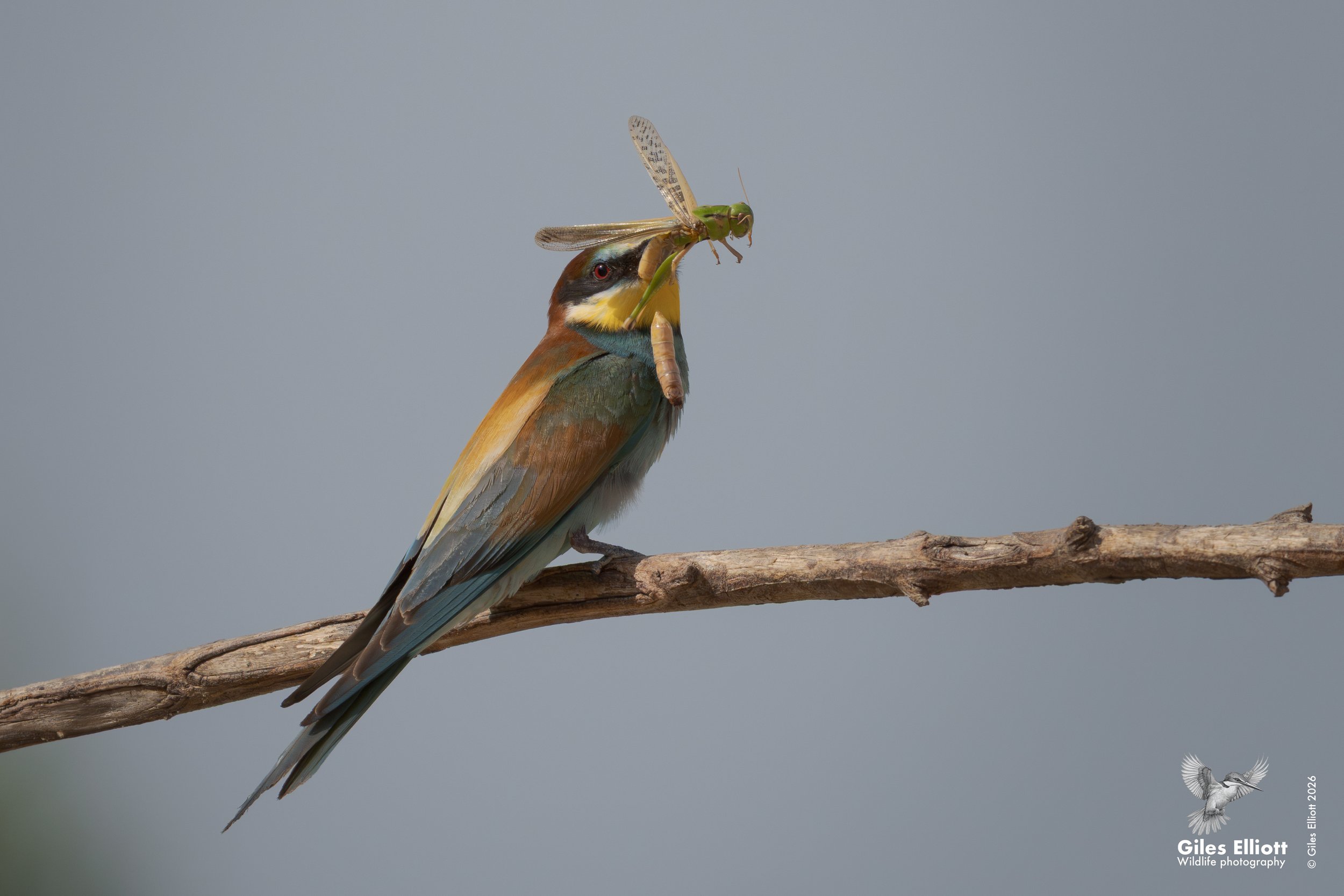
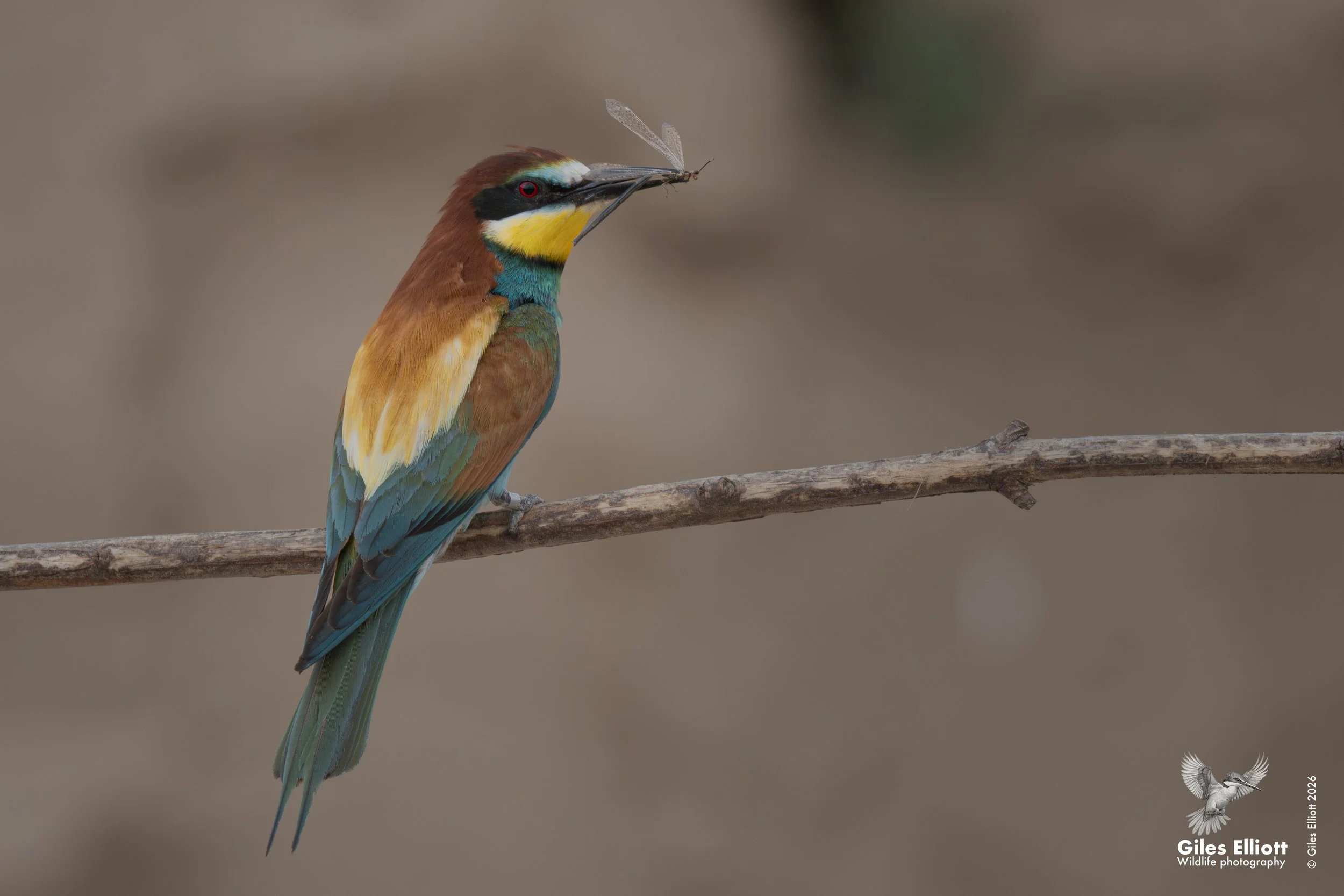
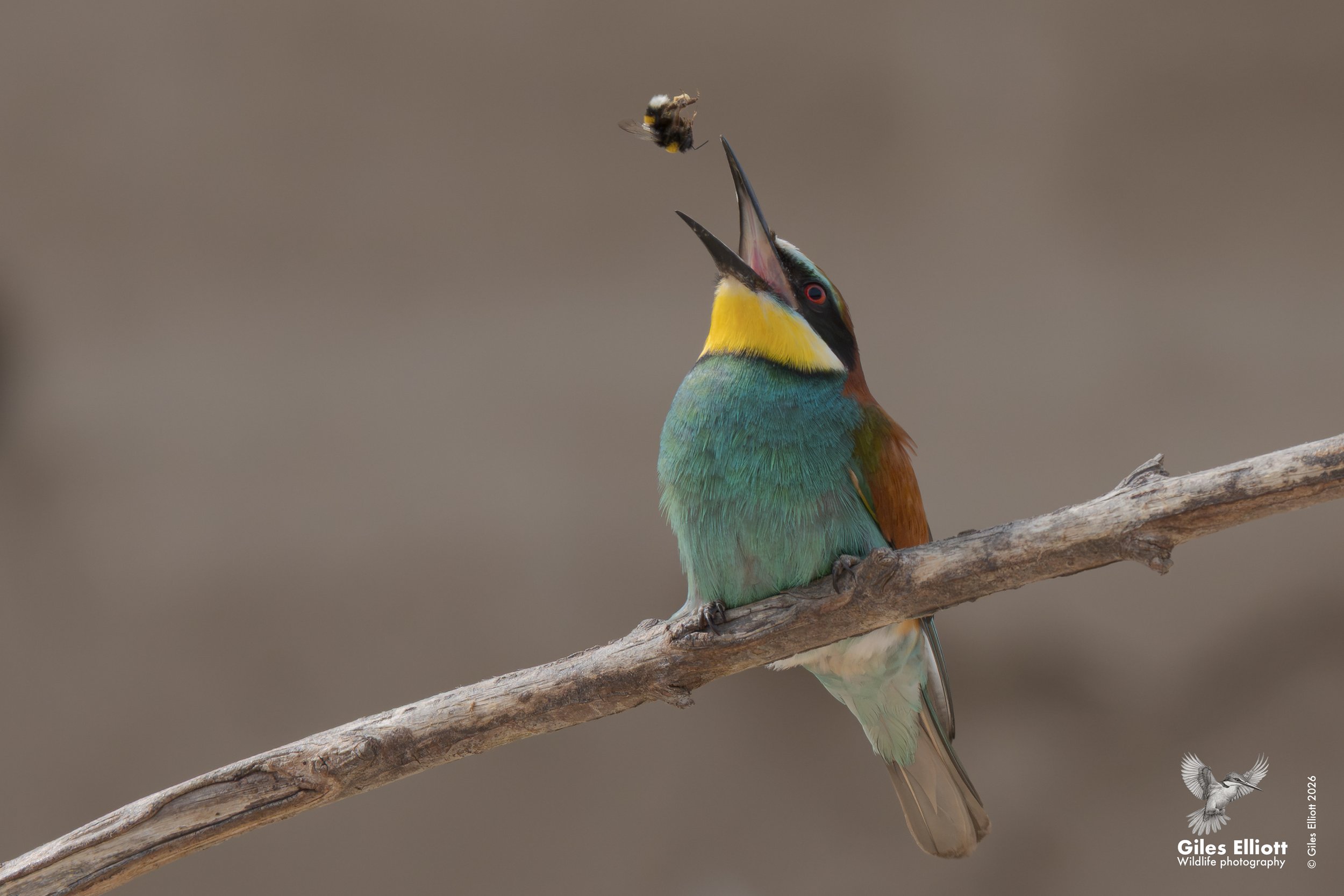
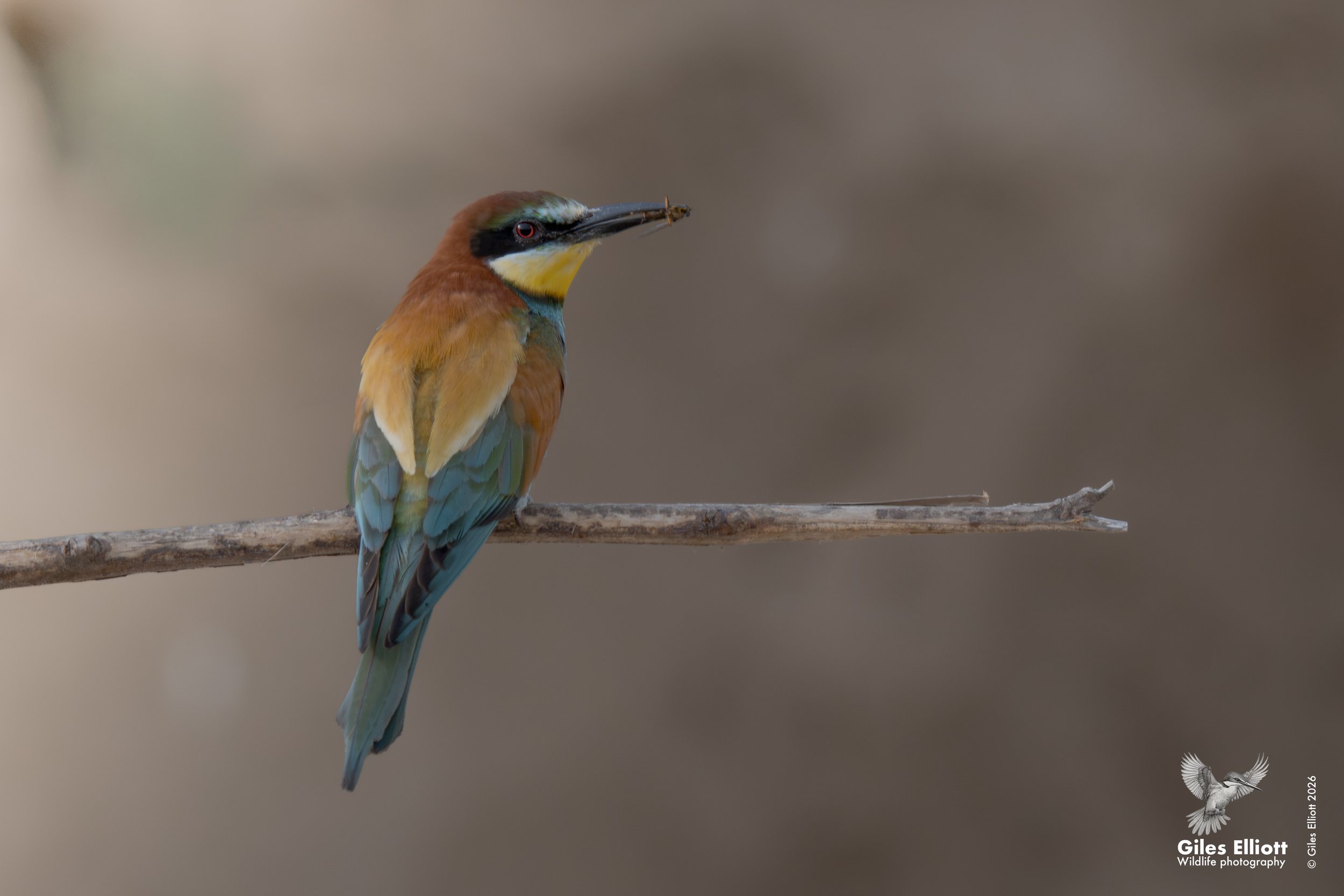
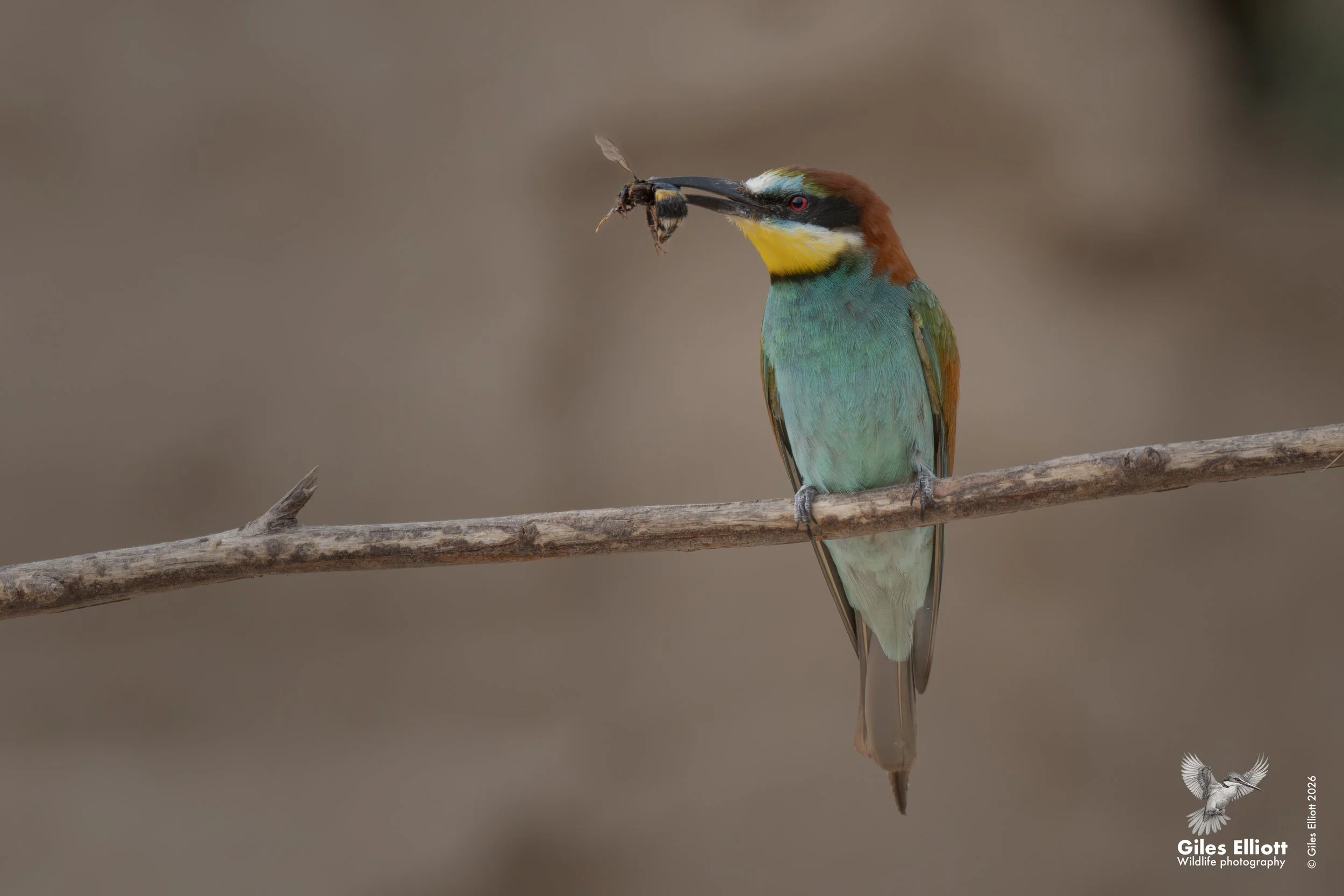
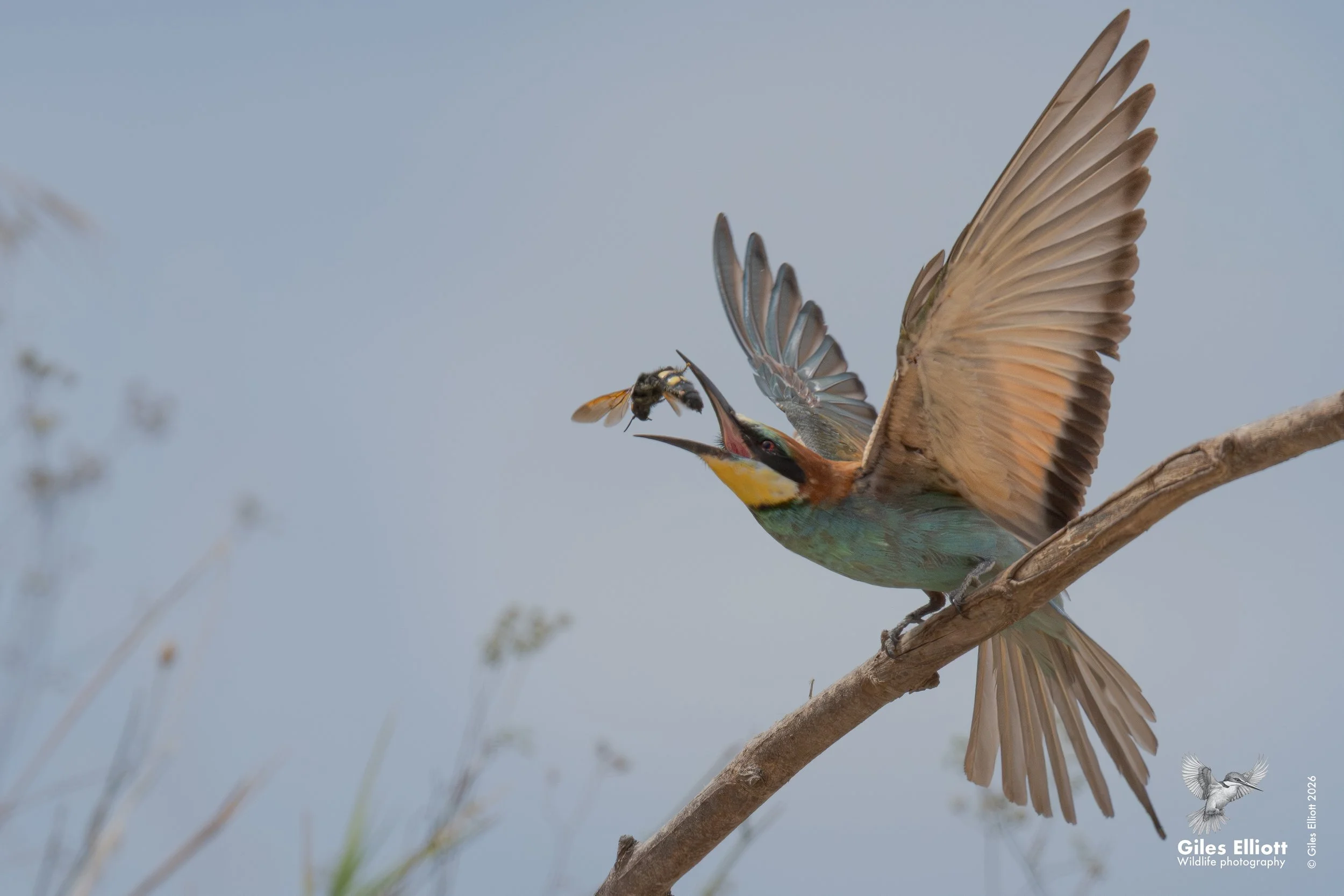
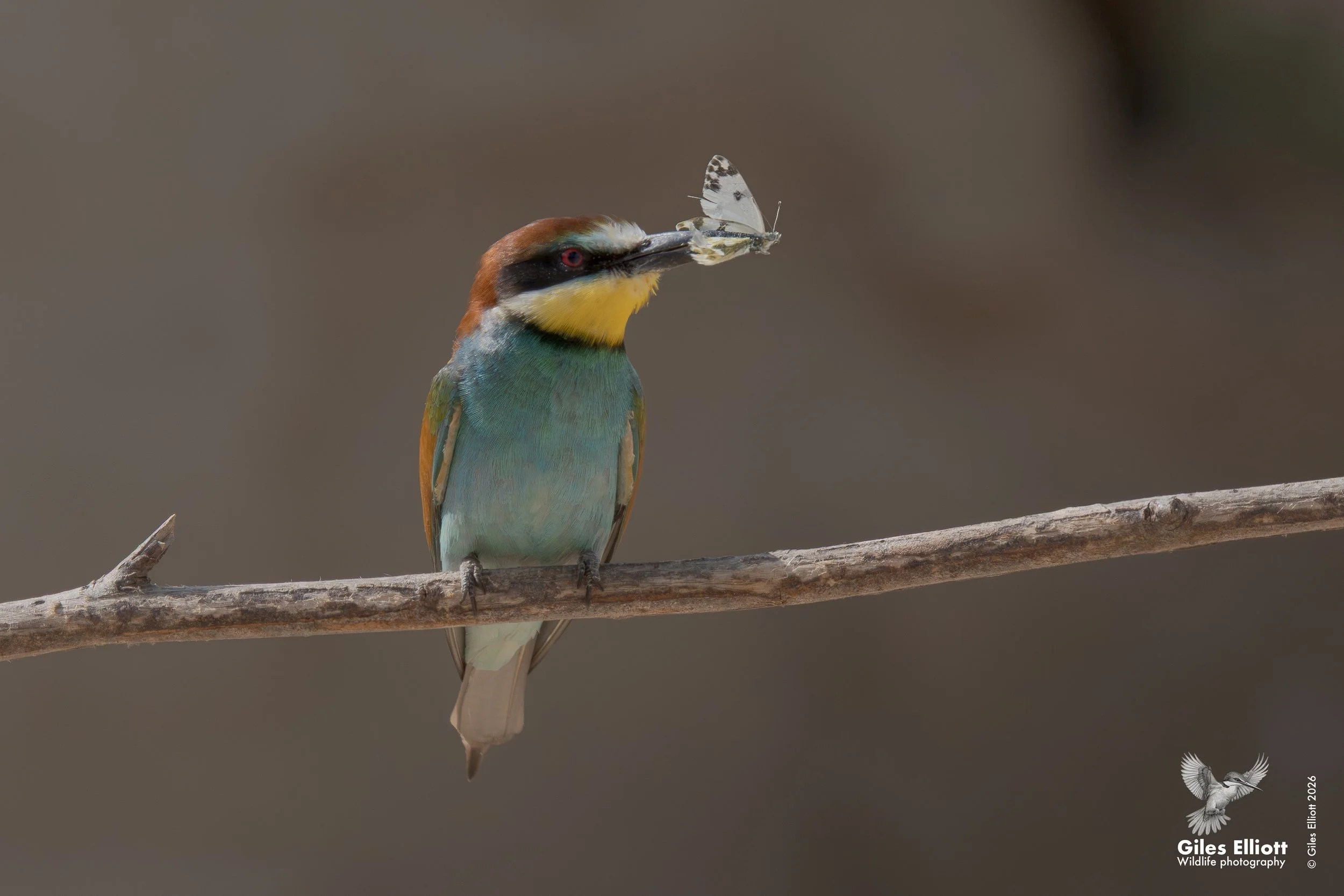
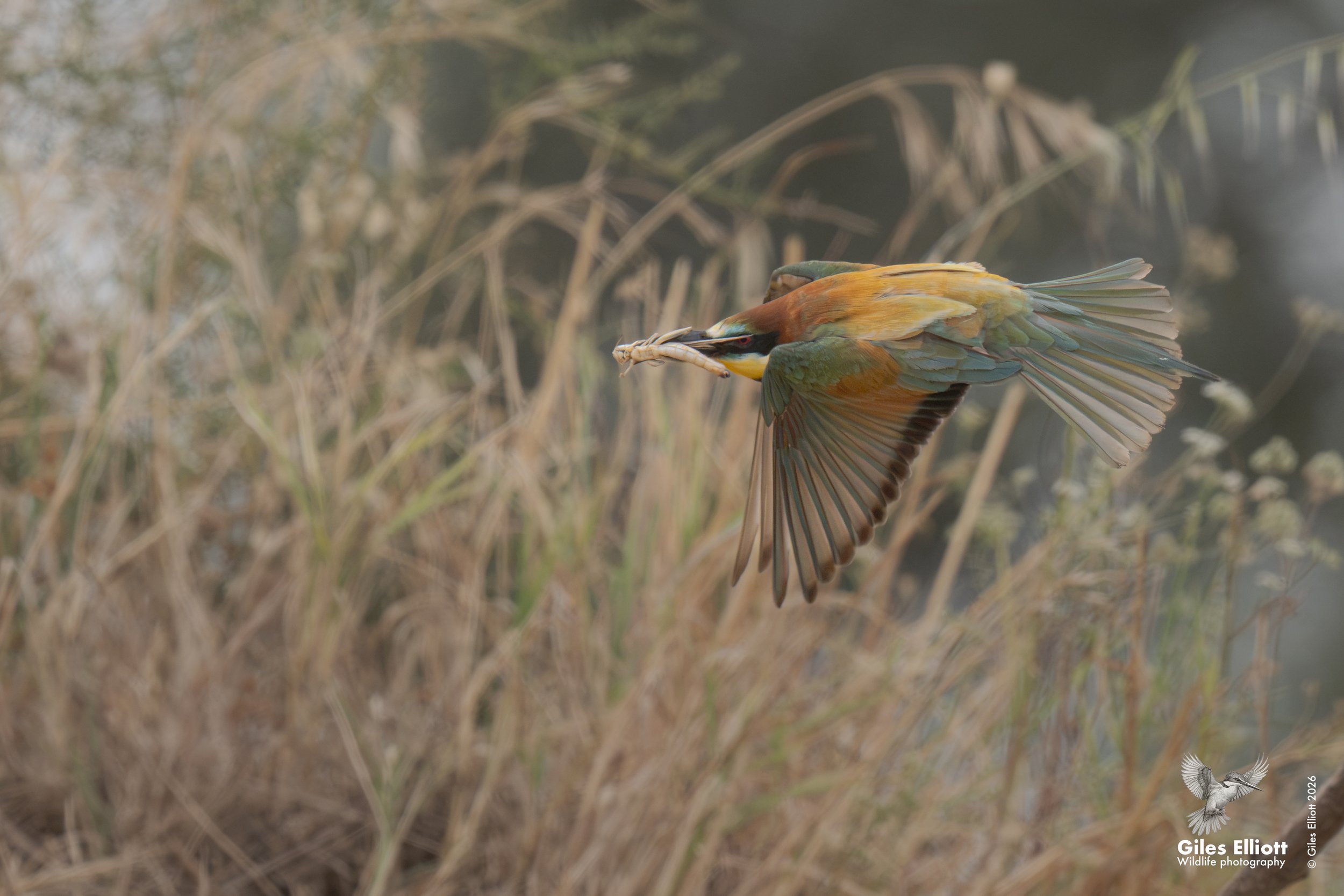
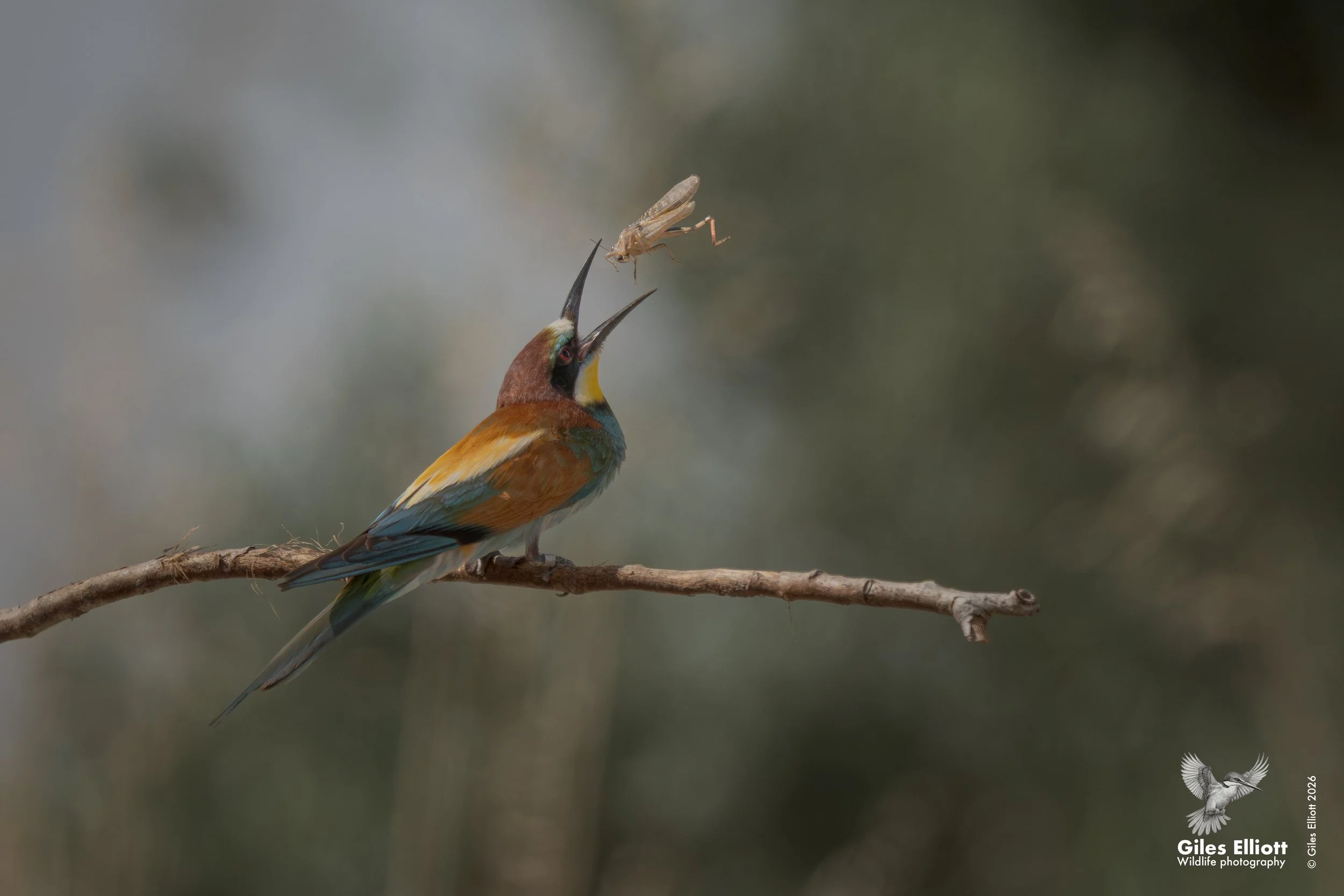
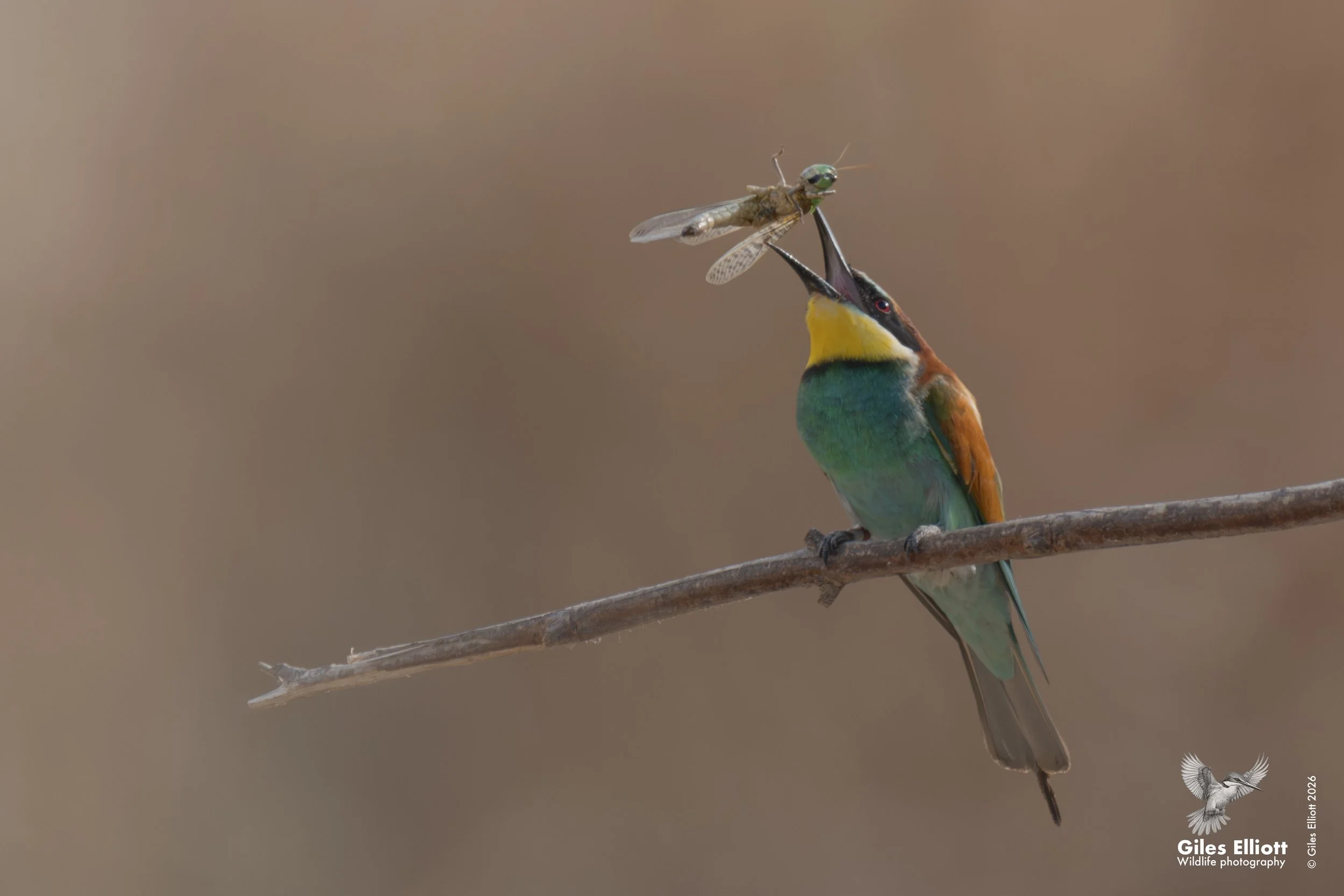
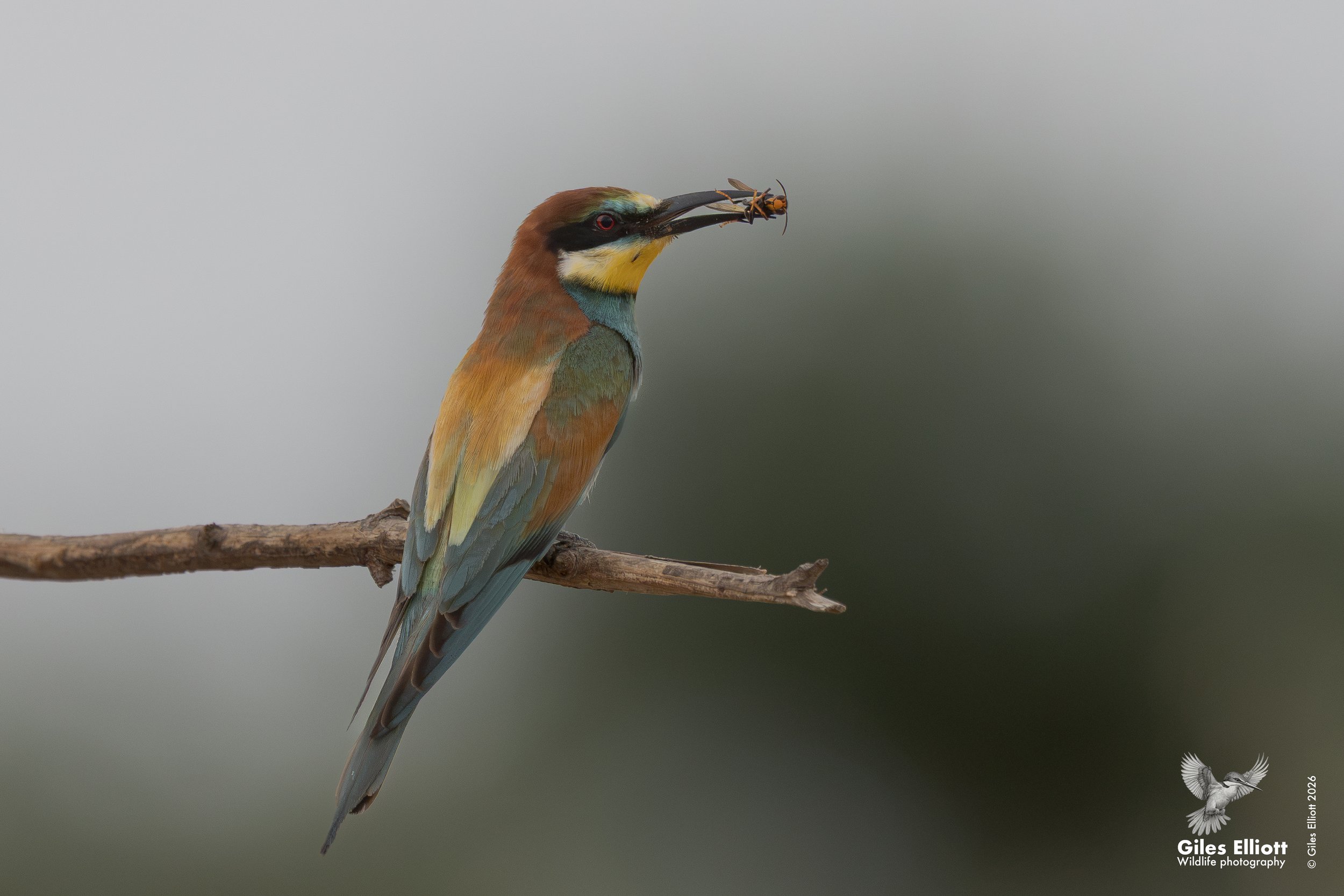
The colony
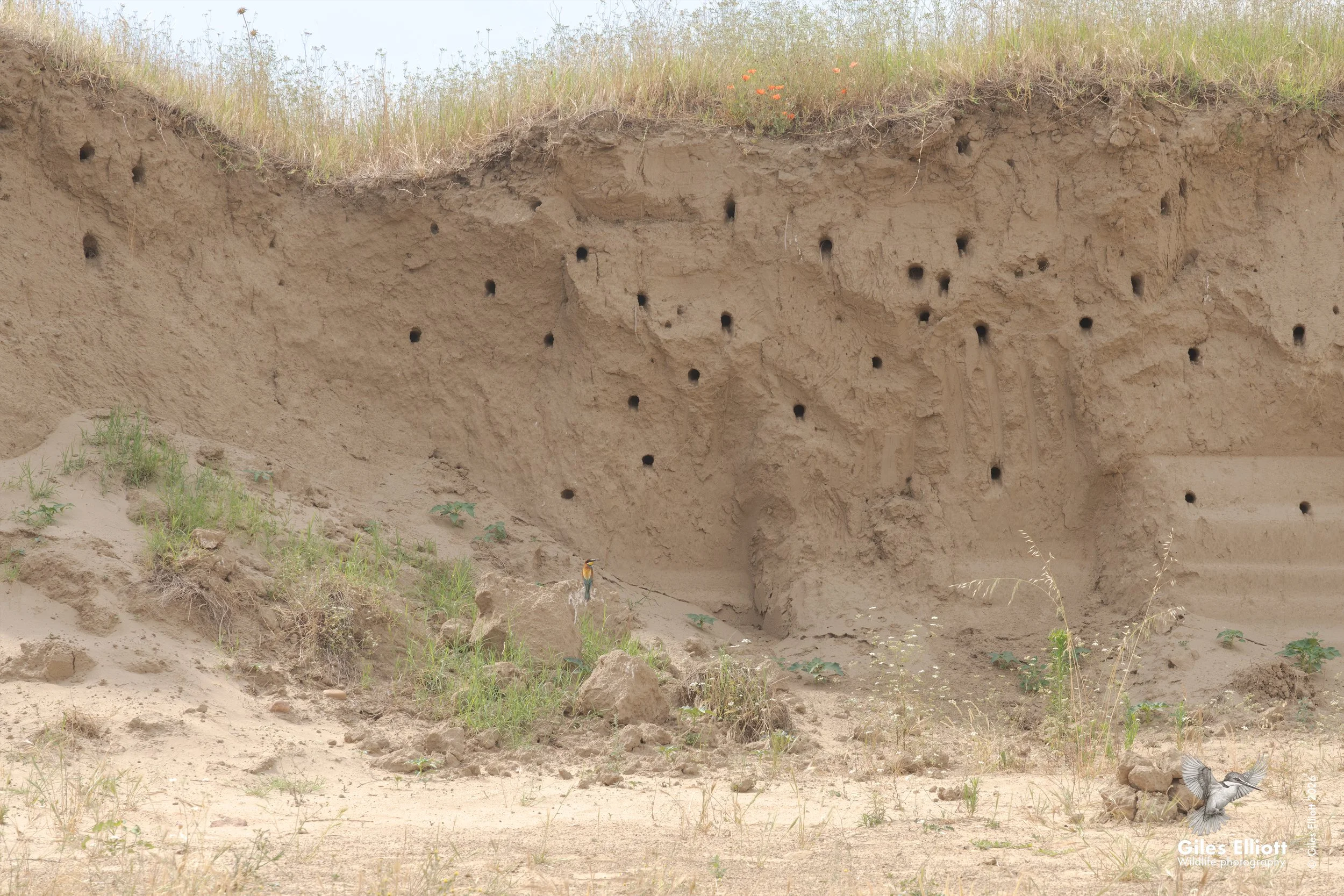
The bee-eaters have chosen as home a pair of sand banks in an area just away from the Tagus River. Here they have soft sand to tunnel in, surrounded by oak trees and scrubland covered in wild flowers. Food is clearly plentiful, and their trips to find insects on the wing are short. They never seem to fly far, and the air is filled with their constant calls.
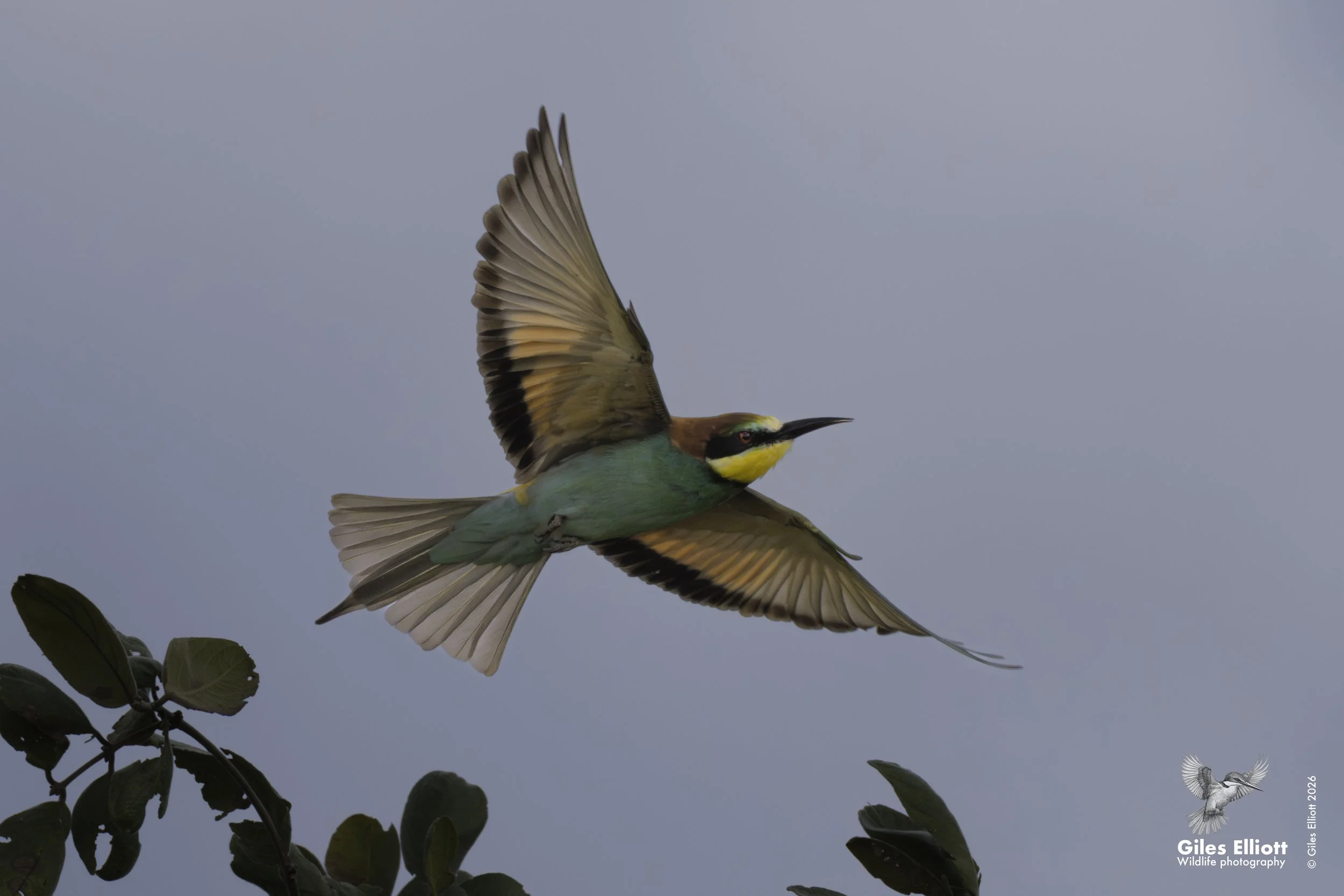
The migration
European bee-eaters are summer visitors to Europe, heading off once the breeding season’s done to spend winter in sub-Saharan Africa. Once they’re in Africa, they don’t just settle in one spot — they move around following wherever the insects are.
It is a hazardous journey, driven by the availability of insects. The wetlands and grasslands they rely on for rest stops on the way are shrinking because of farming, building, and drought. Climate change is messing with rainfall patterns too, which throws off insect numbers right when the birds need fuel the most, while pesticides can wipe out the insects they depend on.
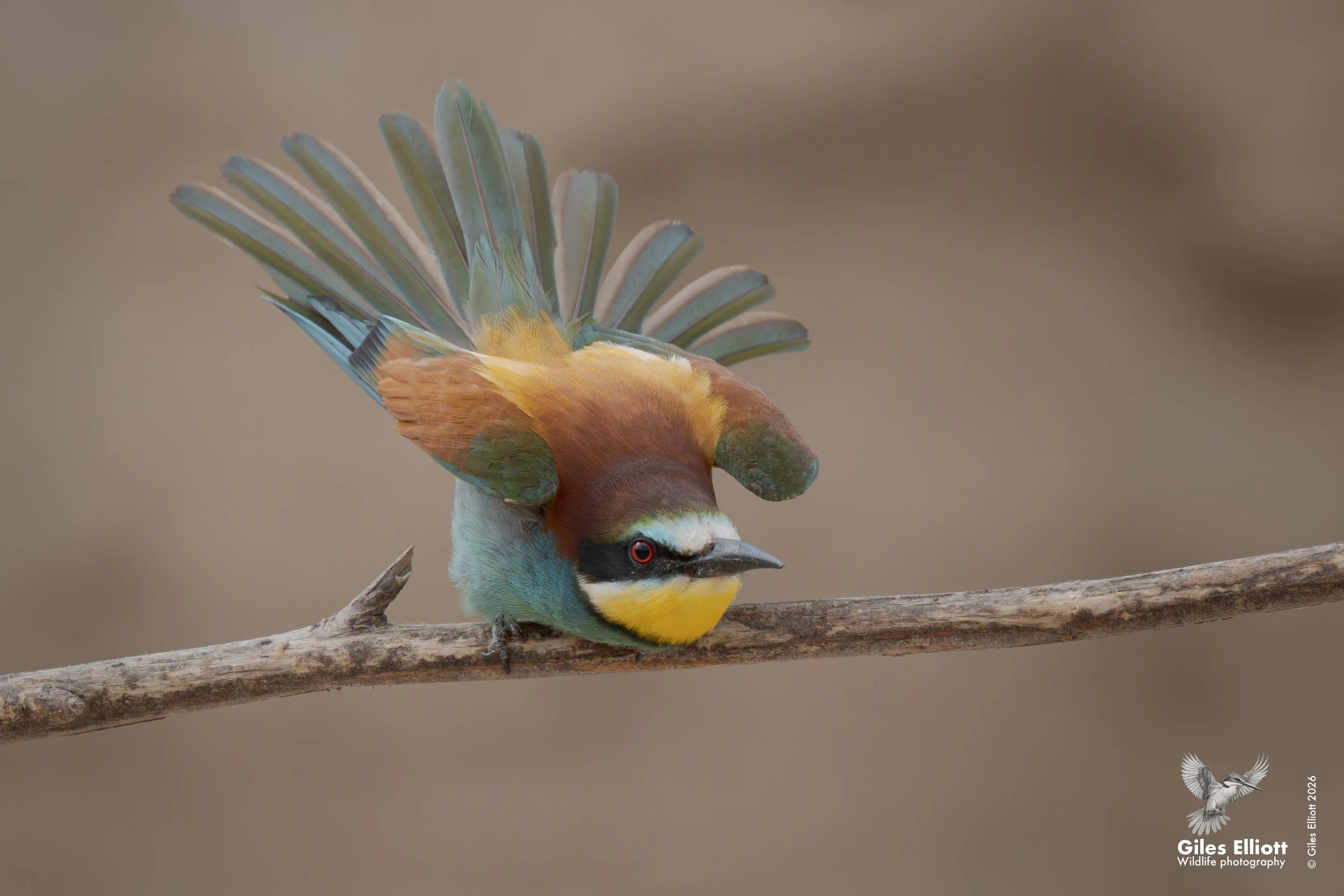
And still they thrive. I saw my first European bee-eaters of this year in the Waterberg district of South Africa (where I took this photo), I hope to see them again later in the year in Namibia or Botswana. It will be a fitting way to round off my summer spent with this colony.
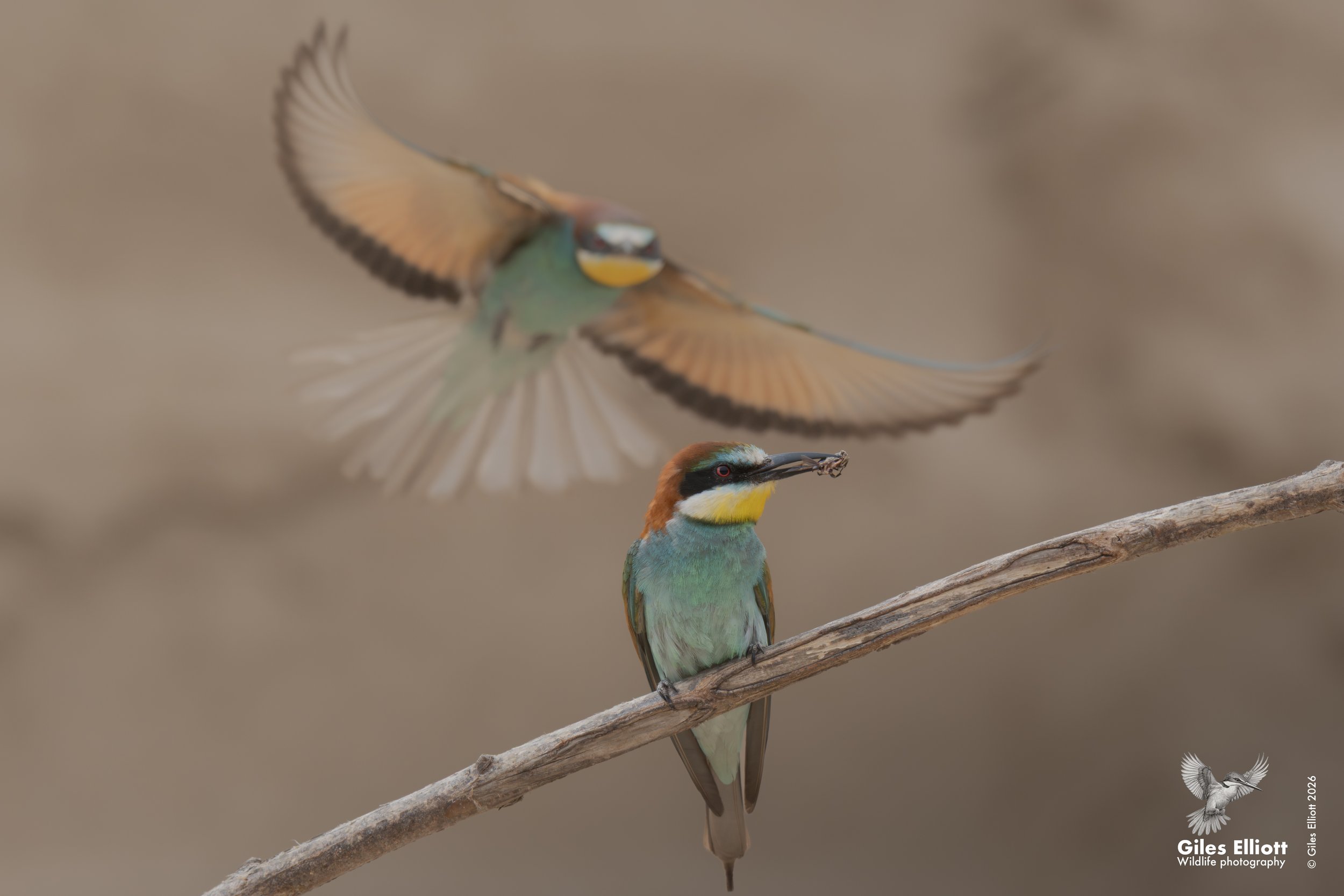
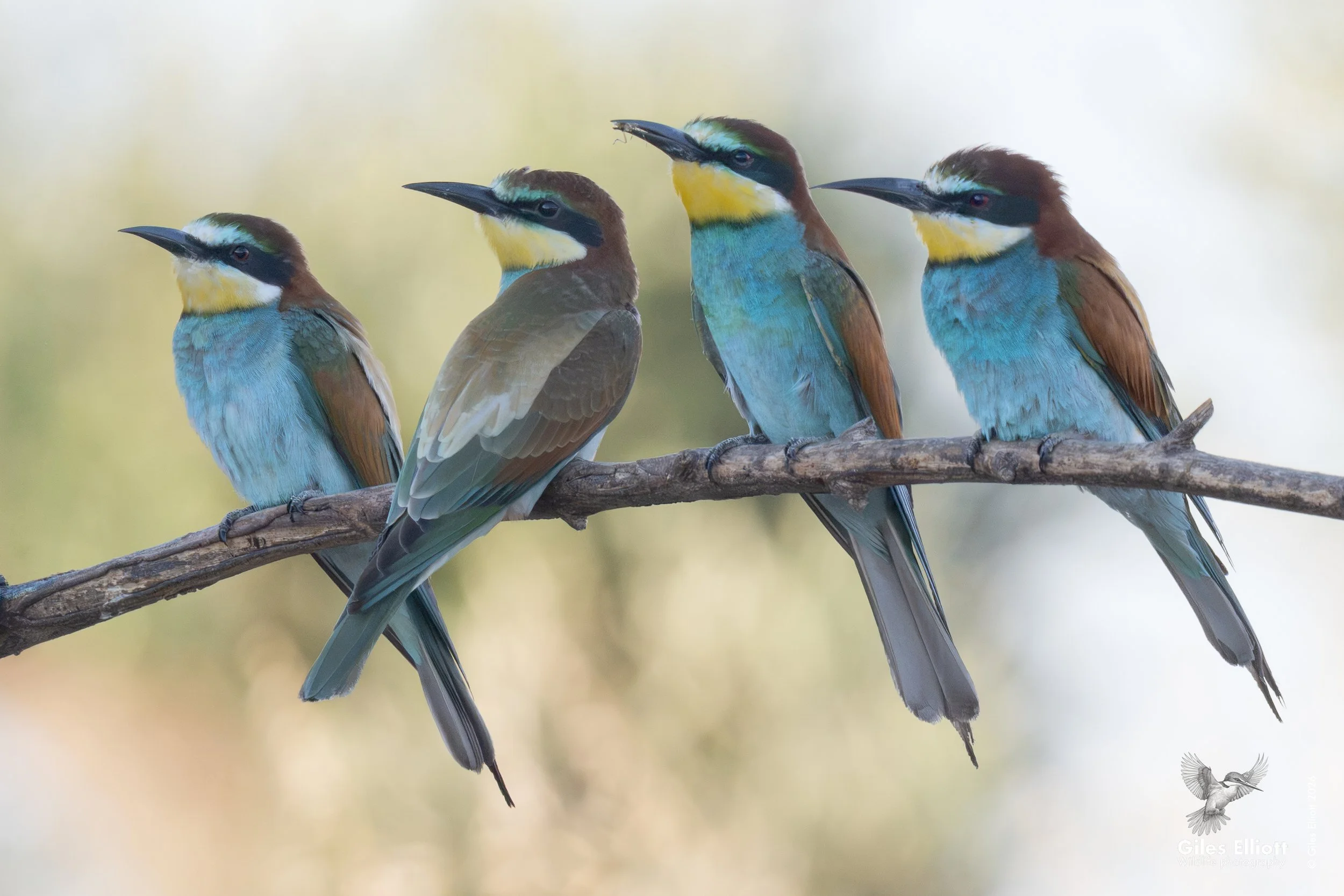
Fledging
I had envisaged shots of the parents feeding the recently fledged chicks for their first few days out of the nest holes.
What I saw instead was the parents and other adult birds chasing the young fledglings away from the nest holes. Each time a fledgling would try and go back to their nest they were chased off by multiple adult birds. The adults clearly don’t want the young returning to the nest, but want them away to get ready for the next stage… migration back to sub-Saharan Africa.
Hopefully I will encounter some European bee-eaters there on my next trip to Southern Africa, and I will whimsically wonder if any I see there are from this Portuguese nesting colony that has been so rewarding tho visit across the European summer.
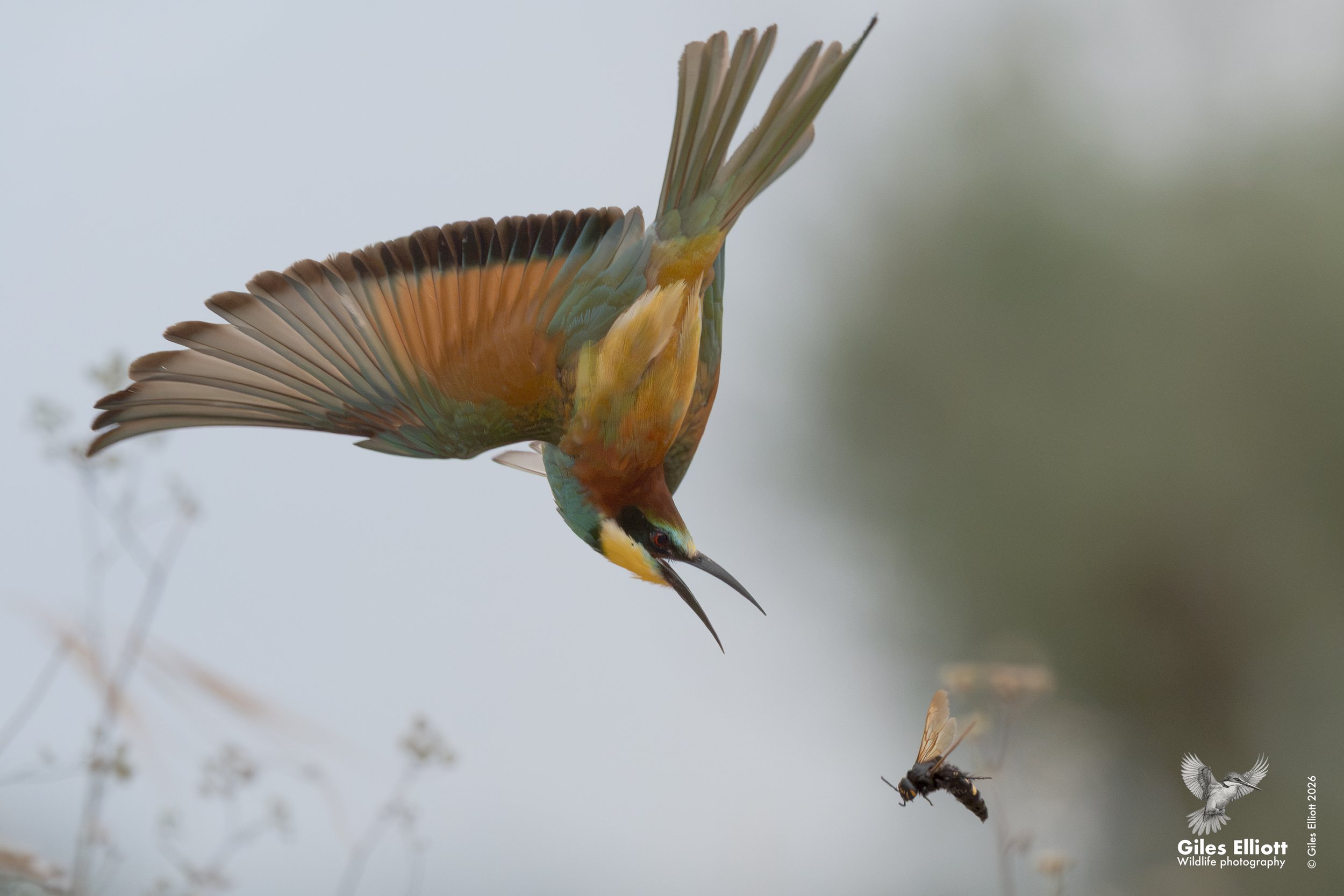
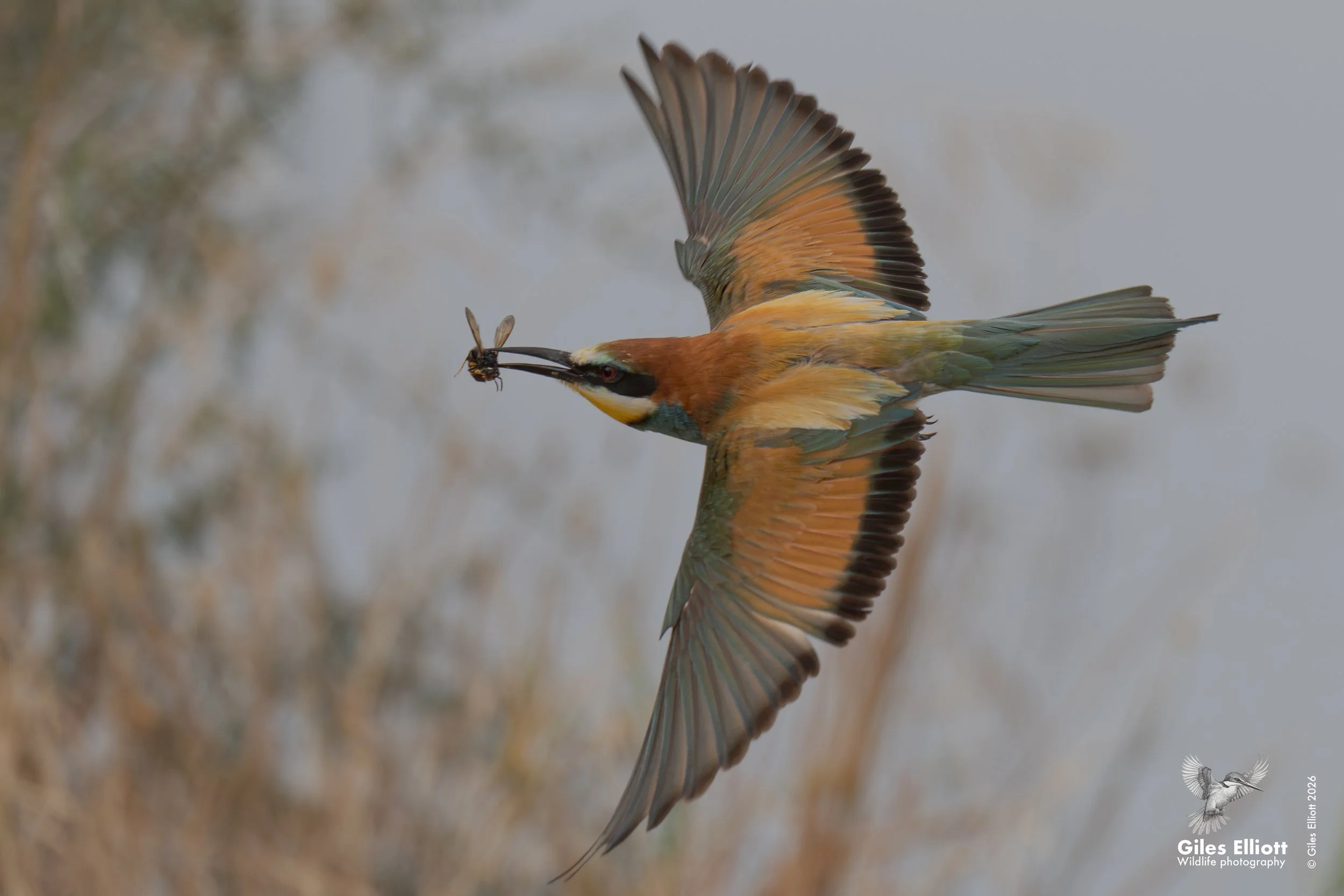
Constant motion, constant sound
What photography can’t portray is the constant sound around the nest site - the bee-eaters are constantly chirping. They are really argumentative with each other, but also get very excited when they see their mate coming. As the summer goes on the constant motion increases - at times the parent birds were visiting the young with food every 25 to 30 seconds. It is this movement and sound that makes every visit to the colony such a pleasure.
European bee-eater montage